


QUICK ANSWER: A Volvo may fail to start because of a weak battery, poor battery connections, a starter or starter-circuit problem, a key-recognition issue, or a fault affecting fuel delivery, ignition, or engine-speed signals. First determine whether the engine does not crank at all or cranks normally without starting. Begin with the battery and connections, check dashboard messages, and follow the model-specific key and jump-start procedures in the owner’s manual. If the engine cranks normally but will not fire, fuel, ignition, sensor, and start-authorization faults require further diagnosis. For related context, you may also want to read why is Volvo s keyless start a twist action.
- Main point: Batteries and poor terminal connections cause most Volvo no-starts; key/immobilizer and starter are next.
- Best first step: Read voltage (target 12.4–12.7V); then try a Neutral start and your backup key/fob.
- Cost or value: Many fixes cost under $50 (terminal clean, fob battery). Starters and fuel pumps run $500–$1,200.
- Who it suits: DIY owners can handle basic tests; advanced faults need VIDA-level diagnostics.
- When to get help: Repeated no-start after a jump, immobilizer warnings, or no fuel-pump prime sound.
What Causes a Volvo Not to Start?
A Volvo may fail to start because of a weak battery, poor battery connections, a faulty starter motor, fuel-delivery problems, ignition faults, engine-position sensor issues, or a key and immobilizer problem.
The fastest way to narrow down the cause is to pay attention to what happens when you try to start the car.
If the dashboard is dark, the lights are weak, or you hear rapid clicking, start by checking the battery and its connections. If the engine cranks normally but does not start, the problem is more likely related to fuel delivery, ignition, engine sensors, or the immobilizer system.
The table below can help you decide where to begin.
| What Happens When You Try to Start | Where to Check First |
|---|---|
| No lights and no sound | Battery, battery terminals, or main power connection |
| Rapid clicking | Weak battery or poor battery connection |
| One solid click but no crank | Starter motor or starter circuit |
| Engine cranks but does not start | Fuel, ignition, sensors, or immobilizer |
| Starts after a jump | Battery condition or charging-system problem |
| Starts and then dies | Fuel delivery, electrical, sensor, or charging issue |
| “Key Not Recognized” message | Key, key battery, or immobilizer system |
The key is to first determine whether you have a no-crank problem or an engine that cranks but will not start.
Source: daxstreet.com
Symptoms That Pinpoint Why a Volvo Won’t Start
Specific sights and sounds narrow the fault fast. Differentiate between “no crank” and “cranks but won’t fire,” then match the behavior to the list below. Note any dashboard warnings (Immobilizer, Key Not Detected, Start/Stop Service Required) and what you hear from the engine bay when the Start button is pressed. This connects closely with what does start stop service required mean on Volvo 2 if you want to compare the topic in more detail.
- No crank, no click: Dead/weak battery, corroded terminals, blown main fuse, failed brake switch, key not detected, or gear selector/Park switch.
- Single heavy click: Starter solenoid engagement with insufficient current or a failing starter motor.
- Rapid repeating clicks: Battery voltage collapsing under load — classic weak battery/poor connection.
- Cranks but won’t fire: No fuel pump prime, clogged fuel filter (older cars), failed crankshaft position sensor, flooded engine (short trips in cold), or immobilizer cutting fuel.
- Key-related messages: “Key Not Found/Detected,” “Immobilizer See Manual,” or “Hold key near start button” point to fob battery, antenna ring, or immobilizer sync.
- Only starts in Neutral: Park/Neutral position switch misalignment (shifter/PnP switch).
Most Likely Causes of a Volvo Not Starting (Ranked)
Probability shifts with age and model, but across modern and earlier Volvos the pecking order stays consistent. Start with the simple and the electrical path: battery health and the integrity of the battery clamps and grounds. Next are start-permission items (key/immobilizer, brake switch, shifter position). After that, move to the starter circuit itself. Only when the engine cranks normally but will not catch should you focus on fuel delivery and engine sensors.
- Battery age/terminals: AGM batteries last ~4–6 years. Loose or corroded clamps/ground straps mimic a dead battery.
- Key/immobilizer not detected: Weak fob battery or lost sync blocks start even with a healthy battery.
- Starter motor/solenoid: Worn commutator/brushes cause single-click no-starts, especially hot-soak.
- Brake pedal switch (push-button cars): ECM won’t see “brake applied,” so it denies the start request.
- Shifter Park/Neutral switch: The car thinks it’s not in Park; Neutral-start override is the giveaway.
- Fuel pump/relay (cranks but no fire): No prime hum and instant stall suggest fuel delivery issues.
- Crankshaft position sensor: ECM never sees engine speed — injectors and spark are cut.
- Main fuses/relays/ground strap: High-resistance ground or blown start fuse kills the circuit.
Here is a summary of the key failure patterns, what you’ll notice, and the typical fix path. Use it to choose the next check before you start buying parts. This table shows the top causes, the symptom that best identifies each, a fast DIY check, and a realistic cost window in the U.S. market.
| Cause | Signature Symptom | DIY Check | Typical Cost |
|---|---|---|---|
| Weak battery/terminals | Rapid clicks or dimming cluster | 12.4V+ at rest; clean/tighten clamps | $0–$30 clean; $180–$350 battery |
| Key/immobilizer | “Key Not Detected”/no crank | Try backup key; hold fob to start button | $3–$10 fob cell; $250–$500 new key |
| Starter motor | Single heavy click | Tap starter lightly; hot-soak pattern | $500–$900 parts+labor |
| Brake pedal switch | Push-button dead, no brake lights | Check brake lights; press pedal harder | $80–$200 |
| Shifter P/N switch | Starts in Neutral only | Try Neutral start | $150–$350 adjust/replace |
| Fuel pump/relay | Cranks but won’t fire; no prime hum | Listen 2–3s prime; relay swap test | $20–$40 relay; $600–$1,200 pump |
| Crank sensor | Cranks, no RPM on scanner | OBD2 live data check | $150–$350 |
| Main ground/fuse | Intermittent total power loss | Inspect ground strap; fuse continuity | $0–$50 |
How To Diagnose a Volvo That Won’t Start
A structured 10-minute check saves time and money. Separate “no-crank” from “cranks-no-start,” verify start permissions on push-button cars, and confirm power delivery. You can do most of this without tools; a $15 multimeter speeds it up. Capture any messages and listen closely — a quiet 2–3 second fuel pump prime at key-on is very telling. Follow these steps in order and stop as soon as you find a fault. You can also use how to jump start Volvo S60 2012 without alarm as a helpful next guide on the same ownership topic.
- Step 1: Check battery voltage and clamps. Measure at the jump posts: 12.4–12.7V is healthy. Below 12.2V likely fails to crank. Clean/tighten both clamps and the visible ground strap.
- Step 2: Confirm start permissions. Press the brake firmly (bright “Brake Lights On”?), move the shifter to Neutral and try starting again. Neutral-start success points to the P/N switch.
- Step 3: Validate the key/immobilizer. Try your backup key. For push-button models, hold the fob against the start button or designated key reader and retry. Replace a suspect fob battery.
- Step 4: Listen for pump prime and starter click. On key-on, a faint 2–3s fuel pump hum signals fuel readiness. No hum + crank-no-start leans fuel relay/pump. A single heavy click screams starter.
- Step 5: Attempt a safe jump start. Use proper under-hood posts and a known-good booster. If it starts only with a jump, focus on battery/alternator health and connections.
How To Fix a Volvo That Won’t Start (DIY vs Mechanic)
Repairs split into quick owner actions and shop-level work. Electrical connection issues, key fob batteries, and brake switch tells are easy wins. Starters, fuel pumps, and network faults usually need an experienced Volvo technician with VIDA/DiCE or equivalent to confirm before parts go in. What You Can Do Now (under $50, basic tools):
- Clean and tighten battery terminals and ground strap: Remove corrosion with a brush/baking soda solution; retighten clamps fully.
- Replace key fob battery: Most use CR2032/CR2450. Swap and re-test; try the emergency-start position.
- Neutral-start test and shifter wiggle: Start in Neutral; if it works, book shifter/PnP switch adjustment.
- Brake switch quick check: No brake lights = likely bad switch; pressing harder sometimes starts once.
- Swap fuel pump relay (where accessible): Swap like-for-like relay as a test on older models.
- Jump start correctly: Follow the factory jump posts. For technique, see our step-by-step on how to use a Volvo to jump start another car safely.
What Needs a Mechanic (parts $150+ or software checks):
- Starter motor/solenoid replacement: Confirm with voltage drop tests; replace if single-click/no-crank persists.
- Fuel pump and filter service: Verify power/ground to the pump and pressure; replace pump if failed.
- Crankshaft position sensor: Confirm no RPM signal during crank; replace sensor and retest.
- Brake pedal switch or shifter/PnP switch: Proper diagnosis and calibration prevent repeat faults.
- Immobilizer/CEM issues: VIDA scan for DTCs and key programming. Avoid aftermarket keys that can’t be coded.
Key or immobilizer doubts? Our explainer on whether an old Volvo key can make it hard to start covers aging fobs and antenna rings in detail.
Repair Cost for a Volvo No-Start (Realistic Ranges)
Budgets vary by model, engine, and access time. The figures below reflect common U.S. pricing at independent Volvo specialists vs dealers. Always authorize diagnosis before major parts — a $150 test that prevents a $900 guess is money well spent.
- Battery (AGM) + install: $180–$350
- Starter motor: $500–$900
- Brake pedal switch: $80–$200
- Shifter/Park-Neutral (PNP) switch: $150–$350
- Fuel pump module: $600–$1,200
- Crankshaft position sensor: $150–$350
- Tow to shop: $100–$200 (distance-dependent)
Want battery-specific scenarios and pricing? We break them out separately in our focused guide on Volvo won’t start due to battery.
How To Prevent Volvo No-Starts from Recurring
Prevention is about maintaining cranking power, preserving clean connections, and catching early warnings. Batteries age silently and immobilizer fob cells drain long before you notice. Short-trip, cold-weather driving accelerates both battery sulfation and flooded-engine complaints. A few habits and annual checks eliminate most surprises and keep start permissions happy on push-button Volvos.
- Replace key fob batteries annually: It’s a $5 habit that prevents immobilizer lockouts.
- Inspect and clean battery terminals every 6–12 months: Corrosion increases resistance and mimics a dead battery.
- Load-test the battery before winter: Replace any battery older than 5 years or that fails a load test.
- Use a smart maintainer for low-mileage cars: Keeps AGM batteries at full state-of-charge.
- Know your Neutral-start override: Practice it once so you’re not learning in a snowstorm.
- Listen for the fuel pump prime: No hum? Book a check before the pump strands you.
- Keep a 12V lithium jump starter in the trunk rated for at least 1,000 peak amps.
- Photograph your battery label (size/CCA) so you can buy the right replacement quickly.
- Store a spare CR2032/CR2450 fob cell in the glovebox — still sealed in its package.
- Scan for codes after any no-start event; even stored codes help a mechanic pinpoint the root cause faster.
Finally, know the difference between a Remote Start issue and a true no-start. Remote-start failures are usually app/subscription or safety-condition related — we cover those in Volvo remote start not working. Before we wrap, here’s a quick personal note from the garage.
When to Call a Professional
Basic checks can help narrow down a starting problem, but some situations are better left to an experienced technician.
Consider professional diagnosis when:
- the car still will not start after basic battery and connection checks;
- a fuse repeatedly fails;
- the engine cranks normally but the cause remains unclear;
- the vehicle displays key-recognition or security-system faults;
- you suspect a fuel-system problem;
- the starting problem is intermittent;
- electrical diagnosis requires circuit testing;
- you are not comfortable working around the battery, fuel system, or electrical components.
For complex electrical or security-system faults, a workshop familiar with Volvo diagnostic systems may be especially useful.
Frequently Asked Questions
This FAQ tackles the most common “won’t start” scenarios on Volvos — quick battery checks, what specific clicks mean, immobilizer quirks, neutral-start workarounds, and when to call a pro. You’ll also see typical costs for starters, fuel pumps, and sensors, plus whether it’s safe to keep trying or to attempt a jump. Use these answers to choose your next step confidently.
My Volvo has lights but won’t crank — is the battery still bad?
Often, yes. Dash lights need very little current, while the starter needs hundreds of amps. A battery at 11.9V can light the cluster but collapse under load. Measure resting voltage (aim 12.4V+), then watch cranking voltage (stay above ~10.0V). If a jump start works, replace the battery or fix corroded/loose terminals.
I hear a single loud click when I press Start. What failed?
A single, heavy click points to a starter solenoid engaging but the starter motor not spinning. That’s usually a worn starter (brushes/commutator) or insufficient current due to a poor connection. Verify tight, clean terminals first; if the symptom repeats hot or cold, plan on a starter replacement after testing.
“Key Not Detected” appears — can that block starting even with a good battery?
Yes. Push-button Volvos need a recognized key and a pressed brake to enable start. Replace the fob battery, try your spare key, and hold the fob against the start button to use the emergency reader. Persistent messages suggest an antenna ring or immobilizer issue that needs a scan.
It cranks strongly but won’t fire. What should I listen for?
Listen for a 2–3 second fuel pump prime at key-on. No prime hum plus crank-no-start leans toward a pump/relay. If you have a scanner, check for an RPM signal during crank — no RPM suggests a failed crankshaft position sensor. Fuel pressure and spark tests confirm the path before replacing parts.
Can I start in Neutral if Park won’t start the car?
Yes. Move the shifter to Neutral and try starting. If it fires up only in Neutral, the Park/Neutral position (PNP) switch or shifter alignment needs attention. It’s a common, relatively affordable fix that a shop can adjust or replace.
Is it safe to keep trying to start a stubborn Volvo?
Limit cranking to 10–15 seconds at a time with one-minute cool-downs. Over-cranking overheats the starter and drains the battery. If it doesn’t respond after basic checks or a proper jump, book diagnosis — repeated attempts rarely fix the root cause and can add repair costs.
How much does a typical no-start repair cost?
Simple fixes are cheap: $3–$10 for a key fob cell, $0–$30 for terminal cleaning. Common repairs: starter $500–$900, crank sensor $150–$350, brake switch $80–$200, fuel pump $600–$1,200, and a new AGM battery $180–$350. Expect $90–$300 for professional diagnostics depending on the shop.
Final Verdict
Most Volvo no-starts trace to power delivery and start permissions: a tired battery or poor terminals, a key/immobilizer not recognized, or a failing starter. Start smart: verify 12.4V+, clean and tighten clamps, try a Neutral start, and test with a backup key or fob held to the start button. If it cranks but won’t fire, listen for the fuel pump prime and consider a crank sensor. Use a proper jump to get moving, then schedule diagnosis if the issue repeats. For battery-only cases and post-replacement hiccups, our detailed guides linked above will get you back on the road faster.
FAQ – Frequently Asked Questions
I know when your Volvo “won’t start,” your mind is probably racing with questions! Let’s address some of the most common ones I hear:
Q: My Volvo won’t start but the battery is new. What else could it be?
A: That’s definitely a frustrating situation when you’ve already ruled out the most obvious culprit! If your “car won’t start but battery is good,” then you’re right to look beyond the battery itself.
Likely suspects now become the starter motor, the fuel system (maybe “fuel pump failure” or a “clogged fuel filter”), or the ignition system (“volvo ignition problems” like “spark plug issues” or “ignition coil problems”).
It could also be something like the immobilizer system acting up. Go back and review the sections on each of these to explore symptoms and potential checks you or a mechanic can do.
Q: My Volvo won’t start in cold weather. Is that common?
A: Yes, “car won’t start in cold weather” is a common complaint! Cold temperatures are tough on car batteries – they reduce battery performance and cranking power.
So, cold weather can definitely exacerbate a weak or older “bad car battery,” making it struggle to start. However, cold weather can also affect other components. For example, in very cold conditions, fuel lines can sometimes freeze if there’s moisture in the fuel system.
Also, engine oil thickens in the cold, making the engine harder to crank. If your “car won’t start in cold weather,” the battery is still the first thing to suspect, but it’s worth considering temperature-related factors affecting other systems too.
Q: How much does it cost to fix a car that won’t start?
A: Ah, the dreaded cost question! The “car starting problem cost” can really vary widely depending on what’s causing the issue.
If it’s just a “bad car battery,” that’s on the lower end of the cost spectrum – maybe $100-$300 for a new battery and installation. However, if it’s a “faulty starter motor,” “fuel pump failure,” or especially an “ECU problem,” the cost can jump up significantly, potentially into the hundreds or even over $1000 for more complex repairs.
Honestly, it’s really hard to give exact figures because it depends so much on the specific problem, the parts needed, and labor rates in your area.
The key takeaway is that proper diagnosis is essential to get an accurate estimate – you need to figure out what is broken before you can know “how much does it cost to fix a car that won’t start.”
Q: Can a bad alternator cause my car not to start?
A: Indirectly, yes, “alternator failure car won’t start” is possible. The alternator’s job is to charge the battery while the engine is running. A bad alternator itself won’t directly prevent the engine from cranking initially. However, if your alternator is failing and not charging the battery properly over time, it will eventually lead to a dead battery. And a dead battery, as we’ve discussed, is a very common reason why a car won’t start. So, alternator issues can definitely lead to a “car won’t start” situation, but it’s usually by causing battery drain first.
Q: Is it safe to try to fix a car starting problem myself?
A: “DIY car starting fix” attempts can be rewarding, but safety first! Doing basic checks like jump starting, visual inspections, and checking fuses are generally quite safe.
However, when you start getting into fuel system or more complex electrical work, you need to be cautious.
Fuel leaks are a fire risk, and electrical problems can be dangerous if you don’t know what you’re doing.
My advice is: stick to the basic troubleshooting steps if you’re comfortable. If you’re ever unsure, or if you’re dealing with fuel lines, or anything that feels beyond your comfort level, it’s always best to “call a professional.”
Q: Where can I find a good mechanic for my Volvo?
A: Finding the right mechanic is key! As I mentioned earlier, you have a few good options for your Volvo. “Volvo dealerships” are the official route – they specialize in your brand. “Independent Volvo specialists” are another excellent choice, often offering dealership-level expertise at potentially lower costs.
And don’t rule out “reputable local mechanics” – a well-regarded general repair shop can often handle common starting problems effectively.
To find a good one, ask for recommendations from friends or online Volvo forums, check online review sites (like Google Reviews or Yelp), and see if the shop has certifications like ASE (Automotive Service Excellence).
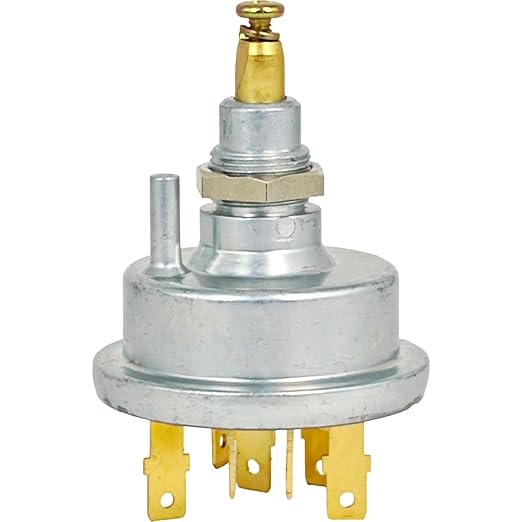
3172171 Turn Bollard Light Switch Compatible with Volvo 9700 9900 FH12 FH16 FL FL6 FM12 NH12 1998-2007
Final Words
So, there you have it! Experiencing a “volvo won’t start” moment can throw a wrench in your day, but armed with a bit of knowledge, it doesn’t have to be a complete disaster.
Hopefully, this guide has shed some light on “why wont my volvo start” and empowered you with “car starting troubleshooting steps” to take matters into your own hands – at least for the initial detective work!
Let’s quickly recap the most important things to remember when your Volvo decides to be stubborn and refuse to start:
- Battery Basics are King: Seriously, nine times out of ten, if you’re facing a “volvo starting problem,” the “bad car battery” is going to be the prime suspect. Always begin your troubleshooting by checking the battery’s health and connections.
- Crank or No Crank is Your Clue: Paying attention to whether your engine cranks – or gives you “volvo no crank no start” – is a crucial step in narrowing down the potential causes. Cranking points towards fuel or ignition, while no cranking points to electrical or starter issues.
- Troubleshooting is a Step-by-Step Journey: “How to diagnose car starting problems” is all about being systematic. Follow a logical approach, starting with the easiest checks and progressing methodically. Don’t get overwhelmed!
- Pro Help is Just a Call Away (and Sometimes the Smartest Move): It’s crucial to recognize “when to call a mechanic.” If you’re uncomfortable, if your basic checks don’t pan out, or if you suspect something complex, getting professional help is the wisest and safest decision.
The best news is that most “volvo starting problem” scenarios are solvable. Whether it’s a simple jump start for a dead battery, cleaning up “corroded battery terminals,” or a slightly more involved repair like a “fuel pump failure” fix, getting your Volvo running again is usually within reach.
And finally, if you’ve gone through these steps and you’re still puzzling over “what causes a volvo not to start,” please, don’t hesitate to consult a qualified mechanic – especially one who knows Volvos!
They have the expertise, the diagnostic tools, and the experience to pinpoint the problem accurately and get you back on the road, enjoying the drive in your trusty Volvo. Safe travels!
172070 Ignition Switch Compatible with Miller 5 Position Without Handle Start Engine
Author

Author

Evans Torres
I’m Evans Torres, an automotive engineer who loves Volvo cars. I graduated in Automotive Engineering from USC. I have worked in the car industry for years and now share my knowledge on The Volvo Life. I started this blog to connect with other Volvo fans. I offer tips, news, and advice to help you care for your car. My goal is to help you keep your Volvo in great shape and find all the best things about it. Join me as we discover everything Volvo has to offer!