


“Reduced Engine Performance” on a Volvo S60 means the car is limiting available power because the powertrain has detected a condition that can affect normal operation. It is not a diagnosis by itself, and it does not automatically mean the engine needs major mechanical repair.
Volvo’s S60 documentation describes Reduced performance / Acceleration performance reduced as a limp-home condition that can occur during a temporary powertrain or driveline fault so the vehicle can reduce output and help protect components. Depending on generation and powertrain, the cause can be engine management, boost/airflow, ignition, fuel delivery, transmission, hybrid/electrical, temperature or communication related.
The right first move is to record the exact message and symbols, scan the car before clearing anything, and then follow the fault data. This updated 2026 guide replaces the old generic “fuel filter / MAF / catalytic converter / ECM” list with a symptom-first diagnostic workflow.
If your Volvo S60 has reduced engine performance, drive gently and read the full driver-display message. If the car is severely misfiring, overheating, losing oil pressure, smoking, stalling or cannot maintain a safe speed, stop and arrange assistance. Otherwise, save the DTCs and freeze-frame data, check whether the fault is engine, transmission or hybrid-related, then use live data to test the affected system. A temporary powertrain fault can put an S60 into reduced-power or “limp home” operation specifically to help prevent further driveline damage.
- Reduced performance is a protection strategy, not a parts diagnosis.
- Do not replace a MAF, turbo, fuel pump, catalytic converter or throttle body from the message alone.
- The transmission can cause a reduced-performance message too. Volvo documents transmission reduced-performance states separately on older and SPA S60s.
- Plug-in-hybrid S60s add another branch. Hybrid-system faults or low available HV-battery energy can limit performance.
- Scan before clearing codes. Freeze-frame and live data can show load, temperature, mixture, misfire and boost conditions at the time of the fault.
- Intake/boost leaks can imitate a failing turbo or MAF. Test the system before replacing expensive parts.
- A flashing Check Engine light or severe rough running deserves immediate attention.
- Current S60 software is still being updated in 2026, but software should be checked after power, wiring and fault-specific hardware diagnosis—not used as a universal explanation.

What Does “Reduced Engine Performance” Mean on a Volvo S60?
On SPA-generation S60 documentation, Volvo states that a temporary driveline fault can place the car into Reduced performance / Acceleration performance reduced, sometimes described as a “limp home” mode with lower power output to help avoid driveline damage.
Older S60 message tables also distinguish Transmission Reduced performance, where the gearbox cannot handle full capacity and the driver is instructed to drive carefully until the message clears; if it appears repeatedly, Volvo recommends workshop diagnosis.
A car that accelerates poorly can have an engine fault, but transmission protection, hybrid-system limits or electronic torque reduction can feel almost identical from the driver’s seat. Read the exact message and scan all relevant modules before deciding which system is actually responsible.
Can You Keep Driving With Reduced Performance?
There is no single answer for every S60 because urgency depends on the accompanying warning and how the car behaves.
| What You See / Feel | Recommended Response |
|---|---|
| Mild power reduction, engine smooth, no red warning | Drive gently to a safe location and diagnose as soon as practical |
| Message clears but returns repeatedly | Do not ignore it; scan and arrange workshop diagnosis |
| Severe shaking / active misfire | Stop normal driving and diagnose promptly |
| Overheating / high-temperature warning | Follow the Volvo stop/cool-down instruction shown |
| Oil-pressure warning | Stop the engine as instructed; do not continue normal driving |
| Transmission hot / stop safely message | Follow the gearbox warning rather than treating it as an engine problem |
| PHEV hybrid-system failure / HV warning | Follow the hybrid warning and use qualified service |
1. Scan the S60 Before Replacing Anything
This is the highest-value first step.
Save:
- All current, pending and stored DTCs
- Which module reported each fault
- Freeze-frame engine load and RPM
- Engine coolant temperature
- Battery/control-module voltage
- Fuel trims and oxygen/air-fuel data
- Misfire counters where supported
- Requested vs actual boost
- MAF/MAP data
- Throttle/pedal requested vs actual values
- Transmission and hybrid-system faults on applicable cars
A basic emissions reader is better than guessing, but reduced-performance faults often benefit from broader system access and live data.
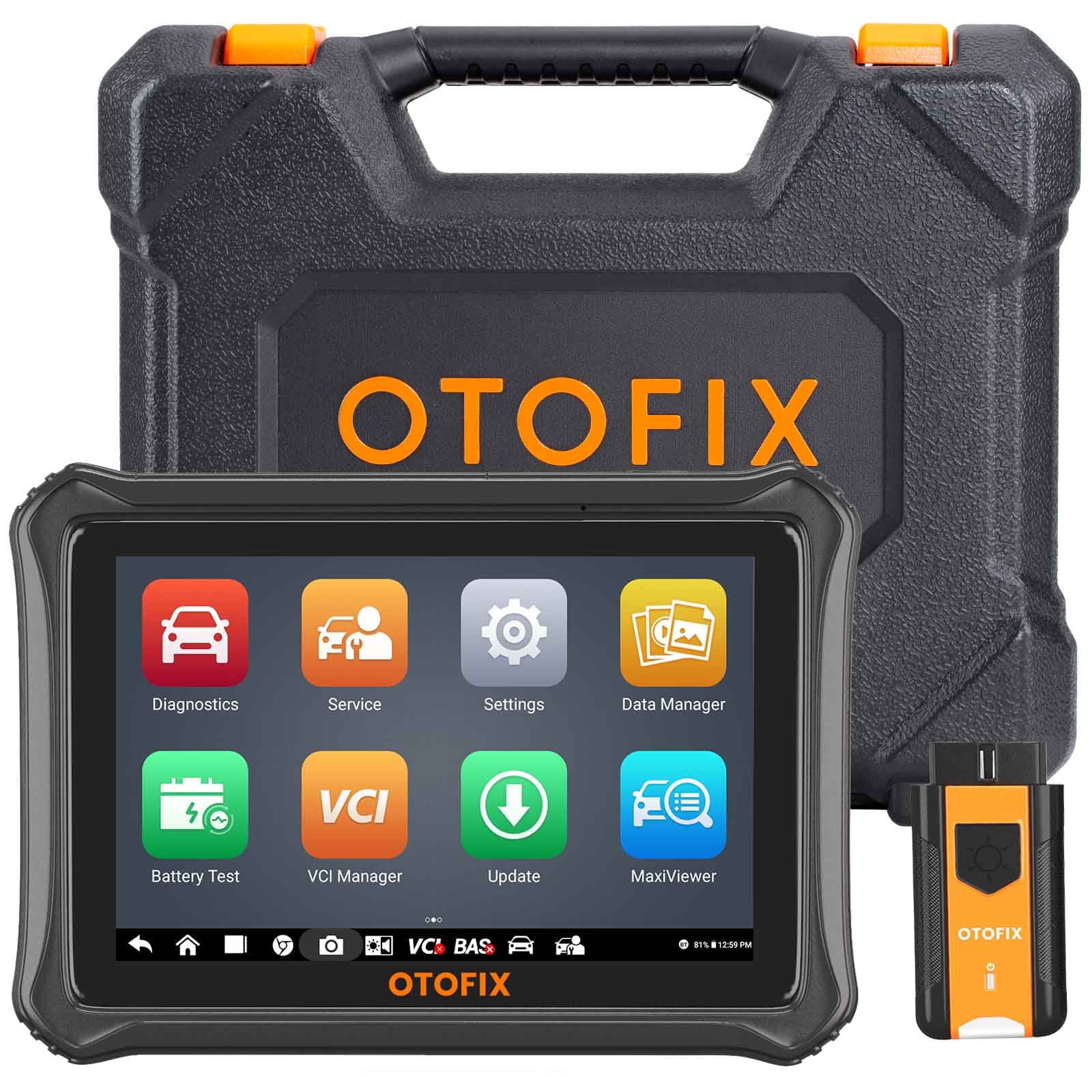
OTOFIX D1 Lite
An OE-level multi-system diagnostic tablet with AutoVIN, code reading/clearing, live data and broad service-function access on supported vehicles. It is much more useful for a reduced-performance complaint than a basic engine-only reader when transmission or body/network faults may also be involved.
2. Misfire: Spark Plugs, Ignition Coils, Injector or Compression?
A misfire is one of the most important reduced-power branches because the engine-control system may reduce torque when combustion is unstable.
Do not replace every coil at once. Use cylinder-specific data and compare:
- Which cylinder is misfiring
- Spark-plug condition and correct specification
- Ignition-coil operation
- Injector command/behavior
- Compression if the misfire remains on the same cylinder
- Fuel-trim and intake-leak data if several cylinders are involved
Severe active misfire can damage the catalytic converter and may make the car unsafe or unreliable in traffic. Do not keep driving hard while trying to “see if it clears.”

Lisle 20610 Inline Spark Tester
A simple visual spark tester that can quickly confirm whether an ignition event is present on compatible plug-wire style systems. It is an established high-selling ignition-test tool, but it is not universally applicable to every coil-on-plug S60 setup.
3. Air-Metering and MAF/MAP Sensor Problems
The old article singled out the MAF sensor as a common S60/T5 problem. A more accurate approach is to treat the MAF/MAP system as one branch of the air-measurement diagnosis.
Before replacing a sensor:
- Check the air-filter installation.
- Inspect the intake tube and charge-air plumbing.
- Compare MAF/MAP readings with RPM/load.
- Review fuel trims.
- Look for sensor circuit DTCs rather than relying only on “low power.”
- Check for boost/vacuum leaks that can make good sensors report unexpected values.
A contaminated sensor is different from a failed sensor, and an intake leak can create data that looks like a sensor problem.
4. Turbo Underboost and Charge-Air Leaks
On turbocharged S60s, reduced performance during acceleration often makes owners suspect the turbocharger first. That can be expensive guesswork.
Compare requested boost with actual boost and inspect:
- Charge pipes and intercooler connections
- Split hoses
- Loose clamps
- Turbo-control actuator/solenoid
- Wastegate/control movement where applicable
- MAP/boost sensor data
- Exhaust-side restrictions only after intake/boost testing
If actual boost is consistently below target, a smoke/leak test can reveal an external leak before the turbo itself is condemned.

AUTOOL SDT206 Smoke Leak Detector
A mid-to-high-end automotive smoke machine with a built-in air pump, pressure gauge and adjustable smoke flow. AUTOOL lists intake, EVAP, cooling/EGR/exhaust and other pipeline leak testing among its applications.
For more boost-related troubleshooting, see Volvo Loss of Power When Accelerating.
5. Fuel Delivery: Pressure, Injector Control and Deposit-Related Problems
Fuel delivery can absolutely reduce engine output, but “dirty injectors” should not become the default explanation.
Use scan data to check:
- Fuel-pressure requested vs actual where supported
- Lean/rich fault direction
- Misfire location
- Injector control/circuit faults
- High-pressure vs low-pressure fuel-system branch on direct-injection engines
- Whether the problem appears only at high load
A fuel-system cleaner can help with deposit-related injector/fuel-system contamination on gasoline engines. It cannot repair a failed pump, electrical injector fault, low compression or damaged high-pressure hardware.
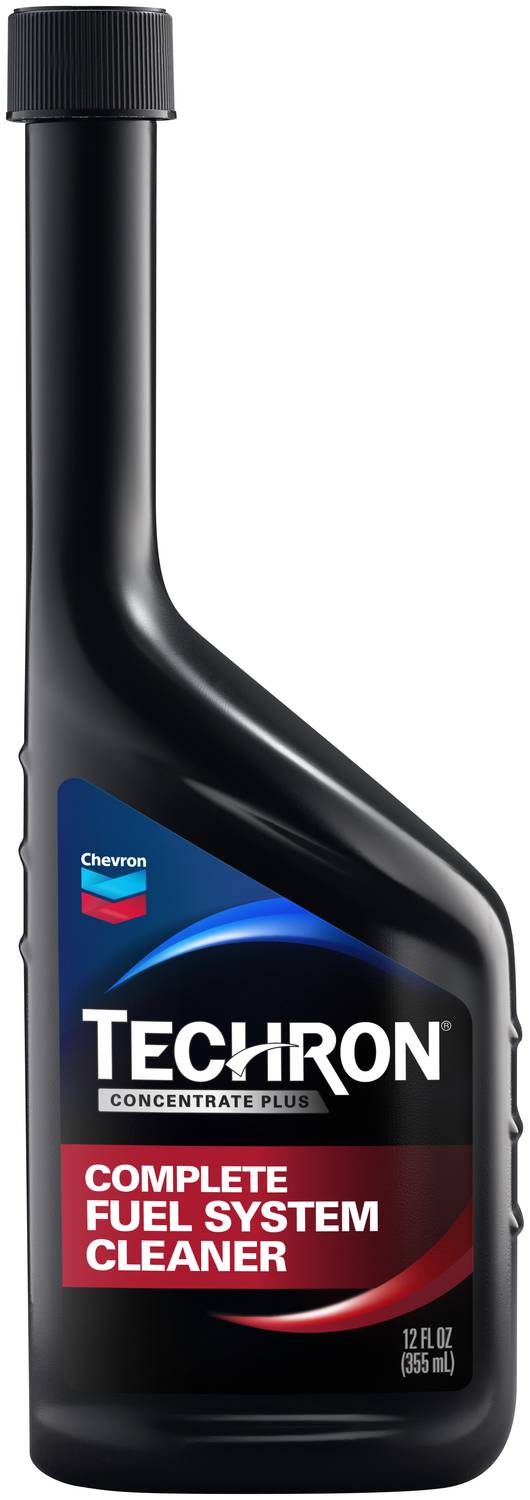
Chevron Techron Concentrate Plus – 12 oz (Pack of 6)
Chevron states that Techron Complete Fuel System Cleaner is designed for gasoline fuel-injected engines, including direct-injected gasoline applications, and can remove deposit buildup from injectors and combustion-system surfaces.
6. Throttle Body and Accelerator-Pedal Control
Electronic throttle faults can produce poor response or torque limitation, but cleaning the throttle body is not a universal cure.
Use the scan tool to compare:
- Accelerator-pedal request
- Commanded throttle angle
- Actual throttle angle
- Throttle actuator DTCs
- Wiring/power/ground faults
- Adaptation/relearn requirements when specified
If the throttle plate is physically contaminated, clean it only with the correct procedure for the specific engine. Do not force an electronic throttle plate or perform a made-up “relearn” sequence.
7. Catalytic Converter and Exhaust Restriction
A restricted exhaust can reduce power, but a catalyst-efficiency code does not prove the catalytic converter is plugged.
Before replacing an expensive catalyst, diagnose:
- Active misfire
- Rich/lean mixture
- Oil consumption
- Exhaust leaks
- Upstream/downstream oxygen or air-fuel sensor behavior
- Actual exhaust restriction where testing is justified
Replacing the catalyst without fixing the condition that damaged it can lead to a repeat failure.
8. Transmission Reduced Performance Can Feel Like Engine Power Loss
This point is missing from many “reduced engine performance” articles.
Volvo’s S60 message documentation states that when the transmission cannot handle full capacity, a Transmission Reduced performance message may appear. On later S60s, a driveline fault can also trigger reduced output/acceleration performance as part of limp-home operation.
Transmission-related clues include:
- Engine revs normally but road speed does not follow as expected
- Harsh/delayed gear engagement
- Gearbox temperature message
- Transmission-specific DTCs
- Reduced performance appears during shifting rather than under steady engine load
If the gearbox is limiting torque to protect itself, an engine tune, throttle reset or boost-part replacement will not solve the real problem.
9. Internal Engine Condition: Compression Matters When the Data Points There
Mechanical problems such as worn rings, valve sealing or timing-related damage can reduce power, but these are not the first thing to assume from a reduced-performance message.
Compression testing becomes more relevant when there is:
- Persistent cylinder-specific misfire
- Low power with no obvious intake/fuel/ignition cause
- Uneven cranking
- Oil consumption or smoke that needs deeper investigation
- Evidence that a timing event may have affected valve sealing
Compare cylinders using the engine-specific test procedure. A leak-down test can be added when low compression needs to be separated into ring, valve or other leakage paths.

Innova 3614 Compression Tester Plus
A 0–300 PSI compression tester with a 15-inch stainless-steel hose, quick disconnect, side-release valve and 10/12/14/18 mm adapter coverage. It is designed to help identify cylinder-sealing problems after easier fuel/air/ignition causes have been ruled out.
10. 12V Power and Network Faults
Low system voltage is not the first explanation for every reduced-performance complaint, but it becomes important when the S60 also has:
- Multiple unrelated module faults
- Slow starting
- Display/module resets
- Communication DTCs
- Charging-system messages
Check battery health, starting voltage behavior, charging performance and main grounds before interpreting a pile of secondary network codes.
Related guide: Volvo 12V Battery Critical Charging Fault.
11. Plug-In Hybrid S60: Reduced Performance Has Extra Causes
Recharge/Twin Engine S60s add high-voltage battery, electric-drive and hybrid-control systems that older gasoline-only S60 guides do not cover.
Volvo documents hybrid messages including:
- Reduced performance — Max vehicle speed limited when available hybrid-battery charge is too low for high-speed driving on supported models
- Hybrid system failure — Service required when the hybrid system is not functioning properly
- 12V charging-system faults that can require urgent service or a safe stop
Do not probe, disconnect or attempt to repair orange/high-voltage components. Diagnose the 12V side and scan data only within your skill level; high-voltage fault tracing belongs with trained personnel.
12. Current 2026 S60 Software: Relevant, but Not the Default Cause
Volvo continues to release S60 software updates in 2026. Current release notes include general stability refinements and some drive-system/power-supply adjustments on selected cars.
That proves software can matter. It does not prove that every reduced-performance message needs an update.
Save DTCs → check 12V power → test the fault-specific hardware/wiring → review current Volvo technical/software information → update only when applicable → verify the fault does not return.
13. First-Generation, P3 and SPA S60: Do Not Mix the Causes
| S60 Generation / Era | Diagnostic Difference |
|---|---|
| First-generation S60 | Older five-cylinder/other engine families, older electronic-throttle and network architecture; use generation-specific fault tracing |
| 2011–2018 S60 (P3 era) | Multiple engine families and message sets; transmission and engine warnings should be separated by module/DTC |
| 2019+ SPA S60 | Newer driveline/network architecture; Volvo explicitly documents reduced-performance limp-home operation for temporary driveline faults |
| S60 Recharge / Twin Engine | Adds HV-battery/electric-drive limits and hybrid-system warnings |
The old article’s claims that “T5 S60s are prone to MAF problems” and “2015 T5 direct injection commonly causes carbon buildup” were too broad. Research the exact engine code and DTC rather than importing one generation’s reputation into another.
14. 8-Step Diagnostic Workflow for Volvo S60 Reduced Engine Performance

Record the Exact Message
Photograph the driver display and note whether the warning is engine, transmission, hybrid or general reduced performance.
Note When the Power Loss Happens
Cold start, idle, hard acceleration, uphill, gear change, hot engine, rain, low fuel or after recent repair.
Perform a Full-System Scan
Save all relevant DTCs and freeze-frame before clearing anything.
Follow the Fault Family
Misfire → ignition/fuel/compression. Underboost → leak/control/turbo. Lean/rich → air/fuel. Transmission → gearbox. Hybrid → hybrid/12V/HV branch.
Use Live Data
Compare requested vs actual boost, throttle, fuel pressure, airflow and other values supported by the vehicle.
Perform the Physical Test That Matches the Data
Smoke test, ignition test, fuel-pressure test, voltage-drop test or compression test—only after the scan points in that direction.
Check Volvo Technical / Software Information
Only after the electrical and mechanical branch is understood.
Repair, Clear and Verify
Clear appropriate faults after repair, reproduce the same load conditions and confirm full performance without returning DTCs.
15. What Not to Do
- Do not replace the turbo because the car has low power.
- Do not replace the MAF from one airflow-related code without checking leaks and wiring.
- Do not pour injector cleaner into the tank as a substitute for fuel-pressure diagnosis.
- Do not replace the catalytic converter from P0420/catalyst wording alone.
- Do not replace every ignition coil because one cylinder misfires.
- Do not call the ECM bad until power, grounds, inputs, outputs and communication are tested.
- Do not ignore a transmission or hybrid message because the car “feels like the engine.”
- Do not clear all DTCs before saving freeze-frame and module information.
16. Maintenance That Helps Prevent Performance Problems
Preventive maintenance matters, but do not use one universal interval table for every S60 generation.
- Use the Volvo-specified engine oil and service schedule for the exact model/year.
- Replace air filters and spark plugs according to the vehicle-specific maintenance program.
- Repair intake/boost leaks promptly.
- Investigate oil consumption rather than simply topping up indefinitely.
- Keep 12V battery/charging health in good condition.
- Address recurring misfire, mixture and boost faults before they damage other components.
- Keep software current where Volvo makes an applicable update available.
See Best Engine Oil for Volvo for broader oil-selection context.
17. Repair Cost: Why There Is No Useful One-Price Answer
The original article gave simple $50–$100 versus “hundreds or thousands” estimates. Those ranges are too broad to help a buyer or owner plan accurately.
| Repair Branch | What Drives the Cost |
|---|---|
| Air/boost leak | Hose/clamp vs intercooler vs turbo-control component |
| Misfire | Plug/coil/injector vs compression/internal engine issue |
| Fuel system | Low-pressure pump, high-pressure system, injector or wiring |
| Catalyst/emissions | Sensor/leak/mixture fault vs actual catalyst replacement |
| Transmission | Software/adaptation, valve-body/control, clutch or internal repair |
| Hybrid system | 12V issue vs HV/electric-drive module/hardware diagnosis |
| Internal engine | Compression/leak-down result and exact engine architecture |
Pay for diagnosis first, then request a written all-in estimate for the confirmed fault.
Video: Reduced Engine Performance Diagnostic Context
The original article included the video below. Keep it for visual context, but use the exact S60 fault code and generation before following any component-specific procedure.
Related Volvo Performance Guides
💡 Evans Torres Tip: On every Volvo I have owned, I always keep a full digital service record from day one. When something goes wrong — and eventually something always does — having that history makes diagnosis faster and often saves money at the mechanic. Start your records today, even if the car is not new.
Frequently Asked Questions
It means available power has been limited because the vehicle detected a powertrain/driveline condition. Volvo documents reduced-performance limp-home operation as a way to lower output and help protect drivetrain components while a fault is present.
If the engine is smooth, there is no red/stop warning and the car can maintain a safe speed, drive gently to a safe location and diagnose it promptly. Stop normal driving if there is severe misfire, overheating, oil-pressure warning, smoke, stalling or another high-priority message.
Yes, incorrect air-metering data can reduce performance, but intake/boost leaks, wiring or other sensors can create similar data. Compare live MAF/MAP values and inspect the air path before replacing the sensor.
Yes. A cylinder misfire can reduce engine power. Use cylinder-specific misfire data and verify spark, plug, injector and compression condition rather than replacing every coil at once.
Yes. Fuel-pressure problems can show up under load as hesitation or lean/misfire faults. Compare requested and actual pressure where supported and follow the engine-specific fuel-system test procedure.
Yes. A charge-air leak can cause underboost and reduced acceleration. A controlled smoke/leak test is often more useful than replacing the turbocharger first.
No. Transmission protection, hybrid-system limits, electronic throttle control, fuel/air faults, sensors or network/power problems can all reduce available torque without internal engine failure.
Sometimes, when Volvo technical information identifies a software-related issue. Current S60s continue to receive software updates, but hardware, power and wiring faults should not be ignored because an update exists.
Load-dependent power loss makes boost leakage/control, fuel delivery, ignition breakdown, airflow measurement and exhaust restriction more relevant. Freeze-frame/live data during the fault helps determine which branch is actually failing.
Use a scanner that can access multiple Volvo systems and display live data, not only generic engine codes. Manufacturer-level guided diagnosis or software work may still require VIDA or an appropriately equipped Volvo specialist.
Sources & Verification
Primary and Current Sources Used for This 2026 Update
- Volvo Support US — S60 Reduced Performance / Limp-Home Symbol
- Volvo Support US — S60 Automatic Transmission Reduced Performance
- Volvo Support — Older S60 Messages: Transmission Reduced Performance / Overheat Guidance
- Volvo Support — S60 Recharge Hybrid Reduced Performance and Hybrid-System Messages
- Volvo Support US — Current 2026 S60 Software Release Notes
- OTOFIX — D1 Lite All-System Diagnostics
- AUTOOL — SDT206 Smoke Leak Detector
- Chevron — Techron Complete Fuel System Cleaner
- Innova — 3614 Compression Tester Plus
Final Thoughts
Volvo S60 reduced engine performance should trigger structured diagnosis, not a parts-shopping spree.
Volvo uses reduced-power operation to protect the driveline when a relevant fault is present. That fault can come from the engine, boost/air path, ignition, fuel system, transmission, hybrid system or electrical/network side.
Start with the exact message and a full scan. Then compare live data and perform the physical test that matches the evidence—smoke testing for underboost/leaks, ignition testing for misfire, compression testing for a cylinder that stays weak, or fuel-system diagnosis when pressure/mixture data points there.
If the car has a high-priority warning, severe misfire, overheating, stalling or cannot maintain a safe speed, stop treating it as a normal “limp mode” trip and arrange professional assistance.
My Top Picks at a Glance
For this reduced-performance keyword, these three products cover the highest-value diagnostic jobs without repeating the same recent product set: all-system/live-data diagnosis, turbo/intake leak testing and mechanical cylinder-condition testing.
PREMIUM FULL-SYSTEM PICK
OTOFIX D1 Lite
A premium multi-system diagnostic tablet for reading codes, live data and performing broad service/active-test functions on supported vehicles. It is the most useful first purchase here because reduced performance can originate outside the engine ECU.
PREMIUM BOOST-LEAK PICK
AUTOOL SDT206
A built-in-pump smoke leak detector with pressure monitoring and adjustable flow. Particularly useful on turbocharged S60s when underboost, intake leakage or vacuum leakage could be causing the reduced-power condition.
ENGINE-CONDITION TEST PICK
Innova 3614 Compression Tester Plus
A durable 0–300 PSI compression kit with a stainless-steel hose and broad adapter coverage. Best used after scan/ignition/fuel checks show that one or more cylinders may have a mechanical sealing problem.
