


b jump starter for volvo troubleshooting — choose a 12V lithium booster rated 2000+ peak amps for most gas Volvos, and 2500–3000A for diesels, V8s, or sub‑freezing starts. Use the under‑hood jump posts per the owner’s manual, then recharge the booster immediately after use.
A single click from the starter and dimming interior lights usually point to a weak 12V battery, not a deeper fault. A properly sized jump starter gets you moving and helps confirm whether the battery or charging system needs attention. You can also use do scanner for Volvo exist as a helpful next guide on the same ownership topic.
Below you’ll find sizing by Volvo model and powertrain, safe hookup steps, winter storage tips, and what to try when a booster won’t work. Diesel, hybrid, and fully electric notes are included so you don’t guess. For another practical angle, see do scanner for Volvo work with all models.
- Main point: Most gas Volvos are well served by a 12V lithium jump starter with 2000–2400 peak amps; diesels and cold climates need 2500–3000A.
- Best first step: Use the factory jump posts under the hood and connect negative to the designated ground, not the battery’s negative terminal.
- Cost or value: Quality lithium boosters run $80–$200 and double as power banks; heavy‑duty 24V fleet units cost more.
- Who it suits: Daily commuters, cold‑climate drivers, and anyone with a 4–6‑year‑old AGM battery.
- When to get help: If a booster fails twice, scan for charging faults and test/replace the 12V battery rather than repeated jumps.
Wants a compact booster that turns a dead‑battery morning into a five‑minute delay instead of a tow.
Needs extra cranking power for sub‑freezing starts and longer storage life between charges.
Works around large diesel engines or 24V systems and needs commercial‑grade starting assistance.
What a Jump Starter Does for Volvos vs. What a Battery Charger Does
A portable jump starter delivers a short burst of high current to crank the engine immediately. It’s for “dead‑now” situations where you need to start and drive.
A battery charger replenishes the battery slowly over hours. It’s for maintenance, storage, or recovering a lightly discharged battery — not for instant starts in a parking lot.
Most modern Volvo owners will benefit from a lithium jump starter for emergencies and a smart maintainer at home to keep an aging AGM battery topped up.
Many Volvos place the 12V battery in the trunk or cargo area, but provide dedicated under‑hood jump posts. Using these posts protects sensitive electronics better than clamping directly on the battery terminals.
Why Keep a Jump Starter in a Volvo: Everyday and Troubleshooting Uses
Cold mornings, short‑trip driving, and 4–6‑year‑old AGM batteries add up to borderline cranking power. A booster gets you going, then you can load‑test the battery or check alternator output.
It also doubles as a power bank for phones and tire inflators, and many units include reverse‑polarity protection that prevents sparks from a mis‑clamp.
Here’s how common Volvo scenarios translate into the right jump‑starter choice. Matching the use case avoids buying a unit that is either undersized or needlessly bulky.
For hybrids and EVs, the jump starter supports the 12V accessory system only. High‑voltage packs must never be jumped — leave those to qualified service procedures.
| Volvo scenario | Recommended type | Peak amps | Notes |
|---|---|---|---|
| XC40/XC60/S60 gas 4‑cyl | Lithium compact | 2000–2400A | Plenty for 2.0L turbo in moderate climates |
| XC90 T6/T8 (12V support only for T8) | Lithium high‑output | 2400–3000A | Extra headroom helps in winter |
| D4/D5 diesel (Europe) | Heavy‑duty lithium | 2500–3000A | Higher compression needs more current |
| Below 0°F / −18°C starts | Cold‑rated lithium | 2500A+ | CCA drops in cold; oversize the booster |
| Older V70/S80 V8 | High‑output lithium | 2500–3000A | Large displacement benefit from higher peak |
| XC90/XC60 Recharge (PHEV) | Compact lithium | 1500–2000A | Jump 12V battery only, per manual |
| EX30/EX40/EX90 (full EV) | Not a starter need | — | Only 12V support; HV system is not jump‑started |
Best Jump Starter Types for Volvo Cars and SUVs
Lithium jump starters dominate for size, safety, and price. They deliver high peak current from a small pack and include smart clamps to prevent reverse‑polarity and short‑circuit accidents.
Heavier lead‑acid “cart” boosters still shine for repeated starts or shop use, but most owners don’t need the weight. A lithium unit with honest specs and a proper amperage rating is the sweet spot.
- Buy by verified peak amps and “starting amps” (CA), not marketing claims. Real CA of 400–800 is typical for quality lithium units.
- Look for spark‑proof clamps, reverse‑polarity and over‑temp protection, and a display that shows state of charge.
- Keep the booster charged to 80–100% and top up every 2–3 months, especially before winter.
- Store it inside the cabin in extreme cold; lithium output sags below freezing.
The quick comparison below helps match a type to your Volvo use case and budget. For most owners, a mid‑priced lithium pack offers the best balance of power, safety features, and portability.
| Type | Typical peak amps | Best for | Approx price | Verdict |
|---|---|---|---|---|
| Lithium compact | 1500–2400A | Gas 4‑cyl Volvos, hybrids’ 12V support | $80–$150 | Best all‑around choice |
| Lithium high‑output | 2400–3000A | Diesel/V8, XC90 in cold climates | $130–$220 | Worth it for winter/diesel |
| Power‑bank style | 1000–1800A | Phones + small gas engines | $60–$120 | Fine for light duty |
| Lead‑acid cart | N/A peak, high cranking | Shops, repeated daily starts | $150–$400 | Bulky but durable |
Peak amp numbers vary by brand testing; lean toward units with UL‑listed cells, robust clamps, and a proven warranty over inflated specs alone.
Volvo Model‑Based Jump Starter Guide
XC90 owners benefit from extra headroom, especially in winter. Target 2400–3000A for T6/V8 gasoline, and 2500–3000A for European D5/D6 diesels. This connects closely with is scanner for Volvo XC90 if you want to compare the topic in more detail.
XC60/XC40/S60/V60 gas models typically start reliably with 2000–2400A. That cushion helps when the battery is cold or the starter is mid‑crank before the pack wakes fully. For related context, you may also want to read is scanner for Volvo XC60.
- XC90 (T6/T8/V8): 2400–3000A lithium. T8 uses the booster for the 12V system only.
- XC60/XC40/S60/V60 (2.0L turbo gas): 2000–2400A lithium.
- V90/S90 (2.0L gas): 2000–2400A lithium; 2400A+ preferred in cold climates.
- Older P2/P3 (S80, V70, XC70, S60 I): 2000–2500A; many have trunk batteries—use under‑hood posts.
- Classic 850/940/960: 1500–2000A often works; upgrade to 2000A+ in winter.
Jump Starter Advice for Volvo Diesel, Hybrid, and Electric Models
Diesel engines need higher cranking current due to compression. A 2500–3000A lithium pack makes cold starts far more reliable than a small unit.
PHEV/Recharge models (e.g., XC60/XC90 T8) still use a 12V battery. You jump that 12V system only — never the high‑voltage pack. Follow the owner’s manual jump points and procedures precisely.
Fully electric EX30/EX40/EX90 typically don’t need a “starter,” but a booster can revive a depleted 12V system so the contactors close. High‑voltage issues are dealer tasks.
Diesel Volvos need more peak amps; hybrids require 12V‑only jumping; full EVs generally don’t use a jump starter for propulsion. Size and use change with powertrain — don’t apply one rule to all.
Jump Starters for Volvo Trucks and Heavy Equipment
Volvo Trucks and Construction Equipment often run 24V systems and large‑displacement diesels. Consumer 12V boosters are not suitable for slave‑starting these platforms.
Use commercial‑grade 12V/24V boosters with protected clamps, or follow a slave‑start procedure with the correct connector. Fleet technicians or mobile service providers are the right call for repeated no‑starts on heavy equipment.
What Size Jump Starter You Need: 5 Sizing Factors
Engine displacement, cylinder count, diesel vs. gas, ambient temperature, and the age of the battery determine the current needed. Undersizing is the #1 reason a new booster “doesn’t work.”
Match your booster to the toughest likely day (first cold snap with an older battery), not just a mild‑weather start.
- Engine size/type: Larger and diesel engines need more amps.
- Temperature: Below 32°F (0°C) increases needed current; below 0°F (−18°C) increases it significantly.
- Battery age: 4–6‑year‑old AGMs sag under load; budget extra headroom.
- Starter condition: A tired starter draws more current.
- Booster chemistry: Lithium output drops in the cold; oversize accordingly.
How To Use a Jump Starter on a Volvo Safely
Hooking up to the correct posts and using the right order prevents sparks and protects modules. The safest method is to use the factory under‑hood positive post and a chassis ground point rather than clamping to the battery negative terminal directly.
- Locate jump points: Open the hood and find the red positive post and designated ground (see your Volvo manual or Volvo Support jump‑start guidance).
- Prepare the car: Switch off lights and accessories; ensure the transmission is in Park and the parking brake is set.
- Connect positive (+): Red clamp to the under‑hood positive jump post.
- Connect ground (−): Black clamp to the recommended chassis ground, away from the battery.
- Power the booster: Turn on the jump starter; wait for any “ready” indicator.
- Start the engine: Crank for up to 5 seconds. If it doesn’t start, wait 30–60 seconds and try once more.
- Disconnect safely: Turn off the booster; remove the black clamp first, then red.
- Recharge and check: Recharge the jump starter. Drive 20–30 minutes or test the battery/alternator soon after.
Never jump a visibly swollen, frozen, or leaking battery. Do not attempt to access or “jump” a hybrid or EV high‑voltage pack. If the alarm sounds during hookup on certain models, see our S60 alarm jump‑start walkthrough.
How To Charge and Store a Jump Starter in Winter
Top up lithium boosters every 2–3 months and before major cold snaps. Most brands recommend storage above 32°F (0°C); keep the unit in the cabin, not the trunk, during deep winter.
Cold temperatures can cut available cranking power dramatically. AAA testing shows winter weather weakens battery performance substantially, so build in margin and keep your booster warm before use.
If the pack sat discharged for months, fully charge it and run its self‑test before relying on it. A slow overnight charge restores balance across cells and prolongs life.
Power loss can trigger a service reminder or clock reset. If your “Time for Scheduled Maintenance” message appears after a battery disconnect, see our quick explainer on Volvo’s scheduled maintenance message.
For cold‑weather battery behavior references, see AAA’s guidance on winter battery performance impacts here.
Where To Buy a Jump Starter for Volvo
Reputable options include Amazon, big‑box retailers, and auto‑parts stores. Prioritize authorized sellers with easy returns — counterfeit clamps and over‑stated specs are common on no‑name listings.
Dealers may carry branded boosters, but value is typically better from mainstream tool brands online. Check warranty terms and real owner reviews that mention your climate and engine size.
Jump Starter Troubleshooting
Failure to start after clamping correctly usually means the booster is undercharged, undersized, or there’s a poor ground. Cold‑soaked packs may need warming inside the cabin for 5–10 minutes.
- No lights on booster: Charge to 100% before attempting a start.
- Sparks or no “ready” light: Check clamp polarity and ensure a clean ground.
- Booster shuts down: Over‑temp or safety mode; let it cool and retry once.
- Starts then stalls: Alternator or battery may be failing — scan and test.
After an emergency start, scanning modules can reveal charging or battery faults early. Use a Volvo‑capable scan tool; our primer on choosing an OBD scanner for Volvo explains what to look for.
Common Mistakes to Avoid — And When to Replace the Battery Instead
Wrong clamp order, clamping onto corroded posts, or jumping a damaged battery create risk and poor results. Clean, solid connections and the correct ground point matter more than raw peak amps on the label.
Needing a jump more than once or twice in a week is a replacement signal. A modern AGM battery typically lasts 4–6 years; persistent no‑starts cost time and can stress the alternator.
Never attempt to jump a cracked, leaking, or frozen battery. Do not connect a 12V booster to a 24V system. If you see smoke, stop immediately and disconnect the booster in reverse order.
A quick alternator/battery test clears doubt. Many parts stores test free, or a multimeter check (12.6V engine off; 13.8–14.6V running) can spot obvious faults at home.
Before you dive into the FAQs, one more practical note: some Volvos will display minor resets after a jump, like radio presets or the clock. That’s normal and not a fault.
💡 Evans Torres Tip: I keep a 2400A lithium booster behind the XC60’s cargo panel and plug it in the night before a cold snap. On a 5°F morning last winter, it spun my 2.0T instantly. The trick is using the under‑hood ground stud, not the battery negative — that one detail made clamp‑up faster and cleaner in the dark.
Frequently Asked Questions
This section answers the quick decisions owners make at checkout and the “what now?” moments after a jump. You’ll find sizing picks for popular models, hybrid/EV safety pointers, alarm behavior notes, and what to do if a booster won’t crank your Volvo in the cold.
What size jump starter is best for an XC60 2.0T?
A 2000–2400A lithium booster is the sweet spot. It provides enough margin for cold mornings and slightly aged AGM batteries without being bulky. If you live where winter regularly drops below 0°F (−18°C), choose 2400A for extra headroom.
Can a compact booster start an XC90 T6 in winter?
Yes, but go bigger than the smallest packs. An honest 2400–3000A lithium unit is the safer bet for XC90 T6 in sub‑freezing temps. Cold reduces both the battery’s output and the booster’s, so oversizing improves first‑try success.
How do I safely jump a Volvo T8 hybrid?
Jump only the 12V system using the under‑hood posts. Never touch or attempt to “jump” the high‑voltage pack. Follow the owner’s manual sequence, and keep the clamps away from orange‑sheathed HV cables. A 1500–2000A compact lithium unit is usually sufficient.
My alarm sounds when I connect the clamps — what should I do?
Lock/unlock the car first and ensure the hood switch reads closed. Some models can trigger the alarm during hookup. See our detailed notes for that scenario in this S60 guide; the same principles apply across many Volvos.
How often should I charge the jump starter?
Top up every 2–3 months and before long trips or winter. Lithium packs self‑discharge slowly, but staying above ~80% keeps them ready and extends service life. Many models include a simple percentage display — use it.
Can I use the same jump starter on non‑Volvo cars?
Absolutely. A 12V lithium booster works across most gas and many diesel passenger cars. Just make sure the clamps fit cleanly on that vehicle’s posts and the unit’s peak amps match the engine size and climate.
When should I replace the battery instead of jumping again?
If you need two jumps in a week, or if the battery is 4–6 years old and fails a load test, replace it. Repeated jumps stress the alternator and risk stranding you again. After a jump, scan for charging faults to rule out alternator issues.
Final Verdict
A right‑sized lithium booster turns a dead‑battery Volvo into a five‑minute detour, not a tow. Aim for 2000–2400A for gas 4‑cylinders and 2500–3000A for diesels, V8s, or sub‑freezing climates.
Use the under‑hood posts and the correct ground, then test the battery and charging system soon after. If a booster can’t get it going twice, stop jumping and replace the 12V battery or schedule a charging‑system check.
My Top Picks at a Glance
Here are the three b jump starter options I would check first if you want a faster buying decision.
These picks highlight the strongest overall choice, the best value option, and the premium-style pick for practical Volvo ownership.
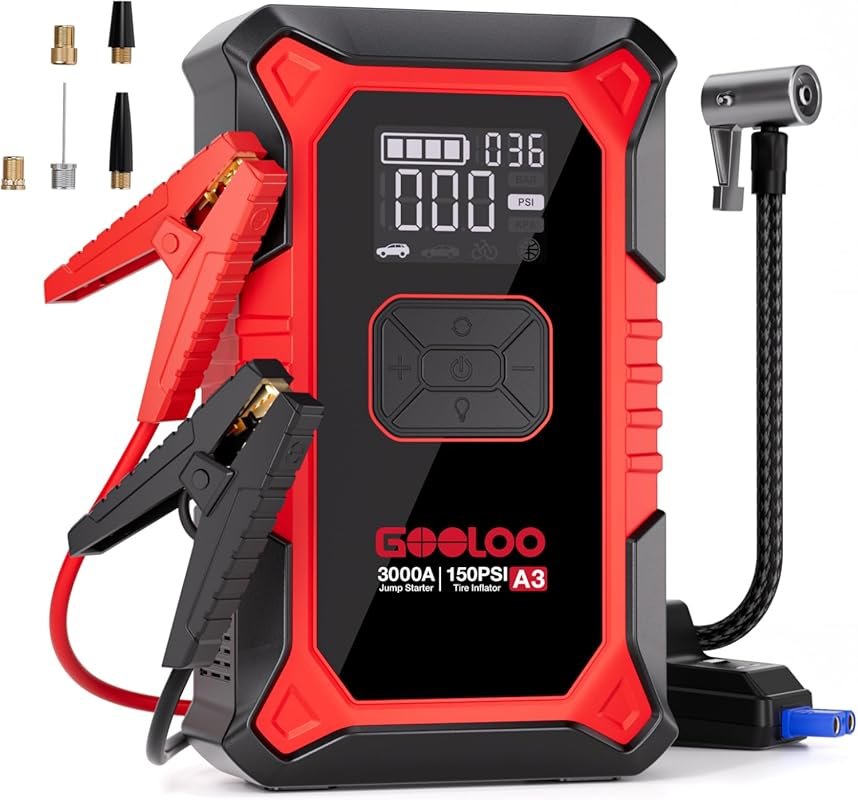 Best Overall
GOOLOO A3 3000A 12V jump starter with air compressor, 150 PSI auto-off, LED, for 9L gas/6.5L diesel.
It offers the strongest all-around mix of fit, value, and practical daily use for Volvo owners.
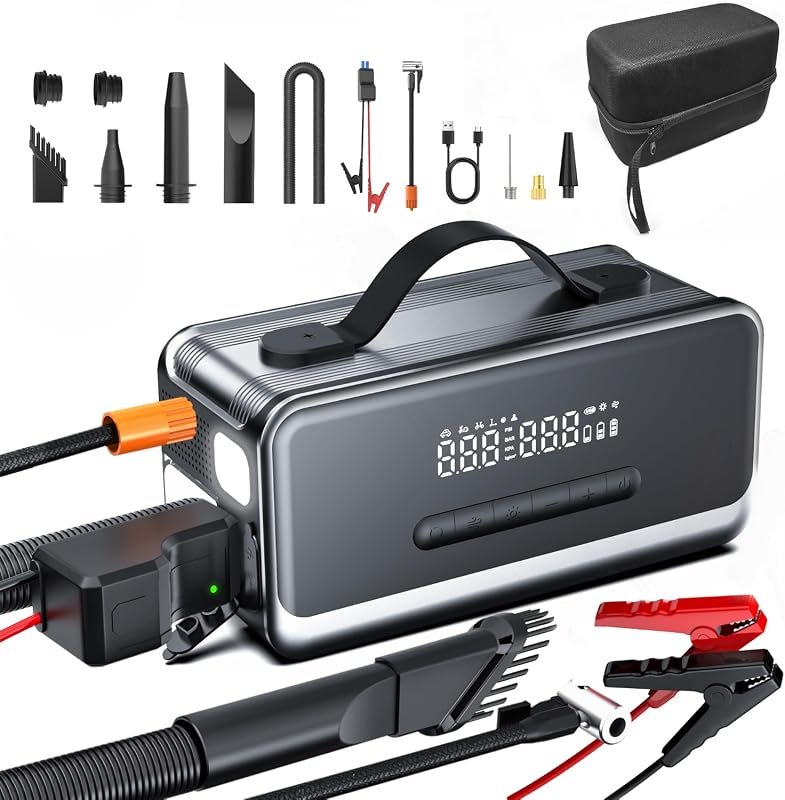 Best Value
Portable tire inflator and jump starter with auto shut-off, jumper cables, LED, for 9.0L gas/8.0L diesel.
It makes sense for owners who want a useful upgrade without paying more than necessary.
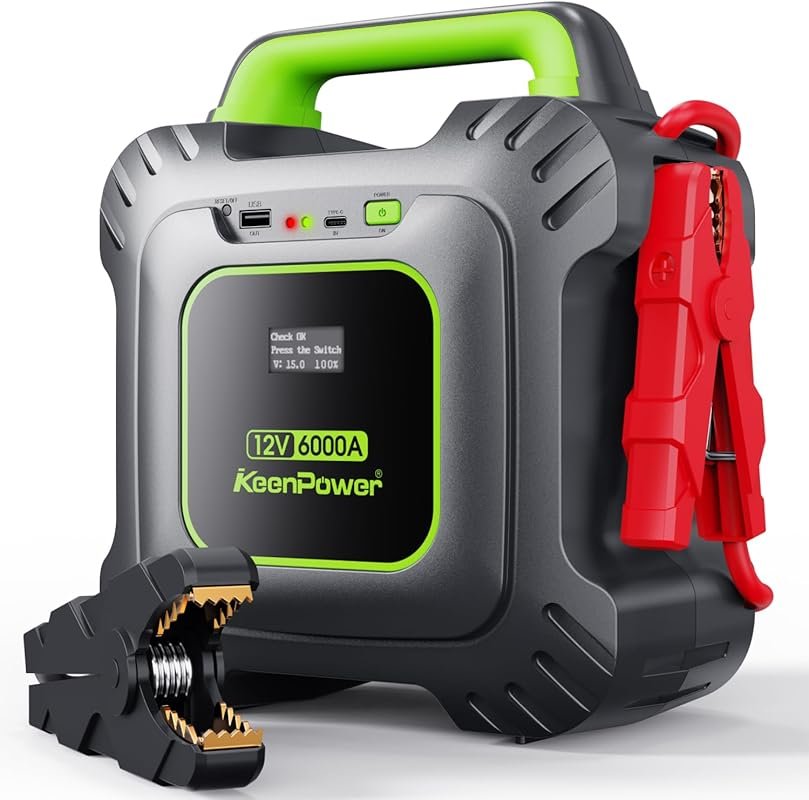 Best Premium Option
KeenPower 6000A supercapacitor jump starter for 12V cars, 1-minute fast charge, works to -45°F, no battery.
It is the pick I would compare first if build quality, features, and long-term ownership value matter most.
Author

Author

Evans Torres
I’m Evans Torres, an automotive engineer who loves Volvo cars. I graduated in Automotive Engineering from USC. I have worked in the car industry for years and now share my knowledge on The Volvo Life. I started this blog to connect with other Volvo fans. I offer tips, news, and advice to help you care for your car. My goal is to help you keep your Volvo in great shape and find all the best things about it. Join me as we discover everything Volvo has to offer!