


The 2006 Volvo XC90 V8 is not a vehicle you should reject simply because it has the 4.4-liter V8. In 2026, the bigger buying question is whether a nearly 20-year-old example has been maintained correctly, whether its six-speed Geartronic automatic and AWD system behave normally, and whether any engine noise, oil/coolant leak, electrical fault or warning message has been properly diagnosed.
Volvo’s own 2006 model information describes the XC90 V8 as using a compact, transversely mounted 4.4-liter 32-valve V8 producing about 311 hp and 325 lb-ft, paired with a six-speed Geartronic automatic transmission and AWD with Instant Traction. That is important because some online XC90 reliability discussions mix the V8 with the earlier T6 powertrain and its different transmission.
This updated guide separates documented vehicle architecture from internet assumptions. It explains what to inspect, which symptoms deserve attention, how to diagnose them safely and which tools are genuinely useful before you authorize expensive repairs.
The biggest 2006 Volvo XC90 V8 risks are age, maintenance history and the condition of the complete powertrain—not one universal fatal defect. Before buying, verify smooth six-speed Geartronic operation, scan all available modules, inspect for oil/coolant leaks, listen carefully for abnormal mechanical noise, confirm AWD/driveline operation, check 12V charging health and review the VIN for open recalls. The V8 does use a counter-rotating balancer shaft by design, but the old article’s blanket claim that high-mileage 2006 V8s are “known” for balance-shaft failure was stronger than the primary Volvo/NHTSA evidence supports.
- The 2006 XC90 V8 has a 4.4L V8, six-speed Geartronic automatic and AWD.
- Do not import the early XC90 T6 transmission reputation onto the V8. The V8 uses a different six-speed transmission architecture.
- Transmission fluid service is not a magic cure for slipping or harsh shifts. Scan and diagnose first.
- The V8 has a counter-rotating balancer shaft by design. Abnormal noise/vibration deserves inspection, but do not pre-diagnose a balance-shaft failure.
- Oil leaks should be located before gaskets are ordered. UV dye can help when the source is difficult to see.
- ECM replacement is a late-stage diagnosis. Do not disconnect the battery and call a temporary change a repair.
- A full-system scan is valuable on an older Volvo. VIDA is Volvo’s manufacturer-level service/diagnostic information platform.
- Recall status is VIN-specific. Check NHTSA rather than relying on an old recall list.

What You Are Actually Buying: 2006 XC90 V8 Powertrain
Before discussing problems, it helps to identify the hardware correctly.
| Component | 2006 XC90 V8 | Why It Matters |
|---|---|---|
| Engine | 4.4L naturally aspirated V8, 32 valves, variable valve timing | Do not mix it with five-cylinder, inline-six or later Drive-E engine advice |
| Output | About 311 hp / 325 lb-ft (U.S. specification) | Useful baseline when judging obvious loss of performance |
| Transmission | 6-speed Geartronic automatic | Different from the older XC90 T6 4-speed powertrain |
| Drive system | AWD with Instant Traction | Used-car inspection must include driveline/AWD operation, not engine only |
| Engine layout | Compact 60-degree transverse V8 architecture | Tight packaging can make diagnosis/access more involved |
| Balancer | Counter-rotating balancer shaft | Normal design feature; mechanical noise must be diagnosed rather than assumed |
When researching XC90 problems, always verify the engine/powertrain. A complaint about an early twin-turbo T6 with a four-speed automatic should not automatically be applied to the 2006 V8 with its six-speed Geartronic.
2006 Volvo XC90 V8 Problems: What Deserves the Most Attention?
The useful way to rank concerns in 2026 is by inspection value, not by repeating a generic list of “common failures.”
| Area | What to Watch For | Best First Test |
|---|---|---|
| Transmission | Harsh/delayed shifts, flare/slip, warning message, leaks | Road test + full-system scan + fluid/leak inspection |
| Engine mechanical noise | Persistent knock/rattle/whine that changes with RPM | Cold-start listen + scan + noise localization |
| Oil leaks | Burning smell, wet engine, frequent top-ups | Clean/inspect; UV dye if source is unclear |
| Cooling system | Low coolant, residue, overheating history | Visual/pressure diagnosis as appropriate |
| Misfire / ignition | Rough idle, flashing MIL, cylinder DTCs | Misfire data + plug/coil/injector/compression branch |
| AWD / driveline | Vibration, clunk, binding, AWD faults | Road test + underbody inspection + scan |
| 12V / electrical | Slow crank, multiple module faults, intermittent electronics | Battery/charging/ground testing + full-system scan |
| Suspension / steering / brakes | Clunks, play, uneven tire wear, pull, vibration | Lift inspection + road test |
1. Transmission Problems: Diagnose the Six-Speed Geartronic, Don’t Guess

The original article made transmission trouble sound almost inevitable and suggested that a fluid change could often restore smooth operation. That is too broad.
A 2006 XC90 V8 with a healthy six-speed automatic should not flare between gears, slip under load, bang into Drive/Reverse or repeatedly display transmission warnings. But those symptoms can come from several branches:
- Fluid level/condition or an external leak
- Valve-body/solenoid control
- Internal clutch wear
- Torque-converter behavior
- Electrical/TCM input faults
- Software/adaptation issues
- Engine torque/misfire problems that alter shift quality
If the transmission is already slipping, contaminated with debris or showing fault codes, diagnose the fault before applying a generic flush procedure. Use the correct Volvo fluid specification and service method for the transmission.
2. Scan the Whole Vehicle Before Buying Expensive Parts
A 2006 XC90 can store useful faults outside the engine ECU. A proper used-car inspection should look at every accessible relevant module, not just generic P-codes.
Save:
- Engine and transmission DTCs
- AWD/driveline faults
- ABS/brake faults
- Body/network communication faults
- Module-voltage history
- Misfire and fuel-trim data
- Transmission temperature/gear-related data where supported
Volvo VIDA remains the manufacturer-level reference for service information, wiring diagrams, diagnostics and supported software operations on this generation.

XTOOL D7
A professional-style all-system scan tablet with live data, freeze-frame information and bidirectional/active-test capability on supported vehicles. It is a stronger fit for an older XC90 inspection than a basic engine-only OBD reader.
3. Balance-Shaft and Mechanical-Noise Concerns: What the Evidence Actually Supports
The V8’s compact 60-degree design creates an inherent imbalance that Volvo addressed with a counter-rotating balancer shaft. That part of the engine architecture is documented by Volvo.
What should be corrected is the old article’s stronger statement that 2006 XC90 V8s are broadly “known for balance shaft failures, particularly at higher mileage,” followed by a fixed multi-thousand-dollar repair figure.
Without an engine-specific fault diagnosis, noise can also come from:
- Accessory bearings/pulleys
- Water-pump or other rotating accessories
- Timing-drive components
- Internal valve-train or bearing condition
- Mounts or driveline components transmitting vibration
- Exhaust contact or loose heat shields
A persistent cold-start or RPM-related mechanical noise is a reason for deeper inspection—not a reason to label the balancer shaft failed before the source is located.
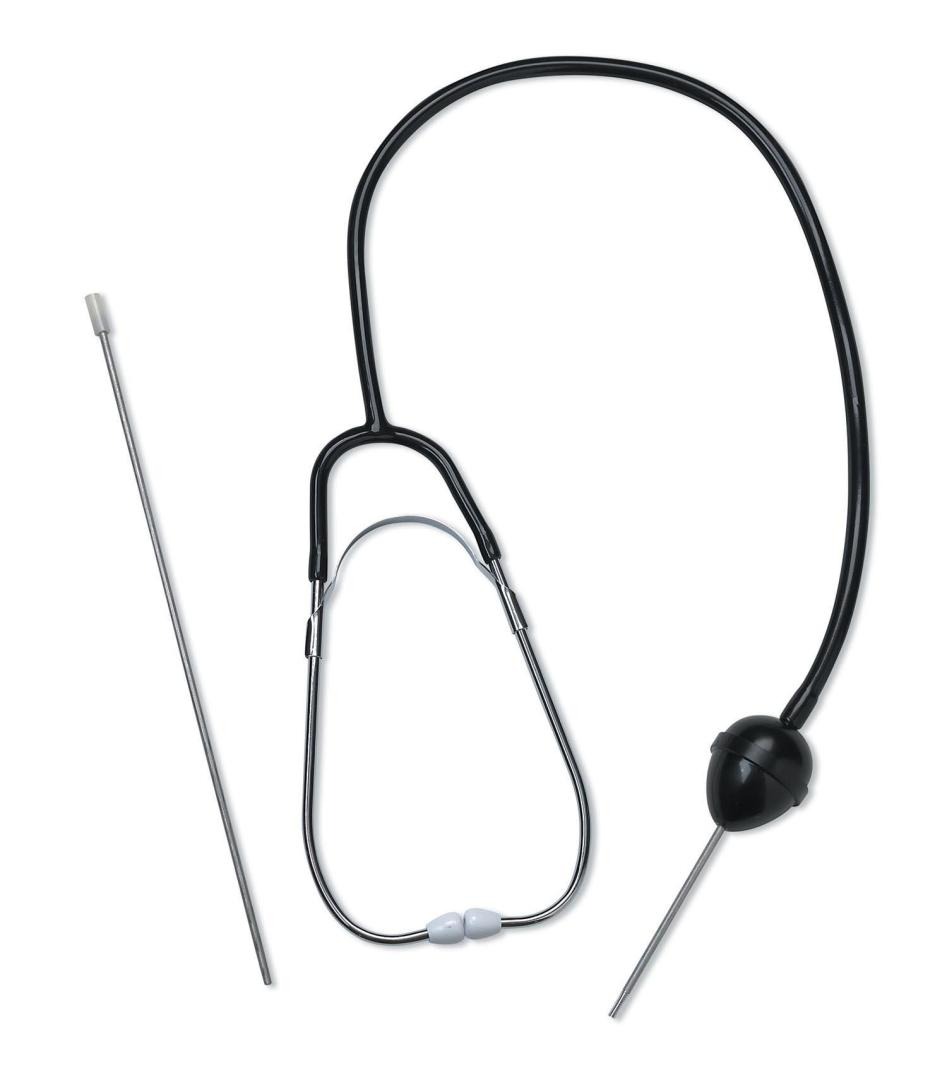
GEARWRENCH 835D Mechanic’s Stethoscope
A simple professional inspection tool designed to help locate engine/mechanical noise and identify noisy bearings, valves, pumps and other moving components. Useful for narrowing a sound before expensive teardown.
4. Oil Leaks: Find the Source Before Ordering Gaskets
On a vehicle this old, an oil leak is believable—but the exact source cannot be diagnosed from “2006 XC90 V8” alone.
The original article listed valve-cover gaskets, camshaft seals, crankshaft seals and the oil pan as though they were all established common failures. A better workflow is:
Verify the Fluid
Engine oil, transmission fluid, power-steering fluid and coolant can travel along shields/subframes and mislead you.
Clean the Suspected Area
Remove old residue so a fresh leak path can be identified.
Inspect From Highest Wet Point Down
Do not assume the lowest drip is the failed seal.
Use UV Dye When Needed
For a slow or hidden oil-based-fluid leak, compatible fluorescent dye can help trace the fresh source.

Tracer Products TP3400 UV Dye
A concentrated fluorescent dye made for circulating oil-based automotive fluids. Tracer Products lists engine oil, transmission fluid, fuel and power-steering applications, making it useful when the wet area is visible but the actual source is not.
5. Cooling-System Leaks and Overheating History
Cooling-system condition matters greatly on any older aluminum engine. Before buying, inspect the reservoir level/condition when cold and look for dried coolant residue around hoses, connections, radiator areas and the engine bay.
Red flags include:
- Repeated coolant top-up with no explanation
- Overheating history
- Sweet smell after driving
- Visible crust/residue from dried coolant
- Cooling fan or temperature-related faults
- Mixed/contaminated fluids
If the temperature warning appears or coolant is actively escaping, stop and diagnose the cause. Continued overheating can turn a manageable cooling repair into major engine damage.
6. Misfire, Ignition Coils, Spark Plugs and Fueling
A 4.4L V8 has eight cylinders, so an intermittent misfire deserves a cylinder-by-cylinder approach rather than replacing parts in bulk.
Use the fault data to determine:
- Which cylinder(s) misfire
- Whether the fault is only cold, hot or under load
- Spark-plug condition/specification
- Ignition-coil behavior
- Injector command/operation
- Fuel trims/air leaks
- Compression when the same cylinder remains weak
Do not blame the ECM simply because the Check Engine light is on. ECM failure should be considered only after power, grounds, wiring, inputs, outputs and network communication have been tested.
7. Engine Mechanical Condition: Compression Testing When the Evidence Points There
Compression testing is not necessary on every smooth-running XC90 V8. It becomes useful when you have a persistent cylinder-specific misfire, uneven cranking, unexplained loss of power, oil consumption or other evidence suggesting a sealing problem.
Compare all cylinders using consistent test conditions. If one or more cylinders are meaningfully lower, a leak-down test can help separate ring, valve or other leakage paths.
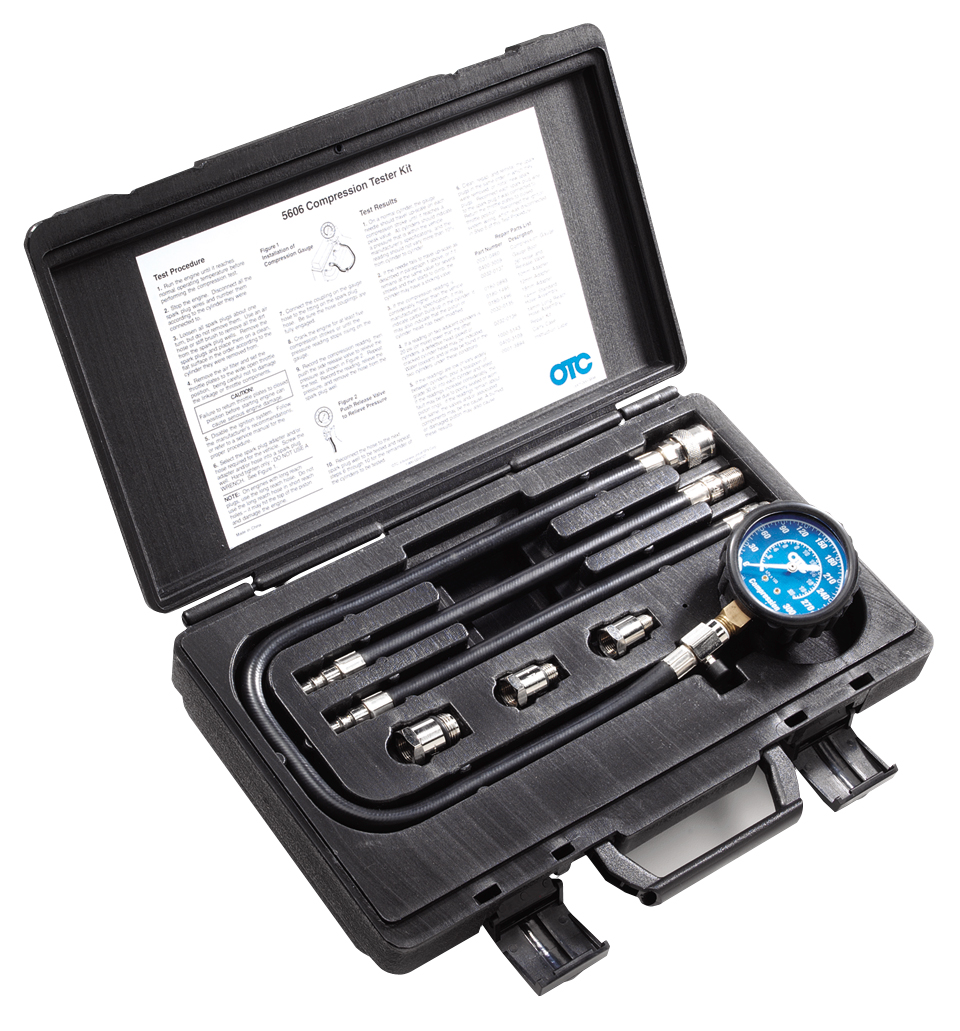
OTC 5606 Compression Tester Kit
A professional gasoline-engine compression kit with a 0–300 PSI dual-scale gauge, long flex hose and 10/12/14/18 mm adapters. It is useful when scan/ignition/fuel checks indicate that cylinder sealing needs mechanical verification.
8. AWD and Driveline Problems Can Be Mistaken for Engine/Transmission Trouble
The 2006 V8 was sold with AWD, so a complete inspection should include the driveline.
Pay attention to:
- Clunk on acceleration/deceleration
- Vibration that follows road speed rather than engine RPM
- Binding or unusual noise in tight turns
- AWD/anti-skid related warning messages
- Oil seepage around driveline components
- Evidence that mismatched tire sizes/circumferences have been used
A transmission-like thump can come from mounts or driveline play, so locate the source before authorizing internal transmission work.
9. 12V Battery, Alternator and Network/Electrical Problems
The original article called “ECM failure” a common XC90 V8 problem and suggested disconnecting the battery to reset it. That is not a safe diagnostic shortcut.
Low or unstable 12V power can create multiple communication/module symptoms. If the XC90 has intermittent warning messages, slow cranking or several unrelated DTCs, test:
- Battery state of health
- Cranking voltage behavior
- Charging output under load
- Main battery connections
- Ground voltage drop
- Relevant module power/grounds
A temporary symptom change after a power cycle does not prove the ECM was repaired. Save DTCs and diagnostic information first, then test the circuit/system that actually reported the fault.
Related guide: Volvo 12V Battery Critical Charging Fault.
10. Suspension, Steering and Brake Wear: Age Matters More Than the V8 Badge
By 2026, any 2006 XC90 is old enough that rubber bushings, mounts, ball joints, shocks/struts, wheel bearings, steering components and brake hardware deserve close inspection regardless of engine.
Check for:
- Clunks over bumps
- Loose or vague steering
- Uneven tire wear
- Pulling under braking
- Steering-wheel vibration
- Wheel-bearing hum that changes with road speed/load
- Leaking dampers
- Corroded brake/hydraulic hardware
These are condition checks for an aging SUV—not evidence that every 2006 V8 has the same suspension failure.
11. Engine Mounts and Vibration
Do not jump from “the V8 vibrates at idle” directly to a balance-shaft diagnosis.
Compare:
- Engine smoothness/misfire data
- Mount movement in Drive/Reverse with proper safety precautions
- Whether vibration changes with A/C load
- Whether the vibration follows engine RPM or road speed
- Whether exhaust/driveline parts contact the body/subframe
A worn mount can transmit normal engine vibration into the cabin and make a mechanically healthy engine feel much worse.
12. Recall and Campaign History: Check the VIN
Do not rely on a static “2006 XC90 recall list” to decide whether a particular vehicle still needs work.
NHTSA’s current recall system lets owners search by VIN or license plate and identifies unrepaired recalls for the specific vehicle where available. For a nearly 20-year-old SUV, checking the actual VIN is more useful than assuming a campaign applies—or was completed—based on model year alone.
Run the VIN through NHTSA recall lookup and ask the seller/Volvo retailer for service documentation. A recall appearing historically for the model does not tell you whether this exact XC90 is affected or whether the remedy has already been completed.
2006 XC90 V8 Pre-Purchase Inspection: 10-Step Checklist

Cold Start It
Listen before the seller warms the vehicle. Note abnormal rattle, knock, smoke, long cranking and warning messages.
Scan Every Relevant Module
Save engine, transmission, AWD, ABS and communication faults plus useful live data.
Road-Test the Geartronic Cold and Warm
Check Drive/Reverse engagement, light/medium throttle shifts and acceleration under load.
Inspect Oil and Coolant
Check level/condition and look for fresh leaks, residue or evidence of frequent top-up.
Confirm AWD/Driveline Behavior
Listen for road-speed vibration, clunks or abnormal binding/noise.
Check 12V/Charging Health
Do this especially if several unrelated electronic warnings or slow cranking are present.
Inspect Suspension, Steering and Brakes
Age-related chassis repairs can materially change the value of an inexpensive older XC90.
Check Tires as a Set
Look for matching sizes, similar tread depth and even wear on an AWD vehicle.
Run the VIN for Recalls
Confirm open safety campaigns using current NHTSA/Volvo information.
Pay for a Volvo-Specialist PPI
A pre-purchase inspection is inexpensive compared with guessing about a transmission, AWD or internal-engine problem.
What Not to Do With a 2006 XC90 V8
- Do not assume every harsh shift needs a transmission flush.
- Do not call every mechanical noise a balance-shaft failure.
- Do not replace the ECM before proving its power, ground, network and I/O.
- Do not disconnect the battery and call the result an ECM repair.
- Do not order valve-cover/cam/crank seals before locating the actual oil leak.
- Do not replace all eight coils because one cylinder misfires.
- Do not ignore an overheating event.
- Do not apply early XC90 T6 transmission advice to the V8 without checking the actual gearbox.
- Do not rely on fixed 2026 repair-cost numbers from an old article.
Preventive Maintenance for a 2006 Volvo XC90 V8

Use the maintenance history and Volvo service information for the exact vehicle rather than a one-size-fits-all interval table.
- Use the correct engine oil specification and service interval for the vehicle.
- Check engine oil/coolant levels and investigate unexplained loss.
- Use the correct transmission fluid/service procedure.
- Repair fluid leaks rather than repeatedly topping them off.
- Keep matched tires in good condition on the AWD system.
- Maintain battery/charging health to reduce voltage-related electronic faults.
- Address misfires promptly.
- Inspect suspension, steering, brakes and driveline as age/mileage accumulate.
- Use VIDA/service information for exact specifications, wiring and procedures.
Repair Cost: Why the Old Fixed Numbers Were Misleading
The old article quoted fixed prices for ECM replacement, balance-shaft repair and transmission work. Those estimates are not dependable for a 2006 XC90 in 2026.
| Repair Area | What Actually Drives the Cost |
|---|---|
| Transmission | Fluid/leak/control fault vs valve body vs internal rebuild/replacement |
| Oil leak | Exact source, access time and whether multiple seals/components are involved |
| Mechanical engine noise | Accessory/mount/timing/internal source and required access |
| ECM/module | Diagnosis, replacement availability, software/configuration requirements |
| Cooling system | Hose/connection/radiator/fan vs internal engine consequence |
| AWD/driveline | Mount/joint/bearing vs AWD coupling/gear hardware |
| Suspension/steering | Single wear item vs accumulated multi-component refresh |
Diagnose first, then compare written all-in quotes for the confirmed repair.
Is the 2006 Volvo XC90 V8 Reliable?
It can still be a satisfying older SUV, but “reliable” in 2026 depends more on the individual vehicle than on the original brochure.
A strong candidate has:
- Documented service history
- Smooth cold/hot transmission operation
- No unexplained oil/coolant loss
- No abnormal persistent engine noise
- No unresolved AWD/ABS/network faults
- Healthy 12V/charging system
- Good suspension/brake condition
- Matching tires
- Recall history checked by VIN
A neglected example with several warning messages, harsh shifting, active leaks and no records can quickly cost more to sort than its purchase price suggests.
Related Volvo XC90 Guides
💡 Evans Torres Tip: On every Volvo I have owned, I always keep a full digital service record from day one. When something goes wrong — and eventually something always does — having that history makes diagnosis faster and often saves money at the mechanic. Start your records today, even if the car is not new.
Frequently Asked Questions
Check transmission shift quality, leaks, abnormal engine noise, cooling history, misfire faults, AWD/driveline behavior, 12V electrical health and age-related suspension/steering/brake wear. Use a full scan and inspection rather than assuming one universal V8 defect.
Volvo’s U.S. model information lists a transversely mounted 4.4L 32-valve V8 producing about 311 hp and 325 lb-ft, paired with a six-speed Geartronic automatic and AWD.
No. The 2006 V8 was paired with a six-speed Geartronic automatic. Do not automatically apply the earlier twin-turbo T6/four-speed transmission reputation to the V8.
Yes. Volvo’s technical description of the compact 60-degree V8 explains that a counter-rotating balancer shaft is used to cancel the engine layout’s inherent imbalance. A balancer shaft is part of the design, but abnormal noise still needs source-specific diagnosis.
Do not assume a fluid change will fix slipping, flare or harsh shifts. Check DTCs, fluid/leak condition and transmission behavior first, then use the correct Volvo service procedure for the confirmed fault/maintenance need.
Oil leakage is plausible on any vehicle of this age, but the source must be inspected. Do not order a generic list of valve-cover, camshaft, crankshaft and oil-pan seals without finding the highest fresh leak point.
Do not label the ECM failed from symptoms such as misfire, poor starting or a Check Engine light. Verify module power/grounds, wiring, communication, sensor inputs and controlled outputs before condemning an ECM.
Not as a generic diagnostic fix. Save DTCs and fault context first. A power cycle can temporarily change symptoms but does not repair a leaking, mechanical, wiring, sensor or module fault.
Use the 17-character VIN with the current NHTSA recall lookup and confirm any Volvo campaign history with a Volvo retailer. VIN lookup is more useful than assuming every recall for the model year applies to your exact vehicle.
It can be if the individual SUV has strong records, smooth transmission operation, no serious leaks/noise, functioning AWD, healthy electronics and a clean specialist inspection. Condition and deferred maintenance matter more than the V8 badge alone.
Sources & Verification
Primary and Product Sources Used for This 2026 Update
- Volvo Cars USA — 2006 XC90 V8 Model Overview / 4.4L V8 / Six-Speed Geartronic
- Volvo Cars — V8 Technical Design / 60-Degree Layout / Counter-Rotating Balancer Shaft
- Volvo Tech Info — VIDA Vehicle Information and Diagnostics for Aftersales
- NHTSA — Recall Lookup by VIN
- XTOOL — D7 Full-System / Bidirectional Diagnostics
- Tracer Products — TP3400 UV Fluorescent Dye for Oil-Based Automotive Fluids
- GEARWRENCH — 835D Mechanic’s Stethoscope
- OTC Tools — 5606 Gasoline Compression Tester Kit
Final Verdict
The 2006 Volvo XC90 V8 is best treated as a condition-sensitive older luxury SUV, not as a vehicle with one guaranteed catastrophic flaw.
Volvo’s original specifications show a 4.4L V8, six-speed Geartronic and AWD package that is distinct from the early T6 powertrain. The balancer shaft is part of the V8 design, but the old article overstated the evidence by turning it into a near-default high-mileage failure diagnosis.
Before buying or authorizing major work, scan the whole vehicle, road-test the transmission cold and warm, locate leaks, verify cooling/charging health, listen carefully for mechanical noise and check AWD/driveline behavior. For a nearly 20-year-old XC90, a detailed pre-purchase inspection and service history are worth more than an internet “common problems” checklist.
My Top Picks at a Glance
For this 2006 XC90 V8 problem/used-buyer keyword, these three products cover the highest-value diagnostic jobs: full-system fault data, hard-to-trace oil-based-fluid leaks and mechanical cylinder-condition verification. The mechanic’s stethoscope above remains the targeted pick for noise localization.
PREMIUM ALL-SYSTEM PICK
XTOOL D7
A professional all-system diagnostic tablet with live data and supported bidirectional tests. It is the strongest overall purchase here when an older XC90 has engine, transmission, AWD or network faults that a generic reader may miss.
OIL-LEAK DIAGNOSTIC PICK
Tracer Products TP3400 UV Dye
A professional fluorescent leak-detection dye for oil-based automotive systems. Particularly useful on an older V8 when oil/fluid residue is visible but the source is hidden or travels before it drips.
ENGINE-CONDITION TEST PICK
OTC 5606 Compression Tester
A professional-quality 0–300 PSI gasoline compression kit with long hose and multiple thread adapters. Best used when misfire or performance data points toward a possible cylinder-sealing issue rather than as a routine first test.
