


If your Volvo Auto Start Stop is not working, it may be completely normal. Volvo only allows the engine to auto-stop when a long list of operating conditions is satisfied. Battery charge, engine temperature, cabin climate demand, ambient temperature, seat-belt status, hood position, steering input, braking events, transmission temperature, trailer connection and several other conditions can temporarily make Start/Stop unavailable.
That means the correct first question is not “Which sensor is broken?” It is: Is Start/Stop unavailable because the car is protecting comfort, battery charge or driveline operation—or is the vehicle actually showing a Start/Stop fault?
This updated 2026 guide explains the difference, shows how to test the battery and support-battery branch correctly, covers the operating conditions Volvo documents, and explains what to do if your dashboard says Auto Start/Stop Service required.
Volvo Auto Start Stop not working does not automatically mean something is broken. On current Volvos, the driver display can show Start/Stop as active, available-but-not-active, or unavailable. On earlier S60-era documentation, Volvo lists normal inhibiting conditions such as low starter-battery capacity, engine not at operating temperature, very hot/cold ambient temperature, strong climate demand, reverse gear, hard steering input, steep road, ABS/heavy braking, high electrical load, trailer connection and transmission temperature. If the car specifically displays Auto Start/Stop Service required, Volvo says the function is not operating properly and workshop diagnosis is recommended.
- Unavailable is not the same as failed. Many normal conditions temporarily inhibit Start/Stop.
- Battery health matters, but one resting-voltage number is not enough. Test state of health, cranking and charging behavior.
- Older Start/Stop Volvos may have a separate 12V support battery. A weak main or support battery can affect system availability.
- Short trips and high electrical demand can keep battery charge below the system’s required threshold.
- Climate demand can keep the engine running. Volvo documents cabin temperature/humidity and windshield heating as Start/Stop conditions on applicable generations.
- Seat belt, hood, trailer and transmission conditions matter. Do not replace sensors until scan data points to a real input fault.
- “Auto Start/Stop Service required” is a real fault message. That is different from a normal unavailable-status icon.
- Never open the hood while the engine is only auto-stopped. Volvo warns to switch the engine off normally first.
Start/Stop is designed to reduce fuel use and emissions by switching the engine off during suitable brief stops and restarting it when the vehicle needs to move again.
Current 2026 Volvo support shows three basic states in the driver display:
| Status | What It Means | What You Should Do |
|---|---|---|
| Active | Engine is temporarily auto-stopped | Normal operation |
| Available, not active | Feature is ready but current driving conditions have not triggered auto-stop | Normal operation |
| Unavailable | One or more required conditions are not satisfied | Check operating conditions before assuming a fault |
| Auto Start/Stop Service required | System fault on supported older Volvo message sets | Save DTCs and diagnose the system |
On a current XC60, Volvo explicitly lists an unfastened driver seat belt, an open hood and an electrically connected trailer as conditions that make Start/Stop unavailable. Earlier SPA-era Volvo documentation lists many additional temporary conditions.
If there is no warning message and the car otherwise behaves normally, first verify whether the system is simply being inhibited by operating conditions. Do not start replacing the battery, brake sensor or temperature sensor from one missed auto-stop.
1. Main 12V Battery Charge or Health Is Too Low
Battery condition is one of the most important Start/Stop inputs. Volvo documentation states that when starter-battery capacity drops below the minimum permitted level, Start/Stop is disengaged or temporarily limited.
But the old rule “12.6V = good, below 12.4V = replace” is too simplistic. A resting-voltage reading can be influenced by recent charging, temperature, surface charge and battery chemistry.
A better battery diagnosis checks:
- Correct battery type and rating
- State of charge
- State of health / measured cranking capability
- Voltage behavior during starting
- Charging-system performance
- Terminal and ground condition
- Whether battery-registration/reset procedures apply after replacement

Autel MaxiBAS BT608
A premium battery/electrical diagnostic tablet that tests Flooded, AGM, AGM Spiral, EFB and GEL batteries, supports 100–3000 CCA battery testing, cranking/charging-system diagnosis, battery registration and all-system code reading on supported vehicles.
2. Older Volvos May Have a Separate Start/Stop Support Battery
On applicable older S60/V60-era Start/Stop systems, Volvo documents two 12V batteries: the main starter battery plus a support battery that assists during the Start/Stop starting sequence.
That creates an important diagnostic trap. The main battery can appear acceptable while the support-battery branch still has a problem.
Volvo also specifies generation-dependent battery chemistry. On some older applications, the main battery can be EFB or AGM depending on gearbox/application, while the support battery is AGM. Do not buy a replacement from a generic “Volvo battery size” list.
Not every modern mild-hybrid Volvo uses the same two-12V-battery architecture as older P3/SPA Start/Stop cars. Use the VIN/model-year battery documentation before locating or replacing a “support battery.”
3. Short Trips and High Electrical Load Can Keep Start/Stop Disabled
Start/Stop requires enough reserve battery capacity to restart the engine reliably and support vehicle electronics while the engine is off.
Common situations that can leave charge lower than the system wants include:
- Repeated short journeys
- Frequent cold starts
- Heated seats, heated windows and high blower use
- Long periods parked followed by short drives
- Recent jump-start or deeply discharged battery
- Battery that is aging even though the car still starts
Volvo specifically notes that high electrical current consumption can temporarily limit Start/Stop and cause the engine to restart even while the driver keeps the brake pedal pressed.

ANCEL BM300 Pro
A low-draw Bluetooth battery monitor for 6V/12V/24V systems that records voltage, cranking and charging behavior and can retain up to 72 days of battery history. It supports Flooded, AGM, Gel and EFB lead-acid batteries.
4. Battery Needs Charging After Discharge or Jump-Starting
If the battery has been heavily discharged or the vehicle has recently been jump-started, Start/Stop may remain unavailable until battery charge recovers.
Older Volvo support documentation specifically recommends charging the battery when capacity is inadequate for reliable auto-start operation.
On applicable Volvo Start/Stop systems, Volvo warns not to attach the external charger’s negative clamp directly to the starter battery’s negative terminal. Use the vehicle’s specified negative/chassis charging point. Always follow the exact owner-manual charging procedure for your model.
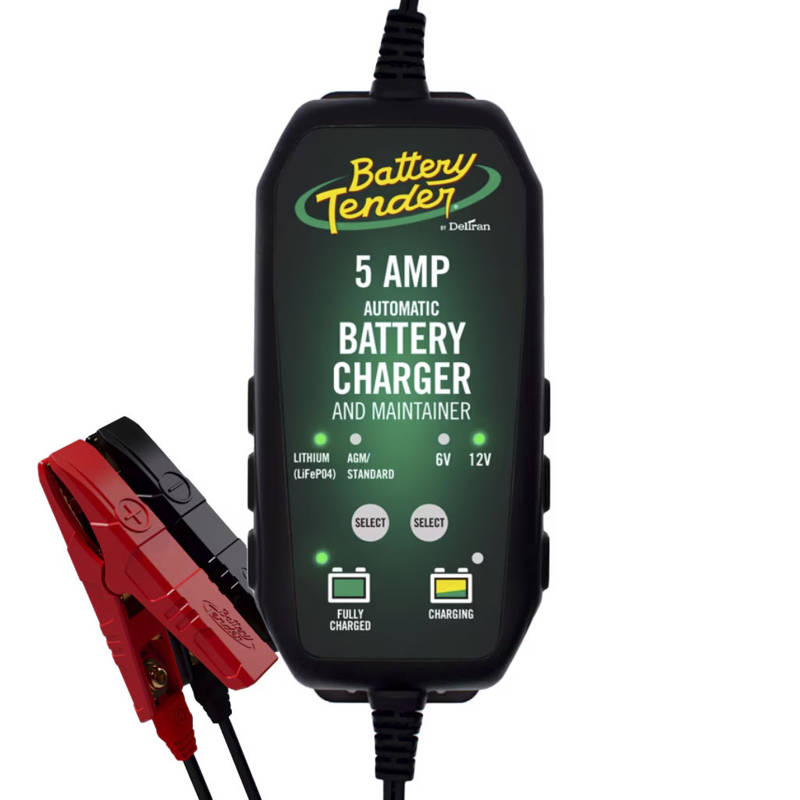
Battery Tender 5 Amp Power Tender
A 5A automatic charger/maintainer for 6V/12V batteries with automatic charge-and-maintain operation. It is a practical garage option for restoring/maintaining charge when repeated short-trip use leaves a compatible Volvo lead-acid battery undercharged.
5. Engine Is Not at Normal Operating Temperature
Volvo documents engine temperature as a normal Start/Stop condition. A cold engine may continue running instead of auto-stopping until operating conditions are suitable.
This is especially relevant when:
- The trip is only a few minutes long.
- The vehicle has just been started in cold weather.
- The engine has recently been under unusual thermal load.
- A coolant-temperature or thermostat fault prevents normal warm-up.
If Start/Stop stays unavailable after a fully warmed drive and a coolant-temperature DTC or implausible live data is present, diagnose the temperature circuit. Do not replace the temperature sensor because Start/Stop did not activate on one cold morning.
6. Outside Temperature Is Too Hot or Too Cold
Earlier Volvo Start/Stop documentation gives approximate ambient-temperature limits. Depending on generation, the feature may be inhibited around very cold conditions and above roughly 30°C (86°F).
The exact limit is not universal across every Volvo. Treat temperature as an operating condition, not a fixed fault threshold for all years.
7. Climate Control, Windshield Heating or Cabin Demands Need the Engine
Start/Stop may keep the engine running—or restart it while you are still holding the brake—when cabin comfort requires more heating, cooling, demisting or electrical power.
Volvo documents examples including:
- Cabin temperature differs significantly from the selected setting.
- High humidity is causing windshield fogging.
- Electric windshield heating is active on applicable cars.
- Electrical load temporarily lowers battery reserve.
If Start/Stop works on a mild-weather drive with moderate climate settings but stays unavailable during maximum heat/defrost demand, that pattern can be normal. Do not disable climate functions when visibility or comfort requires them just to force Start/Stop to operate.
8. Seat Belt, Hood, Door or Trailer Condition
These inputs are easy to overlook.
Current Volvo documentation explicitly states that Start/Stop can be unavailable when:
- The driver is not wearing a seat belt.
- The hood/bonnet is open.
- A trailer is electrically connected.
Older generation documentation also includes driver-door and gear-selector conditions for automatic restart behavior.
If the car falsely believes the hood is open or the driver is unbelted, then a latch/switch/wiring diagnosis may be needed. But scan live status first—do not “clean every sensor” as the old article suggested.
9. Reverse, Steering Input, Hill, ABS or Heavy Braking Can Inhibit Auto-Stop
Earlier SPA S60 documentation lists several driving conditions that can prevent auto-stop:
- Reverse gear selected
- Large steering-wheel movements
- Very steep road
- Recent ABS activation
- Heavy braking
- Repeated Start/Stop events triggering starter thermal protection
These are examples of the control system deciding that keeping the engine running is preferable to stopping it.
10. Transmission Temperature or Gear-Selector Position
On applicable earlier automatic-transmission Volvos, Start/Stop may be inhibited until transmission operating temperature is suitable. Some older systems also list manual shift mode (M) as an inhibiting condition.
If the car has transmission DTCs, abnormal shifting or a temperature warning, diagnose the gearbox fault first rather than treating Start/Stop as an isolated system.
11. Diesel Particulate Filter Regeneration / DPF Condition
On diesel Volvo applications, Start/Stop conditions can include particulate-filter status. Earlier Volvo documentation lists a full particulate filter among conditions that prevent auto-stop.
If your diesel also has a soot-filter message, regeneration problem or exhaust-system DTC, that diagnostic branch takes priority.
12. “Auto Start/Stop Service Required” Means Something Different
A normal unavailable status and a service-required message should not be confused.
On supported older S60/XC60 message sets, Volvo defines:
Auto Start/Stop Service required — Start/Stop is not operational / not functioning properly.
If this message appears:
- Photograph the exact message.
- Scan all relevant modules before clearing anything.
- Save current/stored DTCs and freeze-frame/live data.
- Check 12V power and battery-system faults.
- Check hood, brake, transmission and other input faults only if the DTC/live data points there.
- Use Volvo-specific service information if a software, calibration or support-battery procedure is required.

XTOOL D7W
A wireless full-system diagnostic tablet with bidirectional controls, live-data graphing, CAN FD/DoIP support and 39+ service functions on supported vehicles. It is far more useful for a genuine Start/Stop service message than an engine-only code reader.
For a dedicated fault-message guide, see What Does Start/Stop Service Required Mean on Volvo?.
13. Brake Pedal or Sensor Fault: Diagnose It Only When Evidence Points There
The old article broadly blamed brake-pedal sensors and even low brake fluid for Start/Stop failure. That is too general.
Brake input matters because the system uses brake-pedal status to activate/deactivate auto-stop on automatic-transmission cars. But a brake-sensor fault should normally be supported by:
- A brake-switch or pedal-sensor DTC
- Implausible live brake-pedal status
- Brake lights behaving incorrectly
- Other braking/ABS warnings
Low brake fluid is a braking-system safety issue that requires its own diagnosis. Do not treat it as a routine Start/Stop “fix” or top-off the reservoir simply to make Start/Stop return.
14. Software Can Matter—but Do Not Use a Universal Update Menu
Volvo generations use different infotainment, control modules and software-delivery methods. A generic instruction such as “Settings → Software Update” does not apply to every Start/Stop-equipped Volvo.
A better workflow is:
- Save DTCs and battery information first.
- Verify that the basic operating conditions are satisfied.
- Repair power/wiring/sensor faults supported by evidence.
- Check Volvo software/service information for the exact VIN.
- Update/calibrate only when the applicable Volvo procedure calls for it.
15. Start/Stop Safety: The Engine Can Restart Automatically
Volvo warns that when Start/Stop is active, the engine can restart automatically. Do not treat an auto-stopped engine as a safely switched-off engine before working in the engine compartment.
This is also why random under-hood “sensor cleaning” while the system is active is inappropriate.
8-Step Diagnostic Workflow for Volvo Auto Start Stop Not Working
Check the Driver-Display Status
Is Start/Stop simply unavailable, or is there an actual Service required message?
Recreate Normal Operating Conditions
Warm engine, driver belted, hood closed, no trailer, moderate climate demand and normal driving conditions.
Consider Recent Driving Pattern
Repeated short trips, a recent jump-start or long parking period can leave battery reserve too low for Start/Stop.
Test the Battery System Properly
Use battery type/rating, state-of-health, cranking and charging tests—not a single resting-voltage rule.
Check for a Support Battery if Your Volvo Uses One
Use model-year/VIN documentation rather than assuming every Volvo has the same dual-battery layout.
Scan if the System Still Does Not Work
Save DTCs from engine, battery/power-management, ABS/brake, transmission and body systems as supported.
Follow the Fault Data
Repair the battery, switch, wiring, temperature, transmission or software branch that the evidence identifies.
Verify Under the Same Conditions
After repair/charging, confirm Start/Stop returns during an appropriate fully warmed drive without a service message.
What Not to Do
- Do not replace a battery only because resting voltage is below an internet threshold.
- Do not assume every Volvo has a dashboard Start/Stop on/off button.
- Do not clean random sensors with a cloth or chemical spray.
- Do not top up brake fluid as a Start/Stop fix without diagnosing why the level is low.
- Do not disconnect the battery just to “reset” Start/Stop.
- Do not attach a charger to the wrong negative point on a Volvo that specifies a dedicated grounding/charging point.
- Do not replace a support battery without confirming that your exact Volvo has one and what type it requires.
- Do not clear a Service required DTC before saving it.
- Do not open the hood while the engine is only auto-stopped.
When to Seek Professional Help
- The driver display says Auto Start/Stop Service required.
- The Start/Stop system remains unavailable after the battery is fully charged and normal operating conditions are met.
- There are battery-management, support-battery or communication DTCs.
- The car has ABS/brake, transmission or engine-temperature warnings.
- The battery was replaced but Start/Stop never returned.
- A support battery or battery-registration procedure is uncertain.
- There are repeated low-voltage problems despite charging.
- The system fails to restart the engine normally after an auto-stop.
Preventive Habits That Help Start/Stop Work Reliably
There is no need for an invented “battery every six months, alternator annually” schedule. Instead:
- Follow the Volvo service schedule for the exact model/year.
- Use the correct main/support battery type when replacement is needed.
- Avoid leaving a marginal battery undercharged for long periods.
- Use an appropriate charger for vehicles that sit for extended periods.
- Keep battery terminals and main grounds in good condition.
- Investigate repeated low-voltage or charging-system warnings.
- Use the correct Volvo charging/jump-start points.
- Do not ignore a Start/Stop service message that keeps returning.
Related Volvo Guides
💡 Evans Torres Tip: On every Volvo I have owned, I always keep a full digital service record from day one. When something goes wrong — and eventually something always does — having that history makes diagnosis faster and often saves money at the mechanic. Start your records today, even if the car is not new.
Frequently Asked Questions
It may be normal. Volvo inhibits Start/Stop when required operating conditions are not satisfied, including battery reserve, temperature, climate demand and several driver/vehicle conditions. If the dashboard says Service required, scan and diagnose the system.
Yes. Volvo states that Start/Stop can be disengaged or limited when starter-battery capacity falls below the minimum allowed level. Test battery health and charging behavior rather than using one resting-voltage number.
Some older Start/Stop Volvos use a main 12V starter battery plus a separate 12V support battery. The architecture and battery specifications vary by model year, so verify your VIN/manual before buying a support battery.
It can. Volvo documentation lists low ambient temperature, battery temperature and an engine that has not reached operating temperature among conditions that may inhibit auto-stop on applicable generations.
Yes. If the cabin climate differs significantly from the selected temperature, or demisting/heating requires additional power, Volvo may keep the engine running or restart it automatically.
On supported older Volvo message sets, it means Start/Stop is not operating properly. Volvo recommends workshop/service diagnosis rather than treating it as a normal temporary inhibition.
If low battery charge is the reason Start/Stop is being inhibited, restoring charge can allow the system to return. But charging will not fix a failing battery, support-battery fault, sensor/wiring issue or other stored system fault.
That can be normal. Volvo documents automatic restart during increased climate demand, window demisting, high electrical load or a battery-charge drop, among other conditions.
There is no generic Start/Stop “sensor cleaning” procedure. Diagnose the exact input or DTC first. Hood, brake, temperature and battery-management inputs are different components with different service procedures.
No. Volvo warns that the engine can restart automatically. Switch the engine off normally before opening the hood or working in the engine compartment.
Sources & Verification
Primary and Current Sources Used for This 2026 Update
- Volvo Support US — 2026 XC90 Activating Start and Stop
- Volvo Support — 2026 XC60 Start/Stop Availability Conditions
- Volvo Support — S60 Conditions for the Start/Stop Function
- Volvo Support — S60 Start/Stop Main and Support Battery
- Volvo Support — Auto Start/Stop Service Required Message
- Autel — MaxiBAS BT608 Battery & Electrical System Analyzer
- ANCEL — BM300 Pro Battery Monitor
- Battery Tender — Power Tender 5 Amp Charger/Maintainer
- XTOOL — D7W Full-System Wireless Diagnostic Scanner
Final Thoughts
Volvo Auto Start Stop not working is frequently a normal operating condition, not a failure.
Before buying parts, make sure the engine is warm, the driver is belted, the hood is closed, climate/electrical demand is reasonable and the battery system has enough charge. On applicable older cars, remember that a separate support battery may also be involved.
If the dashboard says Auto Start/Stop Service required, or the system remains unavailable after normal operating conditions and battery charge are confirmed, scan the vehicle and follow the actual fault data.
The most common diagnostic mistake is replacing a battery or sensor from one missed auto-stop. The better approach is to separate normal inhibition from real system failure.
My Top Picks at a Glance
For this Start/Stop keyword, these three products cover the highest-value tasks: professional battery/electrical diagnosis, restoring/maintaining charge on a compatible battery, and full-system fault diagnosis when a genuine Service required message appears.
PREMIUM START/STOP BATTERY PICK
Autel MaxiBAS BT608
A professional battery/electrical platform that supports AGM, EFB and other common lead-acid battery types, performs cranking/charging tests, battery registration and broad system code reading on supported vehicles.
POPULAR CHARGER / MAINTAINER PICK
Battery Tender 5 Amp Power Tender
A well-established automatic charger/maintainer with strong marketplace review/rank history. A practical choice for compatible 12V lead-acid batteries that spend too much time undercharged from short-trip use.
PREMIUM FULL-SYSTEM DIAGNOSTIC PICK
XTOOL D7W
A wireless full-system scanner with live data, bidirectional controls, CAN FD/DoIP support and extensive service functions. Best suited to a genuine Start/Stop service message where battery, engine, brake, transmission or body-system DTCs need to be compared.

Good Effort, You can still do better!