


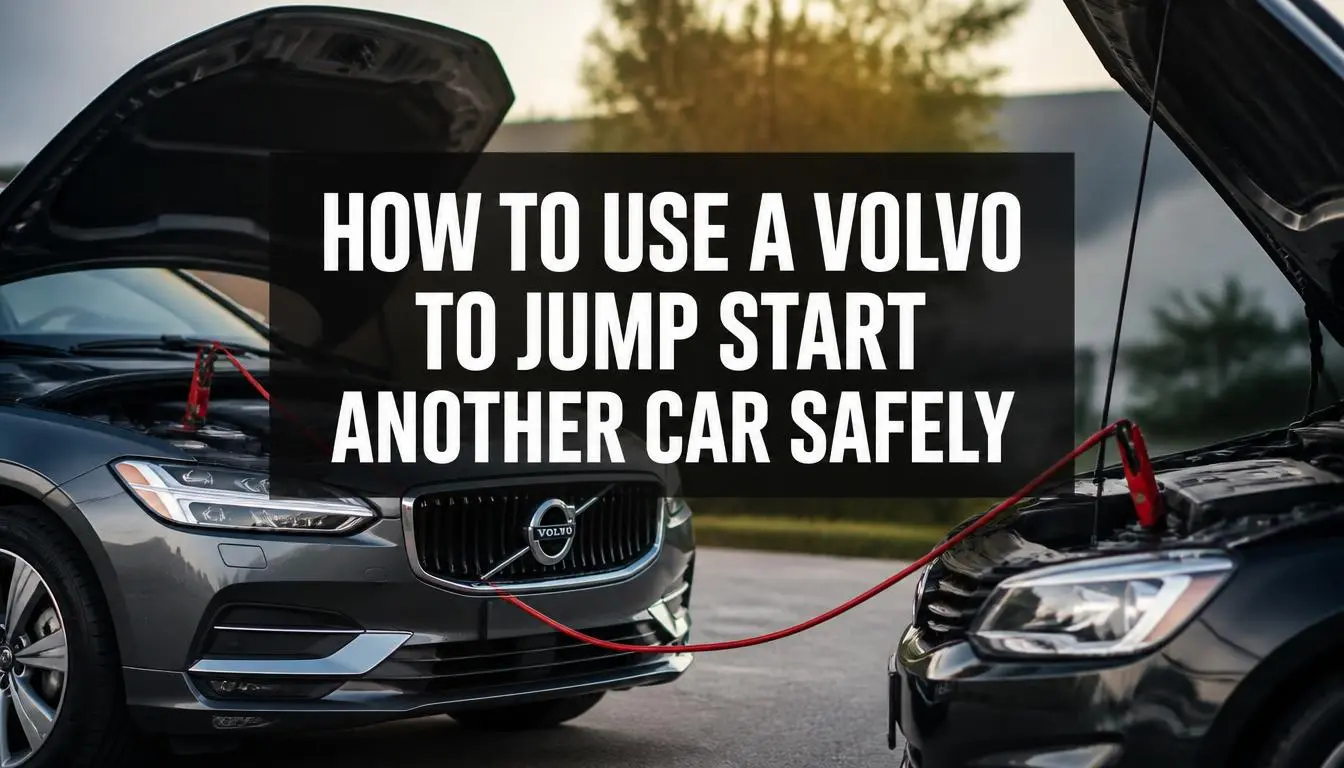
QUICK ANSWERYou can use a Volvo to jump start another 12-volt car by parking both vehicles safely, keeping them from touching, connecting the jumper cables in the correct order, starting the Volvo, then starting the dead vehicle. Always use the correct jump points listed in the Volvo owner manual. If the other car has battery damage, wrong voltage, hybrid high-voltage concerns, or repeated no-start problems, get professional help.
Using your Volvo to jump start another car sounds simple, but it needs care because modern Volvo vehicles use sensitive electronics, control modules, battery monitoring systems, and safety features. As Evans Torres, I always tell Volvo owners to treat jump starting as an electrical procedure, not just a roadside trick. This guide explains how to use a Volvo to jump start another car, where to connect jumper cables, what mistakes to avoid, which Volvo models need extra care, and when not to help. It applies mostly to modern Volvo XC90, XC60, XC40, S60, S90, V60, and similar 12-volt systems in the USA.
KEY TAKEAWAYS
- Main point: A Volvo can usually jump start another 12-volt vehicle if you use the proper jump points and cable order.
- Most likely risk: Wrong cable connection, wrong voltage, or touching vehicles can damage electronics or cause sparks.
- Best first step: Check both owner manuals and confirm both vehicles use a compatible 12-volt system.
- Estimated cost: Usually $0 if you already own jumper cables, but damage from mistakes can become expensive.
- When to seek help: Call roadside assistance if the battery is leaking, frozen, swollen, or the vehicle has high-voltage warnings.
Quick Facts
- Common Cause: The other car has a weak or discharged 12-volt battery.
- Typical Fix: Safe jumper cable connection using the Volvo’s approved jump start points.
- Difficulty: Easy to Moderate.
- Estimated Cost: $0-$150 for cables or a portable jump starter.
- DIY Friendly: Yes, if both vehicles are 12-volt and the batteries are not damaged.
What This Procedure Means
Using a Volvo to jump start another car means your Volvo’s 12-volt electrical system temporarily assists a discharged battery in another vehicle. The goal is not to fully recharge the other battery. The goal is to provide enough electrical support so the other engine can crank and start. Volvo’s own jump-starting guidance emphasizes careful connection order, correct terminals, and preventing the vehicles from touching while cables are connected. This matters because a modern Volvo has more electronic modules than older cars. A careless jump start can create voltage spikes, sparks, blown fuses, or warning messages. The process is safe when done correctly, but it should never be rushed.
Volvo Support states that when using another vehicle as an auxiliary battery source, the vehicles should not touch each other, and drivers should follow the jump-starting instructions carefully. You should also follow the other vehicle’s manual because cable connection points can vary by make and model. For official Volvo guidance, review Volvo Support jump-starting instructions.
When You Should and Should Not Jump Start Another Car With a Volvo
Before connecting anything, decide whether jump starting is actually safe. A normal dead 12-volt battery is usually a good candidate. A damaged, leaking, swollen, frozen, or smoking battery is not. If the other vehicle has a strong fuel smell, visible wiring damage, or unclear battery voltage, do not connect your Volvo. The same rule applies if the other vehicle is a hybrid, EV, commercial truck, or modified vehicle and you are not sure where the 12-volt jump points are. Modern vehicles can have hidden batteries and remote terminals, so guessing is risky. When in doubt, use roadside assistance instead of exposing your Volvo to electrical damage.
| Situation | Safe to Try? | Best Action |
|---|---|---|
| Other car has a normal weak 12V battery | Usually yes | Use correct jump points and cable order. |
| Battery is leaking, swollen, cracked, or frozen | No | Call roadside assistance or a mechanic. |
| Vehicles are touching each other | No | Reposition before connecting cables. |
| Other vehicle voltage is unknown | No | Check the manual first. |
| Hybrid or EV with unclear jump points | Only if manual confirms | Follow the exact manufacturer procedure. |
| Repeated no-start after jump | No | Diagnose battery, starter, alternator, or electrical system. |
If the battery looks unsafe or the vehicle type is unclear, do not take the risk. A safe refusal is better than damaging your Volvo or injuring someone during a roadside repair.
Common Volvo Models Used for Jump Starting
Many Volvo owners ask this question because the battery location is not always obvious. Some Volvo models have batteries under the cargo floor, in the trunk area, or under covers, while the jump-start points may be located in the engine compartment. This is why I do not recommend attaching cables randomly to whatever terminal looks available. Whether you drive an XC90, XC60, XC40, S60, S90, or V60, check the owner manual for the approved positive terminal and ground point. Recharge and mild-hybrid models may have additional warnings. The safest method is always model-specific, even when the general jumper cable logic is similar.
| Volvo Model | What to Check First | Owner Tip |
|---|---|---|
| Volvo XC90 | Engine bay jump points and manual instructions | Battery location may not be the same as cable connection point. |
| Volvo XC60 | 12V support battery procedure | Use Volvo’s listed jump-starting point, not random metal parts. |
| Volvo XC40 | Recharge or gas model differences | Confirm instructions if the car is electric or plug-in hybrid. |
| Volvo S60 | Approved positive and ground points | Keep cables clear of fans and belts. |
| Volvo S90 | Battery and charging warnings | Do not attempt if dashboard electrical warnings are active. |
| Volvo V60 | Owner manual connection diagram | Wagons may have hidden battery locations. |
The table shows why one universal answer is not enough. Use the same safety logic, but always confirm your exact Volvo model’s jump point locations before connecting cables.
Tools You Need Before You Start
You do not need a full workshop setup to jump start another car, but you do need the right basic items. Good jumper cables matter because cheap, thin cables may not carry enough current and may heat up under load. A portable jump starter is often safer for modern vehicles because it avoids using one vehicle to support another. Still, many Volvo owners use jumper cables successfully when they follow the correct order. I also recommend having gloves, a flashlight, and the owner manuals for both cars. These items reduce mistakes, especially in cold weather or dark parking lots.
- Heavy-duty jumper cables in good condition.
- Your Volvo owner manual.
- The other vehicle’s owner manual.
- Gloves and eye protection if available.
- Flashlight for night use.
- Portable jump starter as a safer alternative.
- Phone for roadside assistance if the battery looks unsafe.
PRO TIPKeep a compact lithium jump starter in your Volvo instead of relying only on jumper cables. It reduces the need to connect your Volvo’s electrical system to another vehicle and is often the cleaner option for roadside help.
How To Use a Volvo to Jump Start Another Car
This is the most important section because cable order matters. A correct jump start reduces the chance of sparks, reverse polarity, and voltage-related damage. The exact jump points can vary by Volvo model, so always confirm them in your owner manual before connecting the clamps. The general process below applies to 12-volt vehicles, but it does not replace model-specific instructions. If either vehicle has a battery warning, hybrid warning, high-voltage alert, or damaged battery case, stop and call a professional. Never let the cable clamps touch each other once connected to a battery source.
- Step 1: Park the Volvo close enough for the cables to reach, but make sure both vehicles do not touch. Set both parking brakes, shift both vehicles into Park, and turn off lights, climate controls, and accessories.
- Step 2: Open both hoods and locate the approved jump-starting points. On many Volvo models, the correct cable connection points may be in the engine bay even if the battery is located elsewhere.
- Step 3: Connect the red positive cable to the positive jump point on the dead vehicle, then connect the other red clamp to the positive jump point on the Volvo or its approved auxiliary battery point.
- Step 4: Connect the black negative cable to the negative point on the Volvo, then connect the other black clamp to the approved ground point on the dead vehicle, away from the battery when the manual instructs this.
- Step 5: Start the Volvo and let it idle for a few minutes. Then try starting the dead vehicle. If it does not start after a few tries, stop and diagnose the battery, starter, or charging system.
- Step 6: Once the other vehicle starts, remove the cables in reverse order. Remove black clamps first, then red clamps. Keep the clamps from touching each other during removal.
- Step 7: Let the jumped vehicle run or drive long enough to recharge the battery. If it dies again soon, the battery or charging system needs testing.
WARNINGDo not connect jumper cables if the battery is cracked, leaking, frozen, swollen, or smells like rotten eggs. Do not use the wrong voltage. A mismatch or damaged battery can cause sparks, fire, or expensive electrical damage.
Correct Jumper Cable Order
The cable order is one of the most searched parts of this topic because a mistake can be costly. The common rule is positive first, then negative, and removal in reverse order. However, the exact ground point may vary by vehicle. Some manuals direct you to use an engine ground instead of the dead battery’s negative terminal. This reduces spark risk near the battery. Volvo’s instructions also emphasize secure connections and careful cable removal. Do not rush the process. If a clamp feels loose, stop and reconnect it securely before starting either vehicle.
| Order | Cable | Connection Point |
|---|---|---|
| 1 | Red positive | Positive terminal or jump point on dead vehicle. |
| 2 | Red positive | Positive terminal or approved jump point on Volvo. |
| 3 | Black negative | Negative terminal or approved ground point on Volvo. |
| 4 | Black negative | Approved ground point on dead vehicle, away from battery if instructed. |
| Removal | Reverse order | Black cables first, then red cables. |
The safest takeaway is to connect slowly and remove in reverse. If your Volvo manual shows a different model-specific point, follow the manual over any general guide.
Common Mistakes to Avoid
Most jump-start damage happens because someone rushes, guesses, or ignores warning signs. Modern Volvo vehicles are not simple old-school electrical systems. They have modules that can react badly to voltage spikes or reversed polarity. The most serious mistake is connecting positive and negative incorrectly. Another common mistake is letting the vehicles touch, which can create an unintended circuit. I also see owners connect clamps to painted metal, loose brackets, or random bolts that do not provide a proper ground. A few minutes of checking can prevent hours of electrical diagnosis later.
- Connecting the jumper cables backward.
- Letting the two vehicles touch.
- Using damaged, thin, or overheated jumper cables.
- Connecting to random metal instead of an approved ground point.
- Trying to jump start a leaking or frozen battery.
- Ignoring the other vehicle’s owner manual.
- Revving the Volvo aggressively during the jump.
- Trying repeatedly after the dead vehicle will not start.
NOTEVolvo owner manuals may show model-specific jump points. Do not assume the visible battery location is always the correct place to attach jumper cables.
Repair Cost If Something Goes Wrong
Jump starting itself is usually free, but mistakes can be expensive. A reversed connection, voltage mismatch, or poor ground can damage fuses, sensors, control modules, or the battery management system. If warning lights appear after helping another vehicle, scan your Volvo before ignoring them. The cost depends on what was affected. A simple fuse or battery test may be inexpensive, while module diagnosis can cost much more. In the USA, Volvo dealer labor is often higher than independent Volvo specialist pricing, but dealer tools may be useful for software or module communication issues.
| Issue | Typical Cost Range | Who Should Check It? |
|---|---|---|
| Battery test | $0-$80 | Parts store, mechanic, or Volvo specialist. |
| Jumper cables | $25-$100 | DIY purchase. |
| Portable jump starter | $60-$200 | DIY purchase. |
| Blown fuse diagnosis | $75-$200 | Independent shop or dealer. |
| Battery replacement | $150-$700 | DIY, shop, or Volvo dealer depending on model. |
| Module or electrical diagnosis | $150-$500+ | Volvo specialist or dealer. |
If warning messages appear after a jump start, do not keep clearing codes without diagnosis. Save the codes and have a Volvo-capable scan performed if the problem returns.
COST NOTEA quality portable jump starter often costs less than one hour of diagnostic labor at a Volvo dealer. For many owners, it is a smart emergency tool.
Is It Safe for Your Volvo’s Electronics?
Using a Volvo to jump start another car can be safe when the procedure is done correctly, but there is always some electrical risk. Volvo vehicles rely on control modules, battery monitoring, sensors, infotainment systems, and safety electronics. A voltage spike or wrong connection can create faults. This does not mean you should never help another driver. It means you should use the correct connection points, correct voltage, secure clamps, and proper order. If your Volvo is already showing battery, alternator, or electrical warnings, I would not use it as a donor vehicle. Fix your own electrical issue first.
The NHTSA hosts safety-related information and recall tools that can help owners check whether a vehicle has open safety issues. For battery and electrical safety concerns, you can use the NHTSA recall lookup by VIN. This is not a replacement for your owner manual, but it is useful if you suspect a vehicle has an unresolved electrical safety concern.
How to Prevent Battery Problems in Your Volvo
Even though this article is about helping another vehicle, it is also a reminder to protect your own Volvo battery. If your Volvo battery is weak, using it to jump start another car may add stress. Battery health matters more in cold weather, short-trip driving, and vehicles with many electronic accessories. I recommend testing the battery before winter, keeping terminals clean, driving long enough to maintain charge, and investigating slow cranking early. If your Volvo has start-stop issues or low battery warnings, address those before using it as a donor vehicle.
- Test the 12V battery before winter.
- Replace an aging battery before it fails completely.
- Keep terminals clean and tight.
- Avoid many short trips without longer charging drives.
- Pay attention to low battery warnings.
- Use a battery maintainer if the car sits for long periods.
- Use a portable jump starter for emergencies when possible.
Related Volvo Topics
Jump starting connects to several nearby Volvo ownership topics. If your Volvo often needs a boost, or if another car fails again after being jumped, the real issue may involve the battery, alternator, starter, electrical system, or warning lights. These related topics help build a better diagnostic path. I recommend reading them if you are dealing with repeated no-start issues, battery messages, or electrical warnings. A single dead battery is common. A repeated dead battery is a diagnostic problem that should not be ignored.
- Volvo battery problems
- Volvo electrical problems
- Volvo warning lights
- Volvo no-start problems
- Volvo maintenance guide
- Volvo DTC codes
💡 Evans Torres Tip: On every Volvo I have owned, I always keep a full digital service record from day one. When something goes wrong — and eventually something always does — having that history makes diagnosis faster and often saves money at the mechanic. Start your records today, even if the car is not new.
Frequently Asked Questions
These questions cover the most common concerns Volvo owners have before using their vehicle to jump start another car. The big themes are safety, cable order, model differences, and whether the process can damage Volvo electronics. If your situation does not match a normal dead 12-volt battery, stop and use roadside assistance. Jump starting should be simple and controlled, not rushed or improvised.
Can I use my Volvo to jump start another car?
Yes, you can usually use a Volvo to jump start another 12-volt car if both vehicles are compatible and you follow the correct jumper cable order. Check your Volvo owner manual for approved jump points first. Do not connect cables if either battery is damaged, frozen, leaking, or the other vehicle uses an unknown voltage.
Where do I connect jumper cables on a Volvo?
Many Volvo models use approved jump-start points in the engine compartment, even if the battery is located somewhere else. Look for the positive jump point and the correct ground location in your owner manual. Do not guess or attach clamps to random metal parts because modern Volvo electrical systems can be sensitive to poor connections.
Can jump starting another car damage my Volvo?
It can if the cables are connected incorrectly, the vehicles touch, the voltage is wrong, or the other battery is damaged. When done properly, jump starting is usually safe. Still, a portable jump starter is often a safer option because it avoids connecting your Volvo’s electrical system directly to another vehicle.
Should my Volvo be running when jump starting another car?
In most jumper cable procedures, the donor vehicle is started after the cables are connected correctly, then allowed to idle briefly before trying the dead vehicle. Follow your Volvo owner manual and the other car’s manual. Avoid aggressive revving. If the dead car does not start after a few attempts, stop and diagnose the issue.
Can I jump start a hybrid or electric car with my Volvo?
Only do this if the other vehicle’s owner manual clearly allows it and shows the correct 12-volt jump points. Hybrid and electric vehicles can have high-voltage systems, but jump starting normally involves the 12-volt system. If you are unsure, do not guess. Call roadside assistance or follow the manufacturer’s exact procedure.
What cable order should I use when jump starting?
The common order is red positive to the dead vehicle, red positive to the donor vehicle, black negative to the donor vehicle, then black to the approved ground point on the dead vehicle. Remove the cables in reverse order. Always follow the owner manuals if they show model-specific connection points or a different approved procedure.
What if the other car does not start after using my Volvo?
Stop after a few careful attempts. Repeated cranking can overheat cables, stress the starter, and drain your Volvo battery. The other car may have a failed battery, bad starter, alternator issue, fuel problem, or electrical fault. At that point, roadside assistance or a mechanic is safer than continuing to try.
Is a portable jump starter better than using my Volvo?
For many owners, yes. A portable jump starter is often the safer and simpler emergency tool because it avoids connecting your Volvo directly to another vehicle. It also helps when another vehicle is parked in a difficult position. Choose a quality 12-volt jump starter that fits your engine size and keep it charged.
Final Verdict
You can use a Volvo to jump start another car, but only if you treat the process carefully. Confirm both vehicles use a compatible 12-volt system, check both owner manuals, keep the vehicles from touching, connect the cables in the correct order, and remove them in reverse order. In my experience, the safest first action is to locate the approved Volvo jump points before opening the jumper cable clamps. If the other vehicle has a damaged battery, high-voltage warnings, unknown voltage, or repeated no-start behavior, do not risk your Volvo’s electronics. Use roadside assistance or a qualified mechanic instead. For many Volvo owners, a quality portable jump starter is the best long-term emergency solution.
Author

Evans Torres
I’m Evans Torres, an automotive engineer who loves Volvo cars. I graduated in Automotive Engineering from USC. I have worked in the car industry for years and now share my knowledge on The Volvo Life. I started this blog to connect with other Volvo fans. I offer tips, news, and advice to help you care for your car. My goal is to help you keep your Volvo in great shape and find all the best things about it. Join me as we discover everything Volvo has to offer!