


e jump starter for volvo s60 — choose a 12V lithium unit rated 1500–2000 peak amps. Go 2000A for T6/twin-charged engines or sub-freezing winters; 1000–1500A covers most T5/2.0T. For S60 Recharge/T8, boost only the 12V system at the under‑hood posts, never the high‑voltage pack.
A dead S60 battery is usually solved in minutes with the right portable jump starter. The trick is matching peak amps to your engine and climate, and using the correct Volvo jump points under the hood. For related context, you may also want to read what is the best coolant for 2007 Volvo S60 2 5t.
Below you’ll find exact sizing for S60 engines and years, safe connection steps, winter storage habits, and picks that work across modern SPA cars and older P2/P3 S60s. This connects closely with best coolant for Volvo S60 if you want to compare the topic in more detail.
- Main point: A 12V lithium jump starter with 1500–2000A peak is ideal for the Volvo S60; use 2000A for T6 or cold climates.
- Best first step: Use the S60’s under‑hood jump posts; don’t clamp directly to a trunk battery on newer models.
- Cost or value: Quality units run $90–$250; expect 20–40% capacity loss in deep cold.
- Who it suits: Daily commuters, apartment parkers, and winter drivers benefit most.
- When to get help: If the S60 needs multiple jumps in a week, test/replace the battery and check for parasitic drain.
What a Jump Starter Is for Volvo S60 Owners — And How It Differs from a Charger
A portable jump starter is a high-discharge 12V power pack that cranks the engine immediately. It’s for emergencies when the battery can’t deliver enough cold cranking amps.
A battery charger (or maintainer) restores charge slowly over hours. It’s for storage, weak batteries, and long-term health — not instant starts. Many “boost” chargers can assist, but a true jump starter delivers the fastest rescue.
Why Volvo Owners Should Keep a Jump Starter in the Car
Cold snaps, short-hop driving, and older AGM batteries are the perfect recipe for a no‑start morning. An S60 often shows lights and unlocks normally at 11.8V but won’t crank without a boost. You can also use best convertible car seat for Volvo S60 latest model as a helpful next guide on the same ownership topic.
Underground garages and airport lots rarely have easy access for jumper cables. A compact lithium unit lives in the trunk and gets you moving without waiting for roadside help.
Here is a quick look at everyday S60 scenarios and the jump starter that fits each one best.
Match your engine and weather first; then choose a reputable brand with reverse‑polarity protection and quality clamps.
| Scenario | What’s happening | Recommended size | Notes |
|---|---|---|---|
| Winter morning, 2.0T (T5) | Battery voltage sag under cold crank | 1500–2000A | Go 2000A below 10°F |
| S60 T6 3.0 I6 (2011–2016) | Higher displacement, more draw | 2000A+ | Stronger pack cranks faster |
| Short trips, aging AGM | Undercharged battery from city use | 1000–1500A | Pair with a maintainer at home |
| Airport return, lights left on | Battery deeply discharged | 1500–2000A | May need 2–3 tries if very flat |
| S60 Recharge/T8 (PHEV) | 12V accessory battery is dead | 1000–1500A | Boost 12V only, never HV pack |
| Older P2 S60 (2001–2009) | Worn battery, higher cable resistance | 1500–2000A | Clean grounds improve results |
Best Jump Starter Type for Volvo Cars and SUVs
Lithium jump starters dominate because they’re compact, powerful, and hold charge for months. Traditional lead-acid “booster boxes” are heavier, but some shop-grade models offer 24V support for trucks.
Smart protection — reverse-polarity, spark-proof clamps, and short-circuit safeguards — matters more than a flashy peak-amps number on the box.
| Type | Peak amps | Best for | Approx price | Verdict |
|---|---|---|---|---|
| Lithium compact | 1000–2000A | S60 T5/T6, daily carry | $90–$200 | Best balance of size and power |
| Lithium heavy-duty | 2000–3000A | T6/twin-charged, deep cold | $150–$250 | Top pick for winter states |
| Lead-acid booster | 1700+ peak | Home garage use | $120–$220 | Bulky, steady output |
| Power bank + jump | 800–1200A | Phones + small engines | $70–$140 | OK for warm climates T5 only |
- Pick 2000A if you see sub‑20°F winters; you’ll appreciate the extra headroom.
- Look for clamps with full‑copper jaws; thin plated clamps waste power as heat.
- Confirm “boost override” mode — useful when the S60’s battery is near 0V.
- Charge the pack every 3–4 months; set a phone reminder tied to oil-change dates.
City trips and accessories drain the S60’s 12V; a compact 1500–2000A unit prevents missed meetings.
Winter CCA loss demands a stronger pack; a 2000A model avoids multiple crank attempts in the cold.
No outlets for a charger? A portable jump starter is your backup “battery buddy” in tight city parking.
Volvo S60–Specific Jump Starter Sizing by Generation
Sizing depends on engine family and platform. Use the S60’s under‑hood jump posts regardless of battery location (many S60s place the 12V in the trunk). For another practical angle, see best battery for a Volvo S60.
Older P2 S60s (2001–2009) with 2.4/2.5T/T5 engines do well with 1500–2000A in winter. P3 (2011–2018) T5/T6 models need 1500A minimum; 2000A is smoother in cold.
- 2001–2009 S60 (P2): 2.4 NA/2.4T/T5 — 1500–2000A. R models benefit from 2000A in cold.
- 2011–2016 S60 (P3) T6 3.0 I6: 2000A+ recommended, especially below 20°F.
- 2015–2018 S60 T5 2.0T: 1500–2000A works well; prioritize quality clamps.
- 2019+ S60 (SPA) T5/T6 2.0T/T6: 1500–2000A; use the dedicated front posts per Volvo Support.
- S60 Recharge/T8 (PHEV): 1000–1500A to boost the 12V system only.
Shopping for a replacement battery instead of a boost? See our guide to the best battery for Volvo S60 for size and CCA specifics.
Many S60s keep the main battery in the trunk, yet Volvo provides under‑hood jump posts. Using those posts gives the cleanest ground and avoids sparks near the battery’s hydrogen vent path.
Jump Starter Guidance for Volvo Diesel, Hybrid, and EV Models
Diesel S60s (outside the U.S.) have higher compression and benefit from 2000A+ peak in winter. In the U.S., focus on T5/T6 gas sizing above.
PHEV S60 Recharge/T8 owners should only boost the 12V system at the front jump posts. Never connect a jump pack to the high‑voltage battery or orange‑cable components.
Full EVs (EX30/EX40/EX90) don’t need a traditional jump to start an engine, but you can boost their 12V system if it’s flat to wake the car’s electronics.
Hybrid and EV models still use a 12V battery to power control modules. Always follow the owner’s manual for jump points and never interface with high‑voltage wiring (orange cables).
Jump Starters for Volvo Trucks and Construction Equipment
Volvo Trucks and Volvo Construction Equipment often use 24V systems or large-displacement diesels. Consumer 12V car boosters won’t suffice.
Fleet operators should use commercial 12V/24V boosters or slave-start procedures and follow OEM instructions. For heavy gear, consult a qualified technician before attempting a jump.
What Size Jump Starter You Need: Engine, Climate, and Battery Factors
Peak amps is only one part of the story. Cable quality, internal cell temperature, and your S60’s battery state all affect success.
Choose by displacement/boosting, then add headroom for winter and age. If your S60 is over five years on the same battery, step up one tier.
| Factor | What to check | Recommendation |
|---|---|---|
| Engine size/boost | 2.0T vs 3.0 T6 | 1500A for T5; 2000A+ for T6/twin-charged |
| Climate | Below 20°F regularly? | Add one size tier (e.g., 1500A → 2000A) |
| Battery age | 4–6 years is typical end-of-life | Use stronger pack; plan replacement |
| Cable/clamp quality | Thick copper leads | Better voltage at starter = faster crank |
| State of charge | Deeply flat batteries | Use “boost override” if safe and supported |
How to Use a Jump Starter on a Volvo S60 Safely
Volvo provides dedicated jump points under the hood on most S60s; use them for best ground and module protection. Keep accessories off, verify polarity, and let the pack “wake” a deeply flat battery before cranking.
- Park and prepare: Engage the parking brake, switch off lights/HVAC, and pop the hood.
- Locate jump posts: Find the marked positive (+) terminal and the recommended ground point/chassis stud. Check your owner’s manual or Volvo Support.
- Connect positive clamp: Red clamp to the S60’s positive jump post.
- Connect negative clamp: Black clamp to the designated ground point (not the battery negative on many models).
- Power the jump pack: Turn it on; use “boost” mode if the battery is near 0V and your unit supports it.
- Crank the engine: Attempt a start for 2–3 seconds. Wait 30–60 seconds between tries.
- Disconnect safely: Remove the black clamp first, then red. Keep clamps from touching.
- Let it run: Idle for 15–20 minutes or drive so the alternator restores surface charge.
- Recharge the pack: Top up your jump starter the same day.
Never jump a swollen, frozen, or leaking battery. Do not clamp to painted or moving parts. On PHEV models, avoid any orange high‑voltage cables or components.
Need model‑year specifics to avoid setting off the horn? See our step‑by‑step on how to jump‑start a 2012 Volvo S60 without triggering the alarm.
How to Charge and Store a Jump Starter in Winter
Recharge every 3–4 months, or after any use. Lithium packs lose capacity in the cold; keep it inside at room temperature before a winter drive when possible.
Most units specify storage from roughly 32°F to 86°F. Don’t leave a jump pack plugged in 24/7 — top it off, then disconnect.
Where to Buy a Jump Starter for Volvo
Amazon and major parts stores (AutoZone, O’Reilly, Advance) offer easy returns and fresh inventory. Brand-direct sites work well for warranty claims.
Volvo dealers may stock boosters but at a premium. Wherever you buy, verify the seller is authorized and that the serial number registers for software updates where applicable.
Counterfeit boosters are common online. Telltale signs: price far below MSRP, misspelled packaging, and serial numbers that fail to register. Clones can spark, reverse‑polarity fail, or damage ECUs.
Jump Starter Troubleshooting for Volvo S60
No crank after a boost attempt points to connection, pack charge level, or a fault beyond a weak battery. Start by reseating clamps and confirming pack charge above 75%.
- No lights on pack: Charge it fully; many units lock out below ~20% SOC.
- Sparks or error beeps: Polarity reversed or poor connection; recheck posts and try the chassis ground.
- Cranks then dies: Battery may be sulfated or alternator failing; test charging voltage (13.8–14.6V running).
- Alarm blares on connect: Secure hood latch, lock/unlock cycle, or consult our S60 alarm jump‑start guide.
Common Mistakes to Avoid — And When to Replace the Battery Instead
Wrong clamp order, clamping to paint, and pushing a small 800A pack on a cold T6 are the classic errors. Don’t keep jumping an S60 that needs two boosts in the same week.
At that point, load‑test the battery and consider a replacement. Our breakdown of the best battery for Volvo S60 2012 also applies broadly to similar‑era cars, and older owners can cross‑check the 2001 S60 T5 maintenance schedule for service timing.
Before we wrap up, here’s a field note from years of Volvo ownership.
💡 Evans Torres Tip: I keep a 2000A lithium pack in my S60 during New York winters. The extra headroom means a one‑try start even after a week of short trips. I clip to the factory posts, wait 10–15 seconds to wake a flat battery, then crank. That little pause often makes the difference between stumbling and a clean fire-up.
Frequently Asked Questions
These are the quick answers Volvo S60 owners look for when choosing, using, and maintaining a jump starter. They cover sizing by engine, hybrid safety, jump points, cold-weather habits, and what to do when a boost doesn’t work.
What size jump starter do I need for a Volvo S60 T5?
A 12V lithium unit rated 1500A peak is a solid baseline for the T5 2.0T. If you regularly see temps below 20°F, step up to a 2000A model for faster cranking and better cold‑weather performance.
Is 1000A enough to start an S60 in winter?
Sometimes, but not reliably. Below freezing, battery output and jump‑pack capacity both drop 20–40%. A 1500–2000A pack provides the reserve needed for a clean first crank in cold climates.
Can I use a jump starter on the S60 Recharge/T8 hybrid?
Yes — to boost the 12V accessory battery only, using the under‑hood jump posts. Never connect a jump pack to any orange high‑voltage components. Follow the manual for the exact post locations.
Where are the jump points on a Volvo S60?
Most S60s have a marked positive post and a designated ground point under the hood. Even if the main battery sits in the trunk, use these front posts for safer, cleaner connections and better grounding.
How often should I recharge a lithium jump starter?
Top it off every 3–4 months, or immediately after any use. Set a calendar reminder. Storing the pack at room temperature and around 60–80% charge extends longevity.
Why won’t my S60 start even with a jump starter connected?
Common culprits are poor clamp contact, a severely sulfated battery, an undersized booster, or a charging system fault. Reseat clamps, try a stronger pack, and check running voltage (13.8–14.6V). If voltage is low, inspect the alternator.
Can a jump starter damage my Volvo’s electronics?
Quality units with reverse‑polarity and spark protection are safe when used correctly at the factory posts. Avoid cheap clones, verify polarity, and never jump a damaged or frozen battery.
Should I keep the jump starter in the car year‑round?
Yes, but avoid extreme heat or deep cold when parked for long periods. If summer cabin temps soar, store it at home and bring it on trips. In winter, keep it charged and inside overnight before a cold start.
Final Verdict
Pair your Volvo S60 with a 12V lithium jump starter rated 1500–2000A, sized up for T6 engines and real winters. Use the factory jump posts, keep the pack topped every few months, and treat repeated no‑starts as a battery or charging issue — not a reason to keep boosting.
Choose a reputable, protected unit, follow the steps above, and you’ll turn a stranded moment into a two‑minute pit stop.
My Top Picks at a Glance
Here are the three e jump starter options I would check first if you want a faster buying decision.
These picks highlight the strongest overall choice, the best value option, and the premium-style pick for practical Volvo ownership.
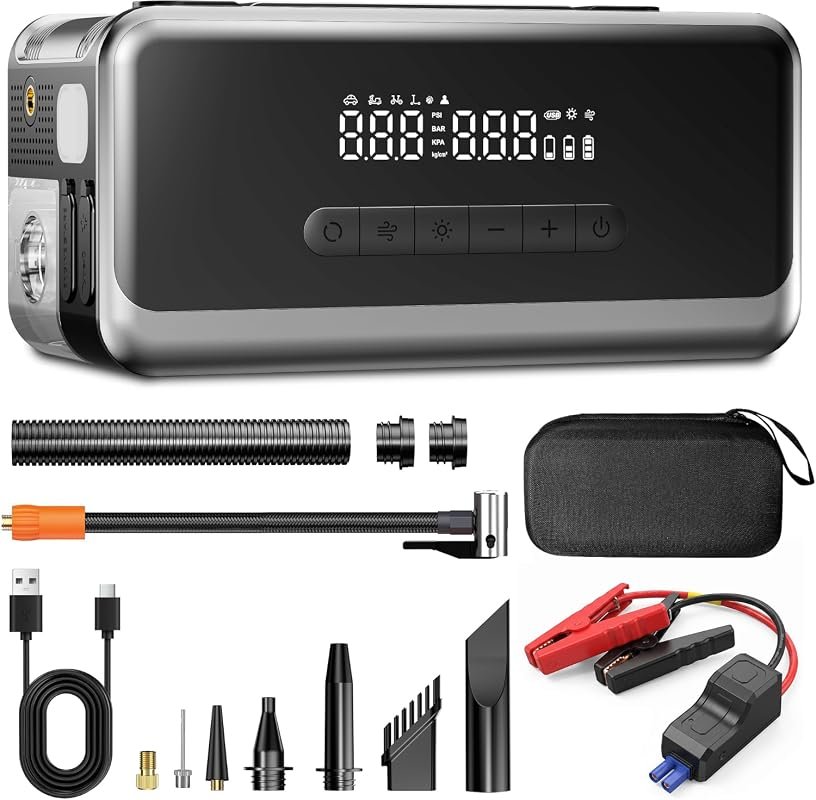 Best Overall
4000A 12V portable jump starter with air compressor inflator, jumper cables, LED flashlight, for 9.0L gas/8.0L diesel
It offers the strongest all-around mix of fit, value, and practical daily use for Volvo owners.
 Best Value
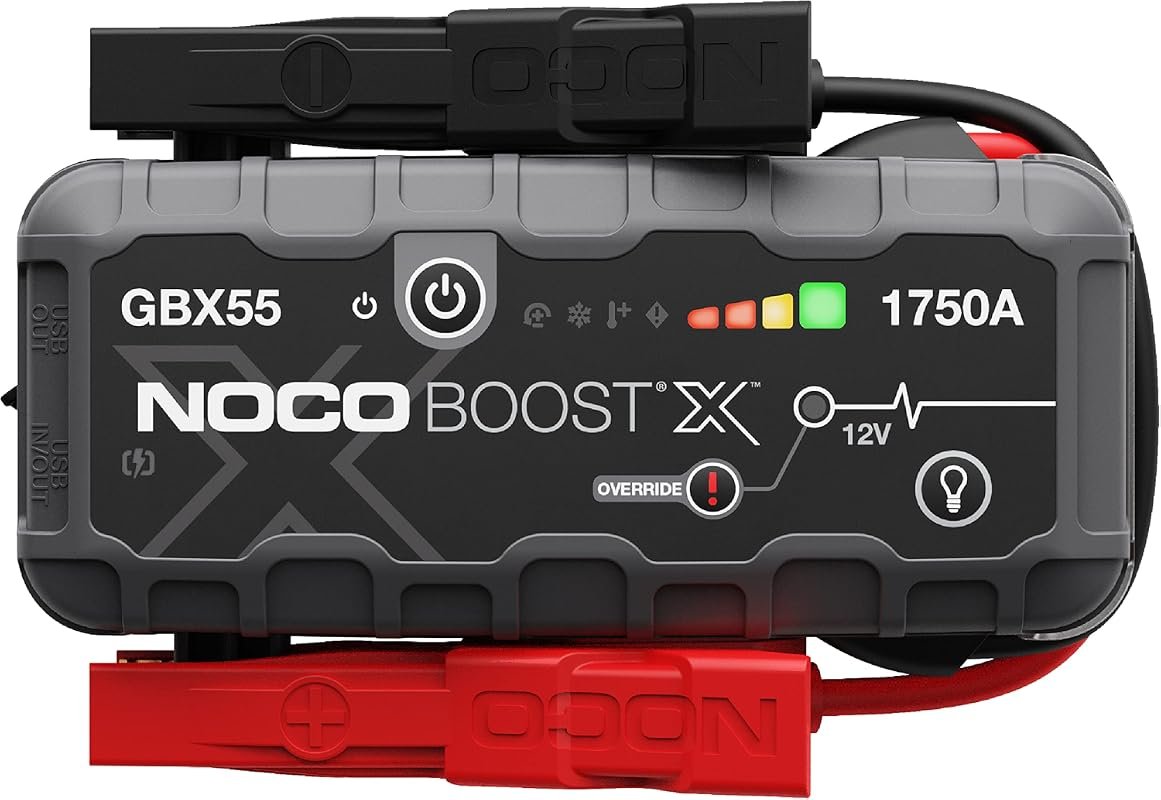
NOCO Boost X GBX55 1750A UltraSafe 12V lithium jump starter, power bank, for 7.5L gas/5.0L diesel
It makes sense for owners who want a useful upgrade without paying more than necessary.
 Best Premium Option
CAT CAT797 heavy-duty truck jump starter, 30000A 12V/24V, instant start to -40°F, for diesel and gas engines
It is the pick I would compare first if build quality, features, and long-term ownership value matter most.
Author

Author

Evans Torres
I’m Evans Torres, an automotive engineer who loves Volvo cars. I graduated in Automotive Engineering from USC. I have worked in the car industry for years and now share my knowledge on The Volvo Life. I started this blog to connect with other Volvo fans. I offer tips, news, and advice to help you care for your car. My goal is to help you keep your Volvo in great shape and find all the best things about it. Join me as we discover everything Volvo has to offer!