
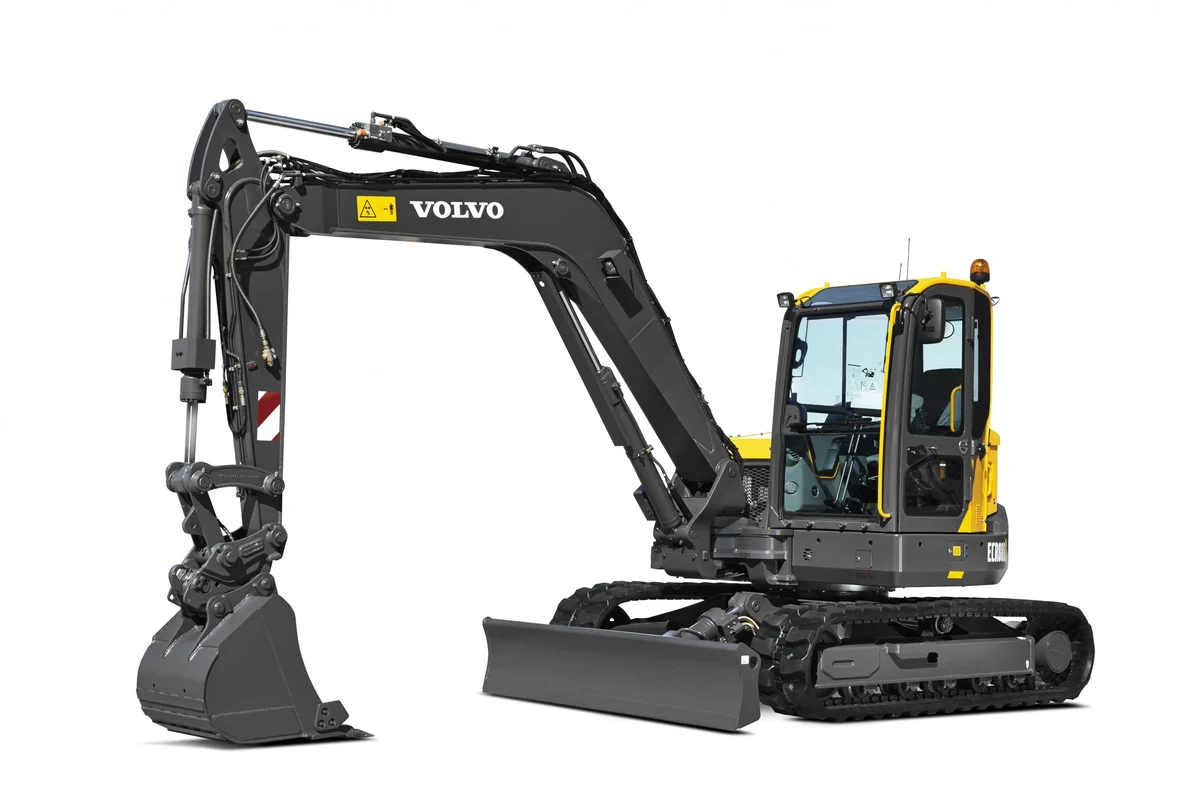
Volvo’s ECR series of excavators is known for their efficiency and versatility in various construction applications. The ECR 58 and ECR 88 models cater to different needs based on size, power, and operational capabilities.
The difference between a Volvo ECR 58 and ECR 88 lies in their specifications, powertrains, and features. Understanding these distinctions helps potential buyers choose the right excavator for their needs, whether for compact jobs or larger tasks.
- Introduction to Volvo ECR 58: Volvo’s ECR series of excavators is known for their efficiency and versatility in various.
- Key Differences Between the Volvo: When comparing the ECR 58 and ECR 88, several key factors come into play.
- Size and Weight: ECR 58: Size and weight are crucial when choosing an excavator..
- Safety Features and Driver-Assist Technology: Safety is a top priority in Volvo’s excavator designs..
- Reliability Records: Owner Insights: Reliability is a key factor for many buyers..
Introduction to Volvo ECR 58 and ECR 88
Volvo’s ECR series of excavators is known for their efficiency and versatility in various construction applications. The ECR 58 and ECR 88 models cater to different needs based on size, power, and operational capabilities.
This article will explore the key differences between the Volvo ECR 58 and ECR 88, helping you decide which model is best suited for your projects. For related context, read what is the difference between volvo group and volvo cars.
| Model | Key Features |
|---|---|
| Volvo ECR 58 | Compact size, efficient power, flexible for smaller projects |
| Volvo ECR 88 | Increased power, larger size, suitable for heavier applications |
Key Differences Between the Volvo ECR 58 and ECR 88
When comparing the ECR 58 and ECR 88, several key factors come into play, including specifications, powertrains, and overall performance capabilities. Understanding these differences will guide buyers in determining which model fits their specific requirements.
Specifications Overview
The specifications of both models highlight their operational capabilities. Here’s a quick look at the key specifications:
| Specification | Volvo ECR 58 | Volvo ECR 88 |
|---|---|---|
| Operating Weight | 5,700 kg | 8,800 kg |
| Engine Power | 40.5 kW | 55.4 kW |
| Bucket Capacity | 0.15 – 0.24 m³ | 0.2 – 0.35 m³ |
| Max Digging Depth | 3,100 mm | 3,300 mm |
Powertrain Comparison
The powertrains of the ECR 58 and ECR 88 significantly influence their performance.
The ECR 58 features a D3.1 engine, providing efficient power for smaller projects, while the ECR 88 is equipped with a more powerful engine that enhances productivity in larger applications.
The higher engine power in the ECR 88 allows for greater lifting capacity and improved digging performance. This area decision also connects with difference between 2025 and 2025 5 volvo xc90.
Before making a decision, check the specifications and availability of both models in your market. Ensure to verify details like engine power and operational capabilities against your specific needs.
Size and Weight: ECR 58 vs. ECR 88
Size and weight are crucial when choosing an excavator. The Volvo ECR 58 is more compact, making it ideal for tight spaces and urban environments. For official guidance on this, see Volvo Cars official website.
In contrast, the ECR 88, while larger, offers additional power and capabilities suited for heavier tasks. The weight difference also affects transportability, with the ECR 58 being easier to move on trailers or transport trucks. For another location comparison, read volvo difference between t5 and t6.
Evaluate the running costs associated with each model, including fuel consumption and maintenance history, to determine the best financial fit for your operations.
Safety Features and Driver-Assist Technology
Safety is a top priority in Volvo’s excavator designs. Both the ECR 58 and ECR 88 come equipped with advanced safety features, including a solid cab structure and excellent visibility.
They also feature driver-assist technology that enhances operational safety, but the ECR 88 offers more advanced systems, making it better suited for challenging environments.
Fuel Efficiency and Running Costs
Fuel efficiency can significantly impact running costs. The ECR 58 is designed for lower fuel consumption, making it economical for smaller jobs.
The ECR 88, while slightly less fuel-efficient due to its larger engine, compensates with increased productivity, potentially lowering the overall cost per job. Buyers should consider their typical workload and budget to determine which model offers the best value. You can also use volvo group vehicle automation technology features as the next practical guide.
Reliability Records: Owner Insights
Reliability is a key factor for many buyers. Both models have strong reputations for durability and performance in the field.
However, the ECR 88 has a slight edge in reliability due to its enhanced engineering and build quality, catering to more demanding applications. For official guidance on this, see EPA fuel economy guide.
Owners often report satisfaction with both models, but those using the ECR 88 for heavier tasks tend to share more positive experiences.

Resale Value Comparison
Resale value is an important consideration for long-term investment. Generally, the ECR 88 tends to hold a higher resale value due to its larger size and capabilities, which appeal to a broader range of buyers.
The ECR 58, while still retaining good value, may not command the same prices in the used market. Buyers should consider their long-term plans when choosing between these models. For another location comparison, read volvo xc40 safety features.
Always check for any recalls or safety notices related to the ECR 58 and ECR 88 before purchasing. Ensure that all safety features are operational for your confidence.
Best-Fit Buyers: Who Should Choose Which Model?
Choosing between the ECR 58 and ECR 88 depends on the buyer’s specific needs. The ECR 58 is best for small to medium-sized contractors needing maneuverability in tight spaces.
In contrast, the ECR 88 is ideal for larger construction projects requiring higher power and load capacity. Understanding your typical job requirements will help in making the right choice. You can also use volvo xc90 safety features as the next practical guide.
- Test maneuverability in tight spaces for the ECR 58.
- Check the lifting and digging capabilities of the ECR 88.
- Evaluate the comfort and visibility from the operator’s cab.
Pros and Cons of Each Excavator Model
Here’s a summary of the pros and cons for each model:
- Compact size for tight spaces.
- Lower operating costs.
- Good fuel efficiency.
Limited power and capacity. Less suitable for heavy-duty tasks.
- Higher power output.
- Better for larger projects.
- Strong resale value.
Higher initial investment. Less fuel-efficient compared to ECR 58.
Understanding the Difference Between a Volvo ECR 58 and ECR 88
The Volvo ECR 58 is designed for compact jobs requiring agility and efficiency, while the ECR 88 is more suitable for larger, demanding applications due to its increased power and size.
Buyers should assess their specific needs and project requirements to determine which model aligns best with their operational goals. For related context, read which volvo safety features work well.
- Evaluate the operating weight and engine power of each model.
- Consider the bucket capacity and digging depth suitable for your projects.
- Assess the transportability and maneuverability based on your work environment.
This guide on difference between a volvo ecr 58 and ecr 88 is general information. Rules, fees, rents, salaries, service coverage, product details, and procedures can change, so confirm important points with the manufacturer, retailer, or official app documentation before acting.
Quick Questions, Answered
The Volvo ECR 58 has an operating weight of 5,700 kg, while the ECR 88 weighs 8,800 kg. Also, the ECR 58 has an engine power of 40.5 kW compared to the ECR 88’s 55.4 kW.
The ECR 58 is equipped with a D3.1 engine, making it suitable for smaller projects. In contrast, the ECR 88’s more powerful engine enhances productivity for larger applications, offering greater lifting capacity and improved digging performance.
The Volvo ECR 58 is more compact, making it ideal for maneuvering in tight spaces and urban environments. The ECR 88, while larger, is better suited for heavier tasks where power is prioritized over compactness.
Both models include advanced safety features such as a solid cab structure and excellent visibility. However, the ECR 88 offers more advanced driver-assist technology, making it better equipped for challenging environments.
The ECR 58 is designed for lower fuel consumption, making it more economical for smaller jobs. Although the ECR 88 is slightly less fuel-efficient, its increased productivity can potentially lower the overall cost per job.
The ECR 88 generally holds a higher resale value due to its larger size and capabilities, appealing to a broader range of buyers. The ECR 58 retains good value but may not command the same prices in the used market as the ECR 88.
Putting It All Together
The difference between a Volvo ECR 58 and ECR 88 is significant in terms of specifications, powertrain, size, and overall capabilities.
The ECR 58 is ideal for compact jobs requiring agility, while the ECR 88 serves well in larger, more demanding applications. Buyers should weigh their specific needs against the strengths of each model to make an informed decision. You can also use what are the key safety features of the volvo xc90 as the next practical guide.
Author

💡 Evans Torres Tip: On every Volvo I have owned, I always keep a full digital service record from day one. When something goes wrong — and eventually something always does — having that history makes diagnosis faster and often saves money at the mechanic. Start your records today, even if the car is not new.