


Jump starter for Volvo A40 means a 24V commercial-grade booster, not a 12V car pack. Look for 1,500–3,000 cranking amps (6,000–8,000 peak), heavy 2/0 AWG leads, or use a 24V slave-start via the A40’s jump posts per the operator’s manual.
A Volvo A40 articulated hauler uses a 24V electrical system and a large diesel that demands far more cranking power than a passenger car. A pocket 12V booster won’t turn it over. Fleet crews use 24V commercial packs or a service truck’s slave-start leads at the designated jump points. For related context, you may also want to read is scanner for Volvo XC60.
Below you’ll find sizing rules, safe connection steps, and heavy-equipment specifics for an A40. I also include quick guidance for Volvo cars/SUVs and T8/EV models so mixed fleets can kit the right tools once. You can also use do scanner for Volvo exist as a helpful next guide on the same ownership topic.
- Main point: The Volvo A40 needs a 24V commercial jump starter (or 24V slave-start), typically 1,500–3,000 CA and heavy-gauge leads; 12V packs are unsuitable.
- Best first step: Confirm system voltage and use the manual’s jump-start posts; never guess clamp locations on heavy equipment.
- Cost or value: Quality 24V boosters run $500–$1,500; 12V car packs for Volvo SUVs run $100–$250 and double as power banks.
- Who it suits: Fleet operators, site managers, and owners who park in remote or cold locations benefit most from carrying a booster.
- When to get help: Swollen/leaking batteries, melted cables, or unclear jump posts warrant a qualified heavy-equipment technician immediately.
What a Jump Starter Does on a Volvo — And How It Differs From a Charger
A portable jump starter delivers a brief, high-amperage burst to crank the engine right now. It’s a temporary assist to start and let the alternator take over. For another practical angle, see do scanner for Volvo work with all models.

A battery charger restores charge slowly over hours. Smart maintainers preserve batteries between shifts or during storage; they are not designed to crank an A40 or a cold-soaked SUV immediately.
For an A40, you’ll use a 24V commercial booster or a service truck’s slave-start. For passenger Volvos, a 12V lithium jump pack works well for roadside recovery.
Why Keep a Jump Starter — From Volvo Cars to an A40 on Site
Cold mornings, long idle periods, or door-ajar drains leave both cars and heavy equipment short on cranking amps. A jump pack avoids downtime, tow calls, and missed dispatch windows.
For fleets, a single failed start can idle crews and trucks. For SUV owners, a compact 12V lithium pack in the cargo bin solves most dead-battery surprises in minutes.
Here is a quick at-a-glance matching of common Volvo scenarios to the right booster choice so you don’t over- or underspec your kit.
Pick the row that best matches your engine and climate. If you run winter duty or older batteries, size up one tier to maintain reliable cold cranking.
| Volvo scenario | Voltage | Recommended booster | Notes |
|---|---|---|---|
| Volvo A40 articulated hauler (A40G/A40F) | 24V | 24V commercial pack, 1,500–3,000 CA (6,000–8,000 peak) | Use designated 24V jump posts; 12V packs are unsuitable |
| XC90/XC60 gasoline 2.0T mild hybrid | 12V | Lithium 1,500–2,000 peak amps | Great all-around car/SUV pack |
| XC60 D5 (diesel, EU) | 12V | Lithium 2,000+ peak amps | Diesel needs more burst current |
| S60/V60 T8 Recharge (PHEV) | 12V | Lithium 1,500–2,000 peak amps | Jump only the 12V system; never the HV pack |
| EX30/EX40/EX90 (BEV) | 12V aux | Small 1,000–1,500 peak amps | Occasional 12V wake-up only; no engine cranking |
| Older 5-cyl Volvo (S60/V70/XC70) | 12V | Lithium 1,200–1,500 peak amps | Healthy choice for aging batteries |
| Volvo truck (FH/FM vocational, large diesel) | 24V | 24V commercial pack, 1,500–3,000 CA | Follow 24V jump procedures |
Keeps a compact 12V pack in the trunk to handle a surprise no-start without waiting for roadside assistance.
Sizes up amperage for winter starts and stores the pack warm to reduce cold-soak performance loss.
Uses a 24V commercial booster or service truck slave-start to keep A40 haulers and trucks on schedule.
Best Jump Starter Types for Volvo Use
Volvo owners typically pick between lithium packs for 12V cars and commercial 24V carts for trucks and haulers. The right type balances amperage, weight, and safety protections like reverse-polarity lockout.
For glovebox use, lithium packs win on size. For an A40, only a commercial 24V unit (or a service truck slave-start) is appropriate.
Use this table to compare types quickly before you buy.
| Type | Peak amps | Best for | Approx price | Verdict |
|---|---|---|---|---|
| 12V lithium pocket booster | 1,200–2,000 | Volvo cars/SUVs, light diesel | $100–$250 | Every car should carry one |
| 12V heavy-duty lithium | 2,000–3,000 | Cold-climate SUVs, larger gas/diesel | $200–$400 | Great for winter and higher displacement |
| 24V commercial lithium/AGM cart | 6,000–8,000 peak (1,500–3,000 CA) | Volvo A40, FH/FM trucks | $500–$1,500 | Fleet-grade solution for 24V systems |
| Service-truck slave-start leads | N/A (vehicle-to-vehicle) | Site support for 24V machines | Service call | Best when no portable 24V pack is available |
Volvo Model-Based Jump Starter Guide
Different Volvos need different amperage. Modern 2.0T gas engines start fine with 1,500–2,000 peak amps, while diesel and cold climates benefit from higher-rated packs. The A40 sits in a separate 24V class entirely.
Always confirm system voltage on the data plate or manual before connecting any booster.
- XC90/XC60/XC40 (gas): 12V, choose 1,500–2,000 peak amps; 2,000+ in northern climates.
- V60/S60 T8 Recharge (PHEV): 12V booster only for the accessory battery; do not touch the high-voltage system.
- Older S60/V70/XC70 five-cyl: 12V, 1,200–1,500 peak amps works well as batteries age.
- EX30/EX40/EX90 (BEV): No engine to crank; a small 12V pack can wake the LV system if needed.
- A40 articulated hauler: 24V, use a 24V commercial booster or 24V slave-start at designated posts.
Many Volvo cars locate the 12V battery away from the engine bay, but provide under‑hood jump posts. Use those posts rather than digging for the battery — it’s safer and designed for clamp access.
Jump Starters for Volvo Diesel, Hybrid, and Electric Models
Diesel engines compress more air and typically need a higher burst current. Size one tier up versus gas. Hybrids still use a 12V accessory battery for ECUs and relays; that’s the battery you may boost.
Fully electric Volvos have no starter motor. A small 12V pack is only for waking a depleted low-voltage system — not for “starting” the car.
For PHEV (T8) and BEV models, jump only the 12V accessory system at the documented posts. Never connect a booster to any orange‑sheathed high‑voltage component.
Jump Starter for Volvo Trucks and Heavy Equipment — Including A40
Volvo A40 haulers and many Volvo Trucks use 24V systems. You’ll need a 24V commercial-grade booster or a service truck’s 24V slave-start leads connected at the marked posts.
Clamp polarity, cable gauge, and grounding points matter more at this scale; incorrect hookup can damage controllers. Follow the A40 operator’s manual procedures without improvisation.
If in doubt, request a technician or service truck. It’s cheaper than a bricked ECU on a job site.
Do not attempt to “series-stack” two 12V car boosters to make 24V. Mismatched packs can fail violently and destroy sensitive electronics. Use a purpose-built 24V unit or a service truck with the correct slave-start system.
What Size Jump Starter You Need: Voltage, Amps, Engine Size, and Cold
Choose voltage first (12V for cars, 24V for A40/trucks). Then size amperage to engine type and weather. Cold batteries lose output; diesel starters draw more current; older batteries sag faster under load.
When on the fence, step up one size. Undersized packs cause repeat cranking attempts that overheat cables and still don’t start the engine.
- Voltage: 12V cars/SUVs; 24V A40 and heavy trucks.
- Cranking/peak amps: 1,500–2,000 peak (cars), 2,000–3,000 peak (diesel/cold), 1,500–3,000 CA at 24V (A40/trucks).
- Cable gauge: 4 AWG (cars) to 2/0 AWG (24V carts) for minimal voltage drop.
- Cold rating: Look for performance at 0°F/−18°C and store the pack warm.
- Duty cycle: Commercial packs should support multiple starts per shift.
- Pre-check your machine’s jump posts and ground points during daylight so you’re not learning in a storm.
- Keep lithium packs at 60–80% state of charge and warm in winter; capacity drops when cold-soaked.
- On site, assign one labeled 24V booster to heavy equipment to avoid mix-ups with 12V car packs.
- After a jump, test charging voltage (13.8–14.6V on cars; 27.6–28.8V on 24V systems) to confirm the alternator is working.
How to Use a Jump Starter on a Volvo Safely
The safest process starts with confirming system voltage and locating the official jump posts. Connect positive first, use a solid chassis ground when specified, and give the pack a full minute to stabilize before cranking. Stop immediately if cables smoke, batteries hiss, or clamps spark excessively.
- Confirm voltage and posts: Check the data plate/manual for 12V or 24V and locate the marked jump-start terminals.
- Power everything down: Headlights, HVAC, and accessories off; ignition off.
- Prep the booster: Verify the pack is charged; set it to the correct 12V or 24V mode (commercial units).
- Connect positive (+): Clamp to the positive jump post (red cover) or battery positive as instructed.
- Connect ground (-): Clamp to the designated chassis ground or negative post per the manual — not to painted surfaces.
- Arm the pack: Turn on the booster; wait 30–60 seconds for voltage stabilization.
- Crank briefly: Crank up to 5 seconds; rest 30 seconds between attempts to avoid overheating.
- Disconnect safely: After the engine runs, turn off the booster; remove negative first, then positive.
- Recharge the pack: Top up the jump starter as soon as practical for next use.
Never jump a swollen, frozen, or leaking battery. Hydrogen gas is flammable — keep sparks and open flames away. On hybrids/EVs, boost only the 12V accessory system at the documented posts.
How to Charge and Store a Jump Starter in Winter
Lithium packs lose capacity when cold; store them indoors or in a warm cab when possible. Top up every 2–3 months off-season, and monthly in subfreezing climates.
Commercial 24V carts often use AGM cells; maintain them on a smart charger and keep them above 32°F/0°C for rated output.
Where to Buy a Jump Starter for Volvo
For 12V car packs, Amazon and major auto parts chains offer good selection and easy returns — stick with known brands and authorized sellers. For 24V commercial boosters, buy from fleet-equipment suppliers or tool trucks to avoid under‑spec’d imports.
When in doubt about heavy-equipment jump procedures, your local Volvo CE dealer can advise or dispatch a service truck.
After any no-start, scanning the charging system is smart. Our overview of an OBD scanner for Volvo explains what you can read at home, and this deeper look at a diagnostic tool for Volvo covers shop-level options.
Jump Starter Troubleshooting
No crank after hookup usually means low booster charge, poor clamp contact, or the wrong voltage. Re-seat clamps on bright metal, confirm mode (12V vs 24V), and warm the pack if it’s been in the cold.
On cars, if it starts then stalls, test alternator output. On an A40, confirm 24V charging and battery condition between shifts.
- No lights on the booster: Recharge fully before retrying.
- Sparks/excess heat: Stop; check polarity and ground point; inspect for damaged cables.
- Clicking only: Undersized pack or severely discharged battery — size up or charge longer before cranking.
- Alarm triggers (cars): See our guide on jump-starting a Volvo S60 without setting off the alarm.
Common Mistakes to Avoid — And When to Replace the Battery Instead
Wrong clamp order, clamping to painted or rusty metal, and guessing at 24V jump posts are the fastest ways to damage electronics. Don’t keep jumping a weak battery multiple times per week — replace it and reset your downtime risk.
On fleets, pull batteries that fail a load test and log replacements. Downtime dwarfs the price of new batteries.
A healthy alternator will show roughly 13.8–14.6V while running on 12V cars and about 27.6–28.8V on 24V systems. Anything far outside that range points to a charging fault, not just a bad battery.
For documented jump-start points, visit Volvo Cars Support or contact your Volvo Construction Equipment support team for A40 procedures.
💡 Evans Torres Tip: I keep a 2,000A lithium jump pack in my XC90 and store it inside the house on freezing nights — warm batteries deliver more current. On a contractor job, a foreman asked about a dead A40; we called in a service truck for a proper 24V slave-start. That ten‑minute call saved hours and avoided risking the machine’s ECUs. This connects closely with is scanner for Volvo XC90 if you want to compare the topic in more detail.
Frequently Asked Questions
These quick answers address the most common A40 and Volvo owner questions about picking, using, and maintaining a jump starter — from 24V heavy equipment specifics to hybrid and EV nuances, winter storage, and what to do when a jump doesn’t hold.
What jump starter do I need for a Volvo A40?
A Volvo A40 uses a 24V system and needs a 24V commercial-grade booster rated around 1,500–3,000 cranking amps (roughly 6,000–8,000 peak) with heavy 2/0 AWG leads. Alternatively, use a service truck’s 24V slave-start at the machine’s designated jump posts per the operator’s manual.
Will a 12V car jump pack start an A40?
No. A 12V booster cannot safely or effectively crank a 24V A40. Do not “stack” two 12V packs to make 24V either — that’s unsafe and risks electronic damage. Use a dedicated 24V commercial booster or a service truck.
Can I jump a Volvo T8 hybrid with a normal 12V pack?
Yes, but only the 12V accessory battery at the documented jump posts. Never connect a booster to any orange high‑voltage components. After it wakes, let the car’s systems initialize before driving, and test the 12V battery if the issue repeats.
Do fully electric Volvos (EX30/EX40/EX90) need a jump starter?
They don’t have an engine to crank, but a small 12V booster (1,000–1,500 peak amps) can wake a depleted 12V system to power up control modules. If low‑voltage issues recur, have the vehicle inspected for a charging or module fault.
How often should I charge a lithium jump starter in winter?
Top up monthly in subfreezing climates and store it warm to reduce capacity loss. Many packs self‑discharge by a few percent per month; keeping them at 60–80% state of charge preserves longevity while ensuring readiness.
Why does my Volvo die again after a successful jump?
A jump gets you running but doesn’t fix an underlying fault. Check alternator output and battery health. For a quick DIY path, see our overview of an OBD scanner for Volvo to monitor charging voltage and stored faults that explain repeat no‑starts.
Is it safe to use a jump starter on modern Volvos?
Yes, when you follow the manual’s jump posts, correct polarity, and safe order (positive first, ground last). Avoid clamping to painted or corroded metal. On heavy equipment, if the posts or procedure aren’t clear, call a qualified technician to prevent ECU damage.
Where should I buy a 24V booster for fleet use?
Use fleet-equipment suppliers, commercial tool dealers, or your Volvo CE support channel. They’ll match duty cycle, cable gauge, and cold‑weather performance to your use. Avoid off‑brand imports with inflated “peak amps” and undersized cables.
Final Verdict
For a Volvo A40, think 24V from the start — a commercial booster or service-truck slave-start at the proper posts. A 12V car pack won’t crank it and risks damage if improvised.
For Volvo cars and SUVs, a 1,500–2,000A lithium pack covers most situations and fits in the cargo bin. After any jump, verify charging voltage and scan for faults so a weak battery or alternator doesn’t strand you twice.
Kit the right voltage once, learn the exact jump points, and you’ll cut downtime to minutes instead of hours.
My Top Picks at a Glance
Here are the three jump starter options I would check first if you want a faster buying decision.
These picks highlight the strongest overall choice, the best value option, and the premium-style pick for practical Volvo ownership.
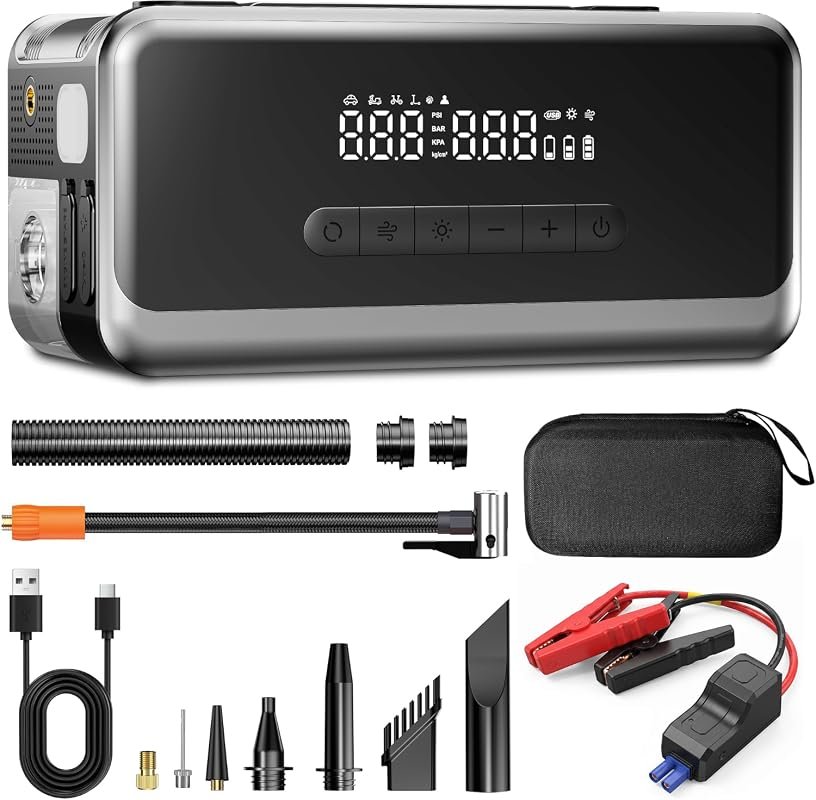 Best Overall
4000A 12V Car Jump Starter with Air Compressor, Portable Tire Inflator, Up to 9L Gas/8L Diesel.
It offers the strongest all-around mix of fit, value, and practical daily use for Volvo owners.
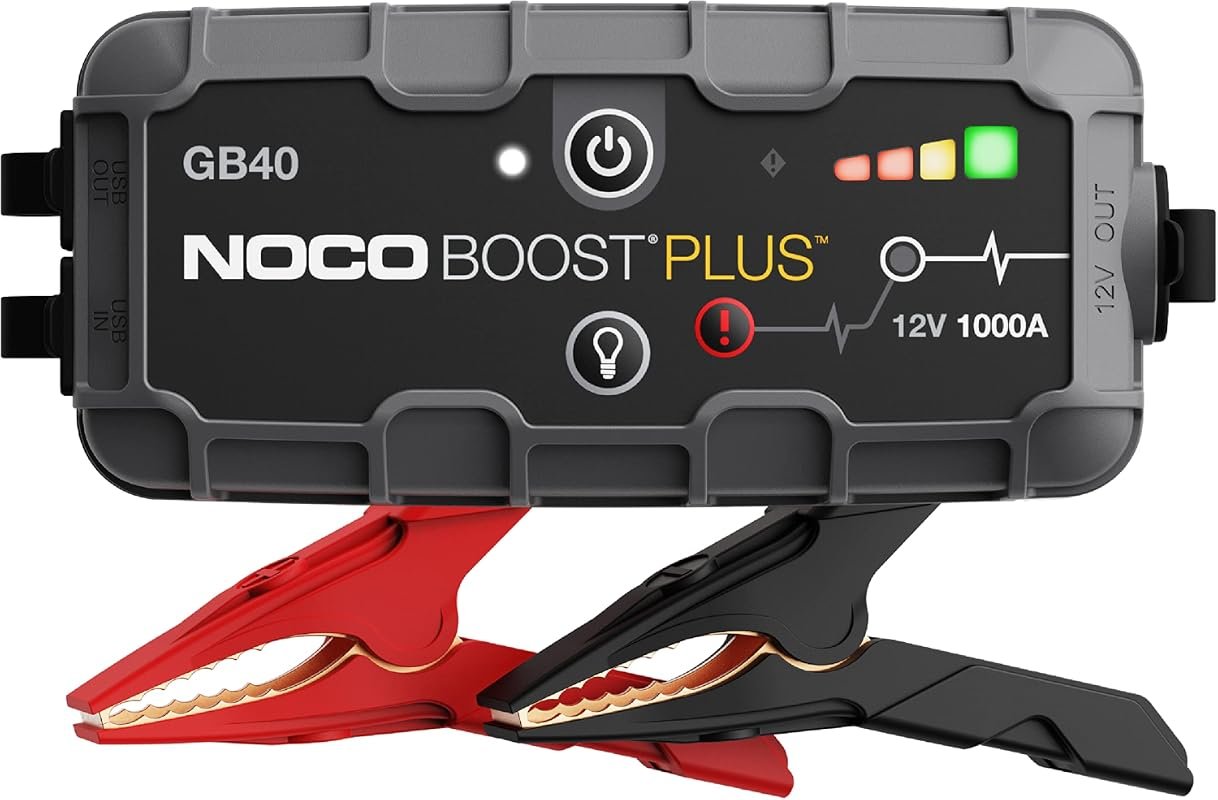 Best Value
NOCO Boost GB40 1000A 12V Portable Lithium Jump Starter, UltraSafe Spark-Proof, 6.0L Gas/3.0L Diesel.
It makes sense for owners who want a useful upgrade without paying more than necessary.
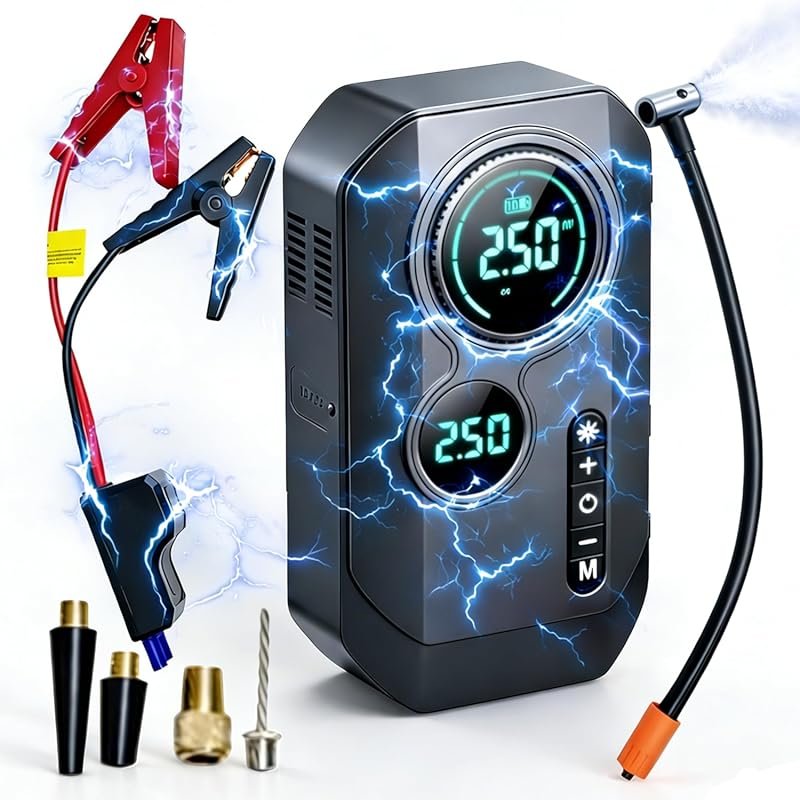 Best Premium Option
9000A Jump Starter with Air Compressor, 200 PSI Tire Inflator, 4-in-1 Power Bank for Cars.
It is the pick I would compare first if build quality, features, and long-term ownership value matter most.
Author

Author

Evans Torres
I’m Evans Torres, an automotive engineer who loves Volvo cars. I graduated in Automotive Engineering from USC. I have worked in the car industry for years and now share my knowledge on The Volvo Life. I started this blog to connect with other Volvo fans. I offer tips, news, and advice to help you care for your car. My goal is to help you keep your Volvo in great shape and find all the best things about it. Join me as we discover everything Volvo has to offer!