


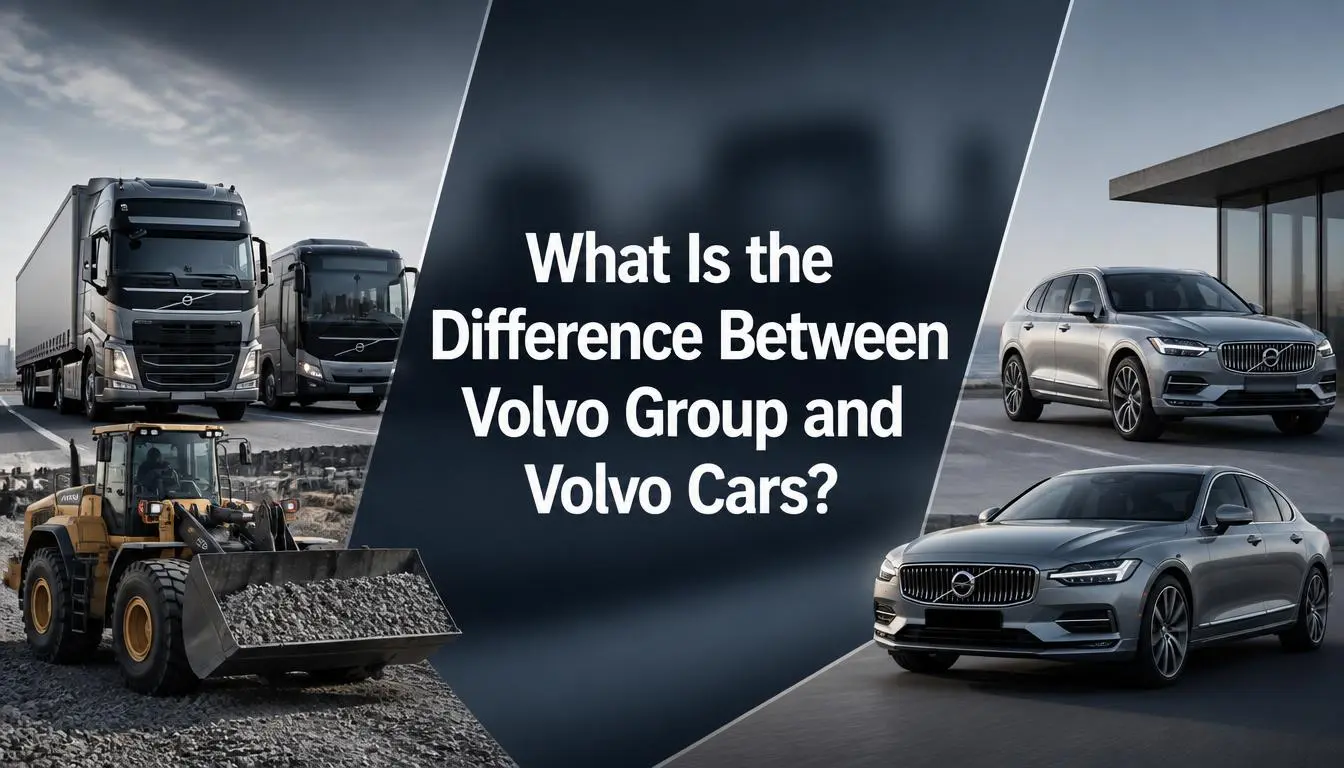
QUICK ANSWERVolvo Group and Volvo Cars are two separate companies that share the Volvo name but operate in different industries. Volvo Cars builds passenger vehicles such as the XC90, XC60, XC40, S60, and V60, while Volvo Group focuses on commercial trucks, buses, construction equipment, marine engines, and industrial solutions. They have been separate businesses since 1999, when Volvo Cars was sold by Volvo Group.
If you’ve ever searched for a Volvo vehicle, you’ve probably noticed references to both Volvo Cars and Volvo Group. This creates confusion because both companies use the Volvo brand and share a common history. As a Volvo enthusiast, I often see owners assume that the company building XC90 SUVs is the same company making Volvo semi-trucks and construction equipment. While they share a heritage, they are now separate organizations with different products, business goals, and ownership structures. This guide explains the differences, how the split happened, and why it matters to Volvo owners.
KEY TAKEAWAYS
- Main point: Volvo Group and Volvo Cars are separate companies.
- Biggest difference: Volvo Cars builds passenger vehicles, while Volvo Group builds commercial and industrial vehicles.
- Historical link: They originally belonged to the same company.
- Split year: Volvo Cars was sold in 1999.
- Why it matters: Ownership, products, support, and business operations are completely different today.
Simple Explanation
Many Volvo owners are surprised to learn that Volvo Cars and Volvo Group are not the same company. Volvo Cars is the company responsible for consumer vehicles that people drive every day, including SUVs, sedans, wagons, and electric vehicles. Volvo Group, on the other hand, focuses on commercial transportation and industrial equipment. If you see a Volvo semi-truck on the highway or a Volvo excavator on a construction site, those products come from Volvo Group rather than Volvo Cars.
Although both companies continue using the Volvo brand, they operate independently and have different leadership teams, business strategies, and customer bases.
Why This Difference Matters
Understanding the distinction helps Volvo owners find accurate information, support, and services. For example, if you’re researching XC60 reliability, Volvo Group information will not help because that vehicle belongs to Volvo Cars. Similarly, someone looking for maintenance information on Volvo trucks should not rely on Volvo Cars resources.
The separation also explains why the companies often appear in different financial reports, industry news, and market discussions despite sharing a recognizable name.
Key Differences Between Volvo Group and Volvo Cars
Before comparing the two organizations, it helps to understand that they serve completely different markets. One focuses on consumers purchasing personal vehicles, while the other focuses on businesses that operate commercial fleets and industrial equipment.
| Category | Volvo Cars | Volvo Group |
|---|---|---|
| Main Business | Passenger vehicles | Commercial vehicles and industrial equipment |
| Customers | Consumers and families | Businesses and fleet operators |
| Popular Products | XC90, XC60, XC40, S60, V60 | Volvo Trucks, Mack Trucks, Volvo Buses |
| Focus | Safety, luxury, electrification | Transport, logistics, construction |
| Ownership | Separate corporate entity | Separate corporate entity |
The biggest takeaway is simple: Volvo Cars builds vehicles for everyday drivers, while Volvo Group develops solutions for transportation, construction, and commercial industries.
A Brief History of the Split
The confusion exists because Volvo Cars and Volvo Group originally belonged to the same organization. The Volvo brand was founded in Sweden in 1927 and became known for safety, engineering quality, and durability. For decades, passenger cars and commercial vehicles operated under the same corporate umbrella.
In 1999, Volvo sold its passenger car division. From that point forward, Volvo Cars operated independently while Volvo Group continued focusing on commercial transportation and industrial operations. Although both companies retained rights to use the Volvo brand, they followed different business paths.
How Volvo Cars Operates Today
Volvo Cars focuses on consumer vehicles and modern mobility solutions. The company is known for safety innovations, Scandinavian design, hybrid technology, and electric vehicle development. Popular models include the XC90, XC60, XC40, S60, S90, V60, and electric EX-series vehicles.
For most visitors to TheVolvoLife, Volvo Cars is the company that matters because it designs, manufactures, and supports the passenger vehicles discussed throughout our guides.
- Luxury SUVs
- Sedans and wagons
- Plug-in hybrids
- Fully electric vehicles
- Volvo Cars mobile app services
- Consumer safety technologies
How Volvo Group Operates Today
Volvo Group focuses on commercial transportation and industrial solutions. Its products are designed for businesses, logistics companies, construction firms, and industrial operations. The company owns several well-known brands and develops vehicles capable of handling demanding commercial workloads.
- Volvo Trucks
- Volvo Buses
- Construction equipment
- Marine and industrial engines
- Fleet management systems
- Commercial transport technologies
These products serve very different markets than Volvo Cars, even though they share the Volvo name.
Common Misunderstandings About Volvo Group and Volvo Cars
Many people assume that all Volvo-branded products come from a single company. This is understandable because both organizations use the Volvo name and maintain Swedish roots. However, the most common misunderstanding is believing that Volvo Cars controls Volvo Trucks or vice versa.
Another misconception is that dealership networks overlap. Volvo Cars dealerships handle passenger vehicles, while Volvo Trucks dealerships and service centers focus on commercial products. Customer support systems, warranties, and product development are also separate.
NOTESeeing the Volvo logo on both a family SUV and a commercial truck does not mean they come from the same company today. The businesses share a heritage but operate independently.
How To Understand the Difference Between Volvo Group and Volvo Cars
The easiest way to avoid confusion is to identify the type of vehicle or product involved. Passenger vehicles belong to Volvo Cars, while commercial transportation and industrial equipment belong to Volvo Group. This simple process helps owners quickly determine which company is responsible for a product, service, or news announcement.
- Step 1: Identify whether the product is a passenger vehicle or commercial equipment.
- Step 2: If it is an XC, S, V, C, or EX model, it belongs to Volvo Cars.
- Step 3: If it is a truck, bus, engine, or construction machine, it belongs to Volvo Group.
- Step 4: Check the official company website for support information.
- Step 5: Use the correct dealership or service network for assistance.
PRO TIPWhen researching a Volvo topic online, always confirm whether the article refers to Volvo Cars or Volvo Group. This prevents confusion and helps you find information that actually applies to your vehicle.
💡 Evans Torres Tip: On every Volvo I have owned, I always keep a full digital service record from day one. When something goes wrong — and eventually something always does — having that history makes diagnosis faster and often saves money at the mechanic. Start your records today, even if the car is not new.
Frequently Asked Questions
Are Volvo Group and Volvo Cars the same company?
No. They are separate companies. Volvo Cars builds passenger vehicles, while Volvo Group focuses on commercial transportation, trucks, buses, and industrial equipment.
Who owns Volvo Cars today?
Volvo Cars operates independently and has its own corporate structure, leadership team, and business strategy separate from Volvo Group.
Does Volvo Group make the Volvo XC90?
No. The Volvo XC90 is a passenger SUV developed and sold by Volvo Cars. Volvo Group does not manufacture passenger vehicles.
Does Volvo Cars make Volvo Trucks?
No. Volvo Trucks is part of Volvo Group. Volvo Cars focuses exclusively on passenger vehicles and mobility-related technologies.
Why do both companies use the Volvo name?
Both companies share a common history and retained rights to use the Volvo brand after the passenger vehicle division was separated from Volvo Group.
Which company should Volvo owners follow?
Most Volvo car owners should focus on Volvo Cars because it develops, supports, and services the vehicles they drive every day.
Final Verdict
The difference between Volvo Group and Volvo Cars is straightforward once you understand their roles. Volvo Cars builds passenger vehicles such as the XC90, XC60, XC40, and other consumer-focused models, while Volvo Group develops commercial trucks, buses, construction equipment, and industrial transportation solutions. Although both companies share the Volvo name and Swedish heritage, they have operated as separate organizations for many years. For everyday Volvo owners, most maintenance, reliability, technology, and ownership information will come from Volvo Cars. Knowing the distinction helps you find accurate information, the correct support channels, and a better understanding of the Volvo brand as a whole.
Author

Evans Torres
I’m Evans Torres, an automotive engineer who loves Volvo cars. I graduated in Automotive Engineering from USC. I have worked in the car industry for years and now share my knowledge on The Volvo Life. I started this blog to connect with other Volvo fans. I offer tips, news, and advice to help you care for your car. My goal is to help you keep your Volvo in great shape and find all the best things about it. Join me as we discover everything Volvo has to offer!