


Quick Answer
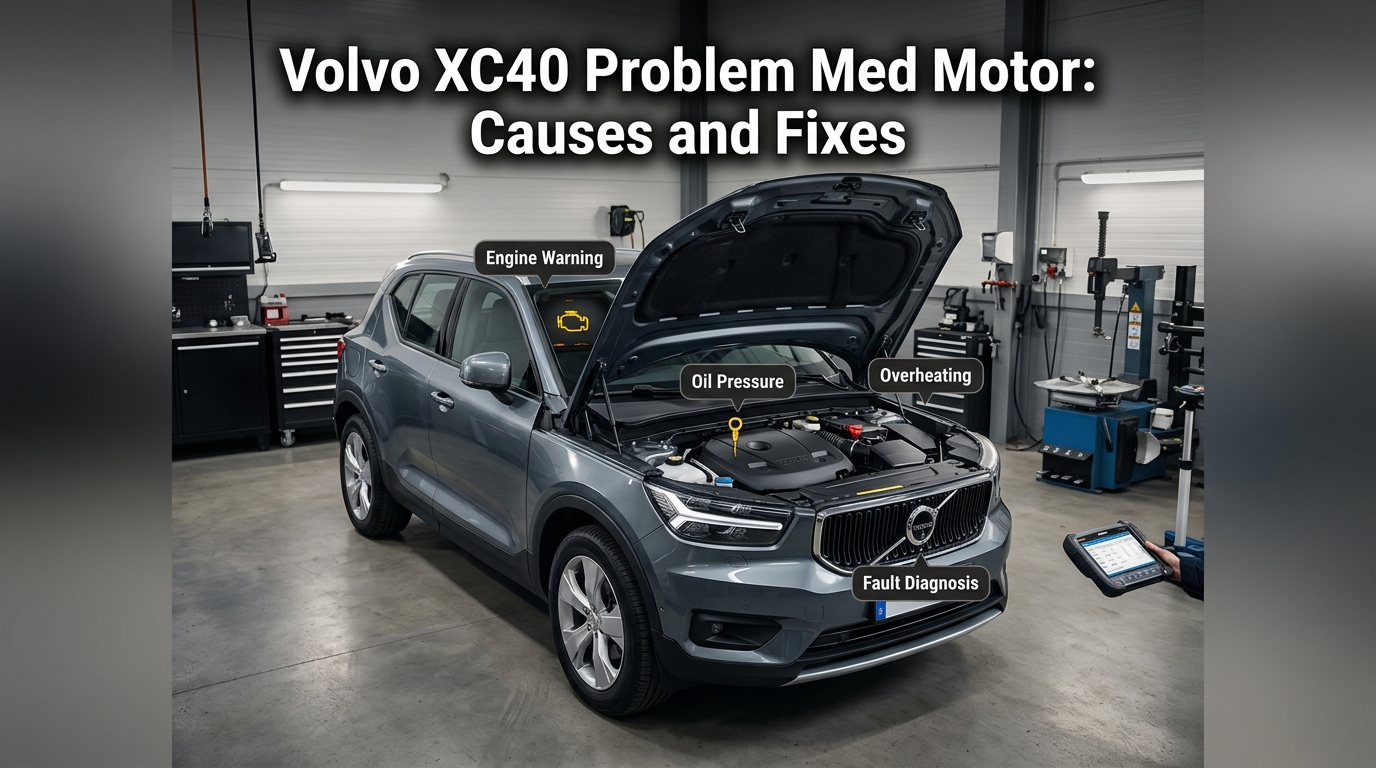
A Volvo XC40 problem med motor means an engine problem with the Volvo XC40. The cause may involve sensors, ignition, fuel delivery, oil pressure, or cooling. Check the dashboard message first. Stop driving if the car shows a serious oil pressure or overheating warning.
The search phrase “volvo xc40 problem med motor” points to a common concern: an XC40 engine warning, loss of power, rough running, or trouble starting. The right fix depends on the exact symptom, model year, and engine type.
Some engine problems are minor, but others can cause costly damage. A warning light alone cannot tell you which part has failed. The safest first step is to read the full dashboard message and note how the car behaves.
The XC40 has been offered with different gasoline, mild-hybrid, plug-in hybrid, and electric powertrains in different markets. A fully electric XC40 Recharge has no gasoline engine, so its powertrain faults need a different diagnosis.
What Every XC40 Owner Should Know
Engine symptoms can point to different faults, even when the dashboard warning looks similar. These checks help you judge the urgency before arranging a repair.
- Stop safely if the display says to stop or switch off the engine.
- Watch for overheating, smoke, fuel smells, or unusual engine noise.
- Do not keep driving with a red oil pressure warning.
- Record the exact warning message and any diagnostic codes.
- Ask a qualified technician to diagnose persistent engine faults.
Common Volvo XC40 Engine Problems
The symptoms offer useful clues, but they do not prove that a particular part has failed. Use them to describe the problem to a repair shop.
Engine warning light
The check engine light can appear when the engine control system detects a fault. Possible causes include a sensor problem, ignition fault, fuel system issue, or emissions system fault.
A steady light with normal engine behavior often allows a prompt trip to a repair shop. A flashing light, severe shaking, or major power loss needs more urgent attention. Pull over safely and seek professional advice rather than continuing a long journey.
Rough idle or engine shaking
A rough idle means the engine runs unevenly while the car is stopped. Possible causes include worn spark plugs, a faulty ignition coil, an air leak, or a fuel delivery problem.
Record whether the shaking happens during a cold start, at idle, or while accelerating. Strong shaking or a flashing check engine light can signal a fault that may damage the catalytic converter.
Loss of engine power
The XC40 may feel slow to accelerate if the engine control system limits power. This can happen because of a sensor fault, a boost problem on a turbocharged engine, or another engine management issue.
Some warnings activate a reduced-power mode to protect the vehicle. Avoid hard acceleration and unsafe overtaking. Stop driving if the car cannot maintain a safe speed or responds unpredictably.
Engine overheating
Overheating can damage engine parts if you continue driving. Possible causes include low coolant, a cooling system leak, a cooling fan fault, or another problem that prevents proper heat control.
Follow the exact message shown on the dashboard. Volvo’s XC40 overheating guidance explains when to stop safely or switch off the engine.
Never open a hot coolant reservoir. Hot coolant can escape under pressure and cause serious burns. Let the vehicle cool and arrange help if the warning remains or coolant is leaking.
Oil pressure or oil level warning
An oil pressure warning is more urgent than a routine service reminder. Low oil pressure can stop engine parts from receiving the lubrication they need.
Stop safely and switch off the engine if the oil pressure warning appears. Do not restart the car just to see if the warning disappears. Arrange recovery and have the fault checked by a qualified technician.
Oil level and oil pressure are not the same thing. Volvo’s XC40 engine oil instructions explain the electronic oil-level system and the need to use the correct oil amount.
What Causes an XC40 Engine Fault?
A proper diagnosis checks the warning, symptoms, and fault codes together. The same symptom can have several causes, so replacing parts without testing may waste money.
| Symptom | Possible cause | Next step |
|---|---|---|
| Rough idle | Ignition or air fault | Scan and test |
| Slow acceleration | Sensor or boost fault | Check fault codes |
| High temperature | Cooling system fault | Stop safely |
| Oil pressure warning | Lubrication fault | Switch off engine |
| Hard starting | Battery or fuel issue | Test the system |
| Engine misfire | Ignition or fuel fault | Arrange diagnosis |
Sensor and electrical faults
Modern XC40 engines rely on electronic sensors and control units. A faulty signal or wiring problem can trigger a warning or change engine performance.
A stored fault code helps narrow the search, but it does not always identify a failed part. A technician may need to test the wiring, sensor readings, and related systems before choosing a repair.
Ignition and fuel system problems
Gasoline XC40 models use an ignition system to burn fuel inside the engine. Worn spark plugs, a failing ignition coil, or a fuel delivery fault can cause shaking, misfires, or poor acceleration.
Diesel versions offered in some markets have different fuel and emissions systems. Repairs must match the actual engine and market specification. Do not assume a fault found on one XC40 applies to every model year.
Turbocharger or air intake problems
Some XC40 gasoline engines use a turbocharger to help the engine produce power. Air leaks, boost control faults, or related sensor problems can affect acceleration.
Whistling noises, unusual smoke, and reduced power are useful details for diagnosis. These signs alone do not prove that the turbocharger needs replacement.
Cooling system leaks
Low coolant can result from a leak or another cooling system fault. A sweet smell, visible fluid, or repeated low-coolant warning deserves prompt inspection.
Never remove a coolant cap while the engine is hot. A technician can pressure-test the cooling system and find the source of a leak safely.
What to Do When the Warning Appears
The correct response depends on the warning message and how the vehicle runs. Use these steps to collect useful information without risking further damage.
- Find a safe place to stop. Pull over as soon as traffic conditions allow if the car shows a serious warning.
- Read the complete message. Note the symbol, message text, and any change in engine performance.
- Check for visible problems. Look for fluid beneath the car, smoke, or signs of a leak from a safe distance.
- Do not touch hot parts. Keep clear of hot engine components and fans that may start automatically.
- Arrange a diagnostic scan. Ask the shop to record the fault codes before clearing them.
Volvo’s warning and indicator symbol reference explains why the displayed message matters. Symbol meanings and instructions can vary by model year and powertrain.
Can you keep driving?
Use the dashboard instruction as your first guide. The table below offers general guidance, but the vehicle’s specific warning takes priority.
| Situation | Recommended action |
|---|---|
| Red oil pressure warning | Stop and switch off |
| Engine overheating | Stop as instructed |
| Smoke or fuel leak | Stop and seek help |
| Flashing engine light | Stop safely and seek advice |
| Steady light, normal running | Arrange prompt diagnosis |
| Severe power loss | Stop if unsafe to continue |
Never drive on if the car feels unsafe, makes severe mechanical noises, or shows a stop-engine warning. If you are unsure, roadside assistance is safer than testing the car on the road.

Repair Costs and Prevention
Repair costs depend on the failed part, the engine version, labor rates, and the tests required. An engine warning does not automatically mean the engine needs replacement.
What affects the repair bill?
A basic diagnostic scan may cost less than a repair that needs extensive testing or replacement parts. Ask the shop to explain the confirmed fault and the reason for each recommended repair.
- Diagnostic labor and specialist equipment.
- Parts availability and the exact engine version.
- Dealer versus independent Volvo specialist labor rates.
- Whether related parts or wiring also need repair.
- Any applicable warranty or recall coverage.
Get a written estimate before approving major work. Ask whether the quoted price includes diagnosis, parts, labor, taxes, and any follow-up testing.
How to reduce the risk of engine trouble
Good maintenance cannot prevent every fault, but it can reduce avoidable wear. Follow the service plan for your exact model year and powertrain.
- Use the specified engine oil and correct service schedule.
- Respond promptly to oil, coolant, and engine warnings.
- Keep service invoices and records of software updates.
- Ask a technician to investigate repeated fluid loss.
- Use the correct parts and fluids for your engine.
For plug-in hybrid and electric versions, use a technician trained for that powertrain. Never open or disconnect high-voltage parts yourself.
Volvo XC40 Engine Questions Answered
The exact message and model year help narrow the cause. These answers cover common questions, but they cannot replace a diagnosis of your vehicle.
Is the Volvo XC40 known for engine problems?
Engine concerns vary by model year, engine, maintenance, and driving conditions. A warning or symptom alone does not prove a widespread defect or a failed engine.
What does a Volvo XC40 engine warning mean?
It means the vehicle has detected a condition that needs attention. Read the full message and check the warning symbol before deciding whether the car can move safely.
Can I drive with the check engine light on?
A steady light with normal running may allow a short trip to a repair shop. A flashing light, severe shaking, smoke, or major power loss calls for a safe stop and prompt help.
Why does my XC40 lose power while driving?
Possible causes include sensor faults, ignition problems, air or boost leaks, and protective reduced-power mode. A diagnostic scan and system tests are needed to identify the cause.
Does a Volvo XC40 engine fault always mean an expensive repair?
No. Some faults involve sensors, wiring, or routine service items. The repair cost depends on the confirmed cause and the parts and labor required.
Can a basic OBD2 scanner find the problem?
A compatible scanner may read common engine codes, but some Volvo-specific faults need advanced equipment. A code is a clue, not proof that a named part has failed.
Are electric XC40 Recharge models affected by engine problems?
A fully electric XC40 has an electric drive system rather than a gasoline engine. Plug-in hybrid versions have both an engine and an electric drive system, so the exact model matters.
What I Would Do Next
Write down the XC40’s model year, engine or powertrain, exact dashboard message, and symptoms. Share these details with a qualified Volvo technician before approving repairs.
If the car shows an oil pressure, overheating, or stop-engine warning, do not continue driving to test it. Arrange roadside assistance and request a diagnosis based on the vehicle’s stored fault codes and condition.
Author

Author

Evans Torres
I’m Evans Torres, an automotive engineer who loves Volvo cars. I graduated in Automotive Engineering from USC. I have worked in the car industry for years and now share my knowledge on The Volvo Life. I started this blog to connect with other Volvo fans. I offer tips, news, and advice to help you care for your car. My goal is to help you keep your Volvo in great shape and find all the best things about it. Join me as we discover everything Volvo has to offer!
💡 Evans Torres Tip: On every Volvo I have owned, I always keep a full digital service record from day one. When something goes wrong — and eventually something always does — having that history makes diagnosis faster and often saves money at the mechanic. Start your records today, even if the car is not new.