


volvo group vs volvo cars difference luxury vehicles comes down to corporate scope: Volvo Group builds commercial trucks and machines, while Volvo Cars makes the luxury SUVs, sedans and EVs you can buy. They share the Volvo name via licensing but operate independently.
Shoppers in the U.S. often stumble over one big Volvo question: are the truck maker and the luxury car brand the same company? They are not. Volvo Group and Volvo Cars split decades ago and now run separate strategies, products and dealer networks.
This guide explains ownership, brand rights, EV timelines, and what that means if you’re choosing a luxury SUV or electric Volvo. We’ll also show why these entities aren’t direct competitors, how safety and tech are measured differently, and where confusion about the shared logo comes from.
If you want even more corporate history context, our in-depth explainer on the difference between Volvo Group and Volvo Cars adds timeline detail and brand milestones relevant to today’s buyers.
- Main difference: Volvo Group is an industrial manufacturer (trucks, construction equipment, marine engines); Volvo Cars is the luxury-vehicle automaker selling SUVs, sedans, wagons and EVs to consumers.
- Best for A: Volvo Group fits commercial and municipal buyers needing heavy-duty trucks or equipment, not luxury passenger vehicles.
- Best for B: Volvo Cars suits U.S. shoppers comparing premium SUVs and EVs like EX30, EX90, XC60 and XC90.
- Cost/value: Volvo Cars has retail MSRPs and consumer financing; Volvo Group pricing is fleet- and spec-dependent and negotiated business-to-business.
- Important caveat: Safety scores, warranty terms and efficiency metrics are incomparable across these sectors; treat them separately.
Are Volvo Group and Volvo Cars direct competitors?
No. Volvo Group competes with other commercial and industrial manufacturers, while Volvo Cars competes with luxury automakers. One sells Class 8 trucks and construction equipment; the other sells premium SUVs and EVs to households.
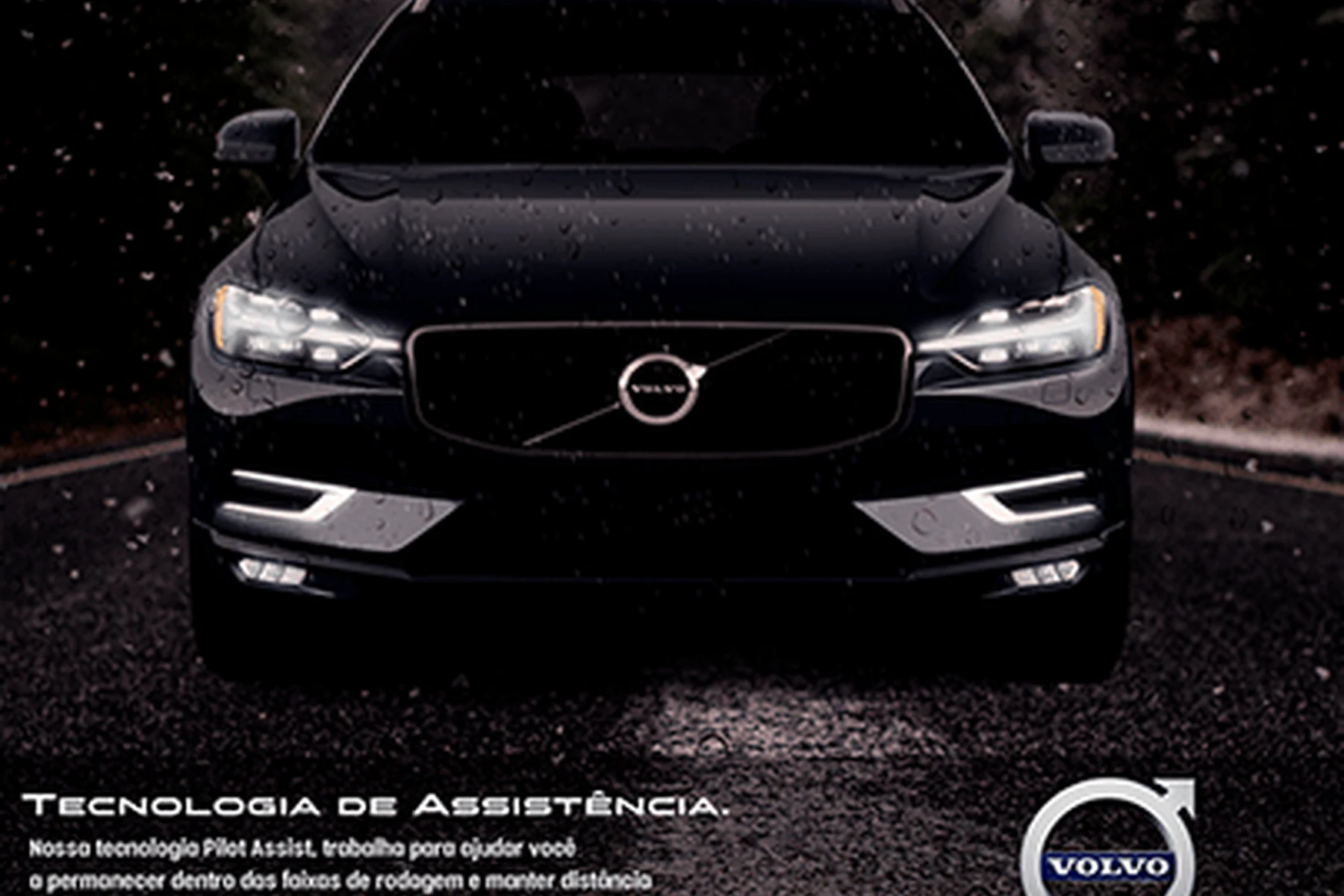
Shoppers still compare them because the companies share the Volvo name and iron-mark logo under a licensing agreement. That brand overlap creates confusion during EV and SUV research.
The Volvo wordmark and iron logo are owned by Volvo Trademark Holding AB, a joint company co-owned by AB Volvo (Volvo Group) and Volvo Cars. Each licenses the brand to its own products, which is why both wear similar badges.
Volvo Group vs Volvo Cars at a glance
Use this side-by-side to separate corporate roles, brands and what’s actually in showrooms if you’re shopping a luxury SUV or EV.
| Category | Volvo Group | Volvo Cars |
|---|---|---|
| Corporate entity | AB Volvo (publ), Sweden | Volvo Car AB (publ), Sweden |
| Stock listing | Nasdaq Stockholm (e.g., VOLV B) | Nasdaq Stockholm (VOLCAR B) |
| Ownership | Independent public company; major shareholders include institutions and Geely Holding | Public company majority-controlled by Geely Holding (via Geely Sweden Holdings) |
| Core business | Commercial trucks, buses (solutions), construction equipment, marine/industrial engines | Luxury passenger vehicles: SUVs, sedans, wagons; EVs and plug-in hybrids |
| Key brands | Volvo Trucks, Mack Trucks, Renault Trucks, Volvo CE, Volvo Penta | Volvo Cars (consumer brand); related tech ties to Polestar via shared heritage and stake |
| Luxury vehicles | Not applicable (industrial/commercial) | Yes — XC90, XC60, XC40/EX40/EC40, EX30, EX90, S60/V60 (availability varies) |
| EV strategy | Battery-electric trucks and equipment for fleets (e.g., regional haul, refuse) | Rapid electrification of consumer lineup with fully electric SUVs and PHEVs |
| U.S. dealer network | Commercial truck/equipment dealers | Consumer Volvo retailers |
| Safety testing | Commercial standards; not IIHS/NHTSA for passenger cars | IIHS/NHTSA for U.S. passenger vehicles |
| Warranty context (U.S.) | Commercial, duty-cycle based; varies by product | Typical luxury-car coverage; verify model-year specifics with dealer |
| Charging standard (NA) | Fleet charging solutions; mixed connectors by segment | CCS with NACS support/adapter rollout by model year; confirm before purchase |
| Who should look here? | Fleet managers, municipalities, industrial operators | Luxury-SUV and EV shoppers, families, commuters |
Shopping a luxury SUV/EV in the U.S.? You want Volvo Cars. Volvo Group dealers cannot sell or service Volvo Cars passenger vehicles, and vice versa. Verify the retailer’s franchise: passenger-car “Volvo Cars” branding only.
Main differences between Volvo Group and Volvo Cars
The core split is mission: Volvo Group builds and services commercial-grade hardware for businesses; Volvo Cars designs and sells premium passenger vehicles. That cascades into separate pricing models, dealer networks, warranty regimes and regulatory testing.
Another key difference is product cadence. Volvo Cars aligns with consumer tech cycles and IIHS/NHTSA crash testing, while Volvo Group iterates on fleet duty cycles, payload, uptime and total cost of operation for businesses.
Where they overlap (and why people get confused)
Both companies use the Volvo name and iron logo under a shared trademark-holding arrangement. Safety culture, Scandinavian design roots and an electrification push appear on both sides, but they’re executed for very different end users.
The logo similarity isn’t an accident or counterfeit. It’s a licensed, governed setup under Volvo Trademark Holding AB to protect the brand and keep consistent quality standards in separate markets.
Price, comparable trims and feature‑adjusted value
You can’t line up “trims” across these entities because only Volvo Cars sells retail passenger models with MSRPs, lease programs and option packages. Volvo Group pricing is customized per fleet, spec and contract terms.
For luxury-vehicle value, compare Volvo Cars models against other premium SUVs and EVs on features like standard safety tech, interior appointments and range/charging, not against a truck manufacturer’s TCO spreadsheet.
Volvo Cars: consider MSRP, incentives, insurance, maintenance and resale. Volvo Group: fleets model total cost of operation (energy, tires, service, uptime, financing). Don’t mix frameworks — they answer different questions.
Size, seating, cargo and everyday practicality
Volvo Cars offers two- and three-row luxury SUVs and crossovers for families, commuters and road-trippers. Expect flexible cargo solutions, child-seat friendly layouts and comfort-first packaging.
Volvo Group builds trucks with driver cabs optimized for commercial duty and buses for transit partners. That utility focus is not a replacement for consumer SUV practicality.
Interior comfort, visibility and cabin usability
Volvo Cars cabins emphasize supportive seats, excellent visibility and minimalist controls. The feel is deliberately premium and family-friendly, with attention to materials and noise isolation.
Volvo Group cabs target ergonomics for long-haul or vocational work, with durability and serviceability prioritized. That’s professional-grade comfort, not luxury-SUV ambiance.
Infotainment, controls and technology
Recent Volvo Cars models in the U.S. use Google built-in for navigation, voice control and app support, layered over Volvo’s safety and driver-assist stack. Over-the-air updates are increasingly common by model year.
Volvo Group integrates telematics, fleet management and duty-specific interfaces. Those systems optimize uptime and route efficiency, not consumer entertainment experiences.
- Ask the Volvo Cars retailer to demo Pilot Assist/driver-support features on your exact trim.
- Verify over-the-air update eligibility and data plans by model year.
- Check seat fit and visibility with all drivers; Volvo’s ergonomics are a brand strength.
Safety and driver assistance: how to compare correctly
Volvo Cars participates in U.S. passenger-vehicle testing (IIHS, NHTSA). Many models regularly achieve strong results, reflecting the brand’s safety focus, though scores vary by model year and equipment.
Volvo Group vehicles follow commercial-vehicle regulations and standards that are not equivalent to IIHS/NHTSA passenger-car protocols. Treat the datasets separately.
Only compare Volvo Cars safety ratings against other passenger vehicles tested the same year and with similar equipment. Commercial-vehicle crash standards and duty usage make cross-sector comparisons misleading.
Performance, ride, handling and drivetrain
Volvo Cars offers mild-hybrid, plug-in hybrid and battery-electric drivetrains tailored for smooth, quiet commuting and confident highway stability. Ride/handling balance skews toward comfort with secure control.
Volvo Group powertrains are engineered for torque, payload and duty cycle. Comparing 0–60 mph or skidpad numbers across these worlds is neither available nor meaningful.
Fuel economy, EV efficiency and range
Volvo Cars publishes EPA fuel economy for gasoline and plug-in hybrids and EPA range for EVs. Figures vary by wheel size, drivetrain and climate, so confirm your exact build’s ratings.
Volvo Group efficiency is modeled via fleet telematics and duty profiles. There’s no EPA “mpg-e” directly comparable to your family SUV.
In North America, recent Volvo Cars EVs support CCS and are rolling out NACS compatibility/adapters by model year. If public-charging access influences your choice, confirm connector support and adapter availability in writing.
Reliability, known issues and evidence level
Volvo Cars reliability varies by model and year like any luxury brand. Look for large-sample data, official recalls and consistent owner reports to avoid over-weighting isolated anecdotes.
Volvo Group uptime and reliability are assessed at fleet scale with very different metrics. Cross-applying passenger-car reliability scores here doesn’t work.
Maintenance, insurance, depreciation and total ownership cost
Volvo Cars total cost of ownership reflects premium parts, luxury insurance categories and modern ADAS/EV systems. Many models include complimentary scheduled maintenance for early ownership years; verify coverage and intervals with your dealer.
Volvo Group costs revolve around fleet service contracts, parts availability, tire strategies and driver training. Businesses track uptime and residuals in ways consumers don’t need to.
- Volvo Cars: warranty term, maintenance plan, ADAS calibration costs after glass repairs.
- EVs: home-charging install quote and public-network fees.
- Commercial: fleet service agreement, duty-cycle assumptions, charging/depot upgrades.
Resale and day-to-day practicality
Volvo Cars SUVs hold value based on demand for safety, design and EV adoption pace. Daily comfort, easy controls and driver aids are the everyday reasons owners stay loyal.
Volvo Group residuals and uptime are fleet-analytics conversations. If you’re a household buyer, they don’t apply to your purchase decision.
Volvo Group Pros and Cons
- Deep industrial expertise across trucks, construction and marine.
- Growing lineup of battery-electric commercial vehicles for fleets.
- Global service networks tailored to uptime and TCO.
- Strong brand trust in heavy-duty applications.
- No luxury passenger vehicles for consumers.
- Commercial pricing and warranties don’t translate to retail shoppers.
- Safety/efficiency metrics are not comparable to passenger-car tests.
- Separate dealers; cannot sell or service Volvo Cars products.
Volvo Cars Pros and Cons
- Safety-first engineering with robust driver assistance options.
- Calm, minimalist interiors with excellent seat comfort.
- Multiple EVs and plug-in hybrids alongside efficient mild-hybrids.
- Accessible nationwide retail network for sales and service.
- Premium pricing versus mainstream brands.
- Complex tech can have a learning curve for some drivers.
- Reliability varies by model year and trim content.
- EV range and charging experience depend on wheel/tire and local networks.
Which is better for different buyers?
Alternatives worth considering
If you’re focused on luxury EVs and SUVs, also look at Polestar for a design-led EV alternative sharing some Volvo tech roots. German and Japanese rivals such as BMW, Audi, Mercedes-Benz and Lexus benchmark Volvo Cars on price, features and dealer footprint.
If you’re a fleet buyer on the Volvo Group side, alternative commercial players include Daimler Truck (Freightliner/Western Star), Paccar (Kenworth/Peterbilt) and Navistar/Traton, depending on your duty cycle and region.
How to Decide Between Volvo Group and Volvo Cars
- Define your use case: consumer family vehicle or commercial/municipal duty.
- Pick the right network: Volvo Cars retailer for passenger models; Volvo Group dealer for trucks/equipment.
- For EVs, confirm charging standards, adapters and at-home installation before signing.
- Match warranty and service: retail plan for Cars; fleet contract and uptime targets for Group.
- Document the total cost: retail TCO for Cars vs. fleet TCO modeling for Group — don’t mix frameworks.
Before you dive into specs and corporate structure, align your research to your goal: a luxury car decision follows different rules than a fleet procurement. Keeping those lanes separate speeds up the right choice.
💡 Evans Torres Tip: If you’re considering a Volvo EV, ask the retailer to specify in writing the connector standard (CCS/NACS), adapter availability, and any included charging credits by model year. Then map your weekly routes to reliable stations before you order, not after delivery.
Frequently Asked Questions
Volvo’s shared name can blur the line between two very different companies. These quick answers separate brand rights, ownership, EV timelines and dealer responsibilities so your luxury-vehicle research stays focused and accurate.
Are Volvo Group and Volvo Cars the same company?
No. Volvo Group and Volvo Cars are independent companies that split long ago. They share the Volvo name and logo under a trademark-holding arrangement, but they have different owners, boards, strategies, products and dealer networks.
Who owns Volvo Cars and who owns Volvo Group?
Volvo Cars is a public company majority-controlled by Zhejiang Geely Holding Group via Geely Sweden Holdings. Volvo Group (AB Volvo) is a separate public company; its major shareholders include institutions and Geely Holding among others.
Why do both companies use the same Volvo logo?
The Volvo wordmark and iron symbol are owned by Volvo Trademark Holding AB, co-owned by Volvo Group and Volvo Cars. Each company licenses the brand for its own products, which maintains consistency and protects the trademark globally.
Which company makes the luxury SUVs and EVs I can buy?
Volvo Cars makes the consumer luxury models. In the U.S., that includes SUVs and EVs such as EX30, EX90, XC60 and XC90, plus plug-in hybrids. Volvo Group does not sell passenger cars; it builds trucks, equipment and marine/industrial systems.
Does Volvo Group make electric vehicles too?
Yes, but for commercial duty. Volvo Group produces battery-electric trucks and other equipment for fleets and municipalities. These vehicles use different connectors, charging strategies and performance metrics than consumer cars and are not available through car dealers.
Can a Volvo Group dealer service my Volvo Cars SUV?
No. Dealer networks, diagnostic tools and training are separate. For a Volvo XC60 or EX90, use an authorized Volvo Cars retailer. Commercial Volvo Group dealers support trucks and equipment with different service procedures and parts catalogs.
How are safety ratings handled for Volvo Cars in the U.S.?
Volvo Cars models are evaluated by IIHS and NHTSA under passenger-vehicle protocols. Ratings vary by model year and equipment packages, so confirm the exact car you’re buying. Do not compare those scores to commercial-vehicle standards.
What should I know about charging for Volvo Cars EVs?
North American Volvo Cars EVs have used CCS and are adding NACS support/adapter access by model year. Before purchase, verify connector support, adapter timing and any charging-network agreements tied to your VIN and build date.
Final Verdict
Volvo Group and Volvo Cars share a name, not a showroom. If you’re a U.S. shopper comparing luxury vehicles, your decision lives entirely within Volvo Cars — trims, safety tech, interiors and EV charging all sit on the retail side with dedicated dealers and warranties.
Reserve Volvo Group research for commercial procurements. For families and commuters, focus on which Volvo Cars model matches your space, safety and charging needs. Confirm safety ratings and charging standards for your exact year and trim, price the full build, and let a same-day test drive decide comfort and tech fit.
My Top Picks at a Glance
These three Volvo accessories are practical options to compare after choosing the right Volvo configuration.
 Best Overall
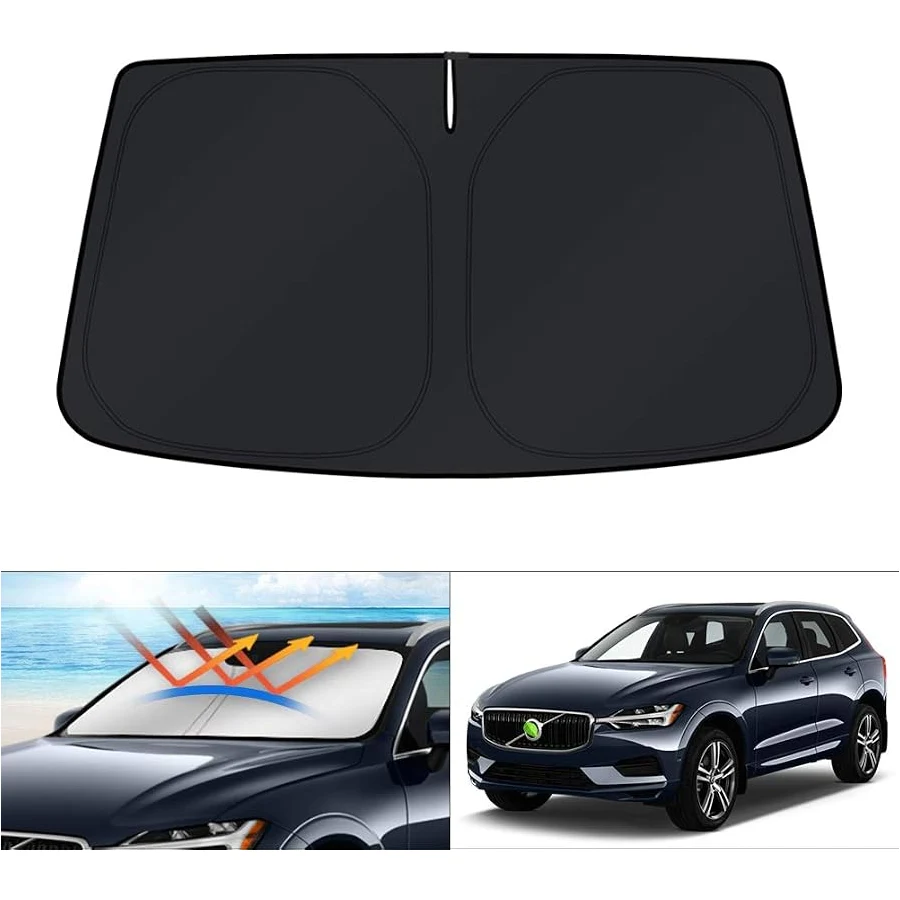
KUST Custom Fit for 2018-2026 Volvo XC60 Windshield Sun Shade, UV-Blocking, Foldable, Keeps Cabin Cooler
A vehicle-fit accessory to compare for compatibility, daily usefulness, and value.
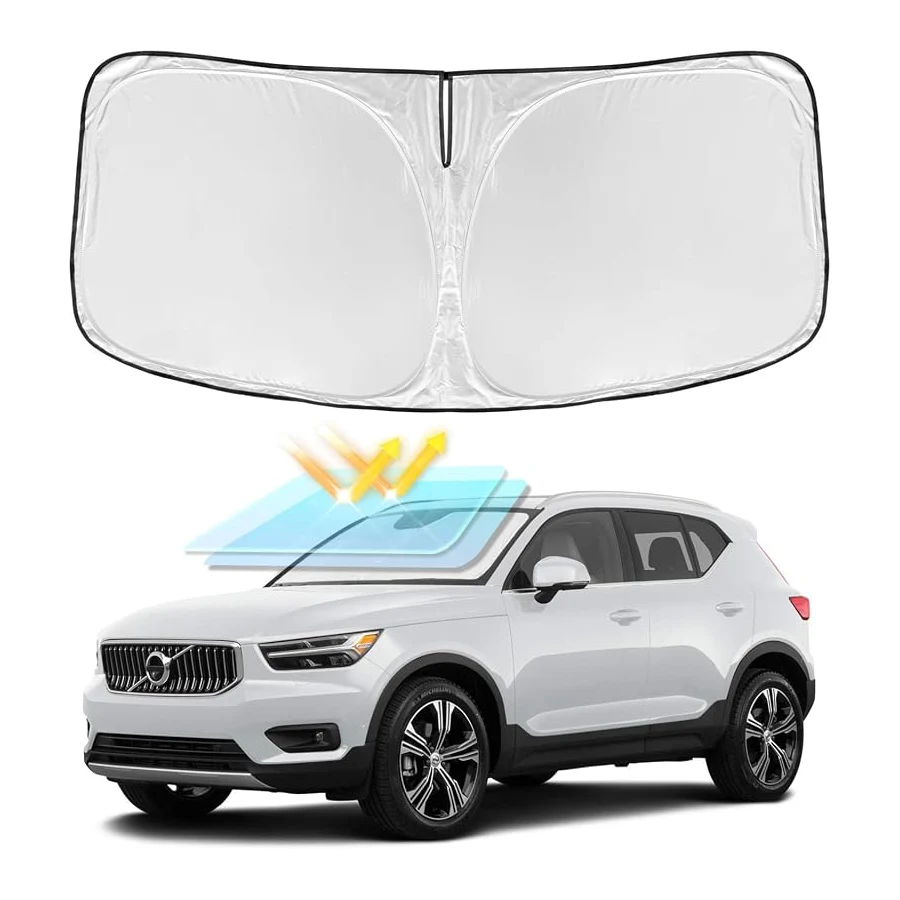 Best Value
Custom Fit Windshield Sun Shade for 2019-2026 Volvo XC40, 4-Layer, Retractable, UV and Heat Blocking
A vehicle-fit accessory to compare for compatibility, daily usefulness, and value.
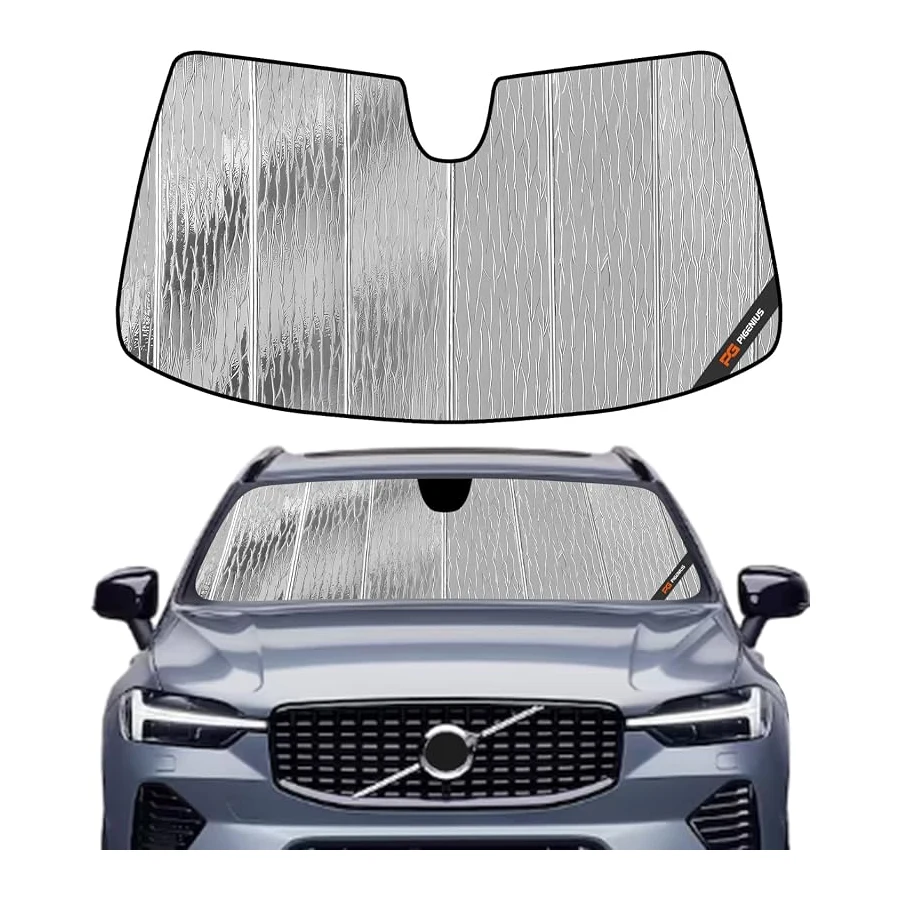 Best Premium Option
AstraGuard Custom Fit Windshield Sun Shade for 2018-2026 Volvo XC60, UV Protection, Keeps Interior Cool
A vehicle-fit accessory to compare for compatibility, daily usefulness, and value.
Sources and Methodology
This article focuses on the U.S. retail luxury-vehicle context (2024–2026). Corporate ownership, brand rights and product scopes were verified via official Volvo Group and Volvo Cars resources. Safety and efficiency comparisons avoid cross-sector mixing (passenger IIHS/NHTSA vs. commercial standards). EV connector details reflect North American market announcements; verify by model year at purchase. Data verified August 2026.
What is the difference between Volvo Group and Volvo Cars?
Can Volvo Cars use Tesla chargers?
Author

Author

Evans Torres
I’m Evans Torres, an automotive engineer who loves Volvo cars. I graduated in Automotive Engineering from USC. I have worked in the car industry for years and now share my knowledge on The Volvo Life. I started this blog to connect with other Volvo fans. I offer tips, news, and advice to help you care for your car. My goal is to help you keep your Volvo in great shape and find all the best things about it. Join me as we discover everything Volvo has to offer!