


Section 179 of the IRS tax code allows businesses to deduct the full purchase price of qualifying equipment and vehicles purchased or financed during the tax year. This provision is designed to encourage businesses to invest in themselves by allowing immediate tax relief for qualifying purchases.
The Volvo XC90 can qualify for Section 179 tax benefits if it meets certain criteria, including weight and business use requirements. This article explores the specifics of Section 179 and its applicability to the XC90.
- Understanding Section 179 for Vehicles: Section 179 of the IRS tax code allows businesses to deduct the full purchase.
- Does the Volvo XC90 Qualify: Yes, the Volvo XC90 can qualify for Section 179 tax benefits, provided it meets.
- Weight Specifications of the Volvo: The weight of the Volvo XC90 varies by trim and model year, which can.
- Business Use Requirements for Section: To claim Section 179 deductions, the XC90 must be used for business purposes more.
- Model Years of the Volvo: The Volvo XC90 has undergone several changes since its introduction in 2003, with different.
Understanding Section 179 for Vehicles
Section 179 of the IRS tax code allows businesses to deduct the full purchase price of qualifying equipment and vehicles purchased or financed during the tax year.
This provision is designed to encourage businesses to invest in themselves by allowing immediate tax relief for qualifying purchases.
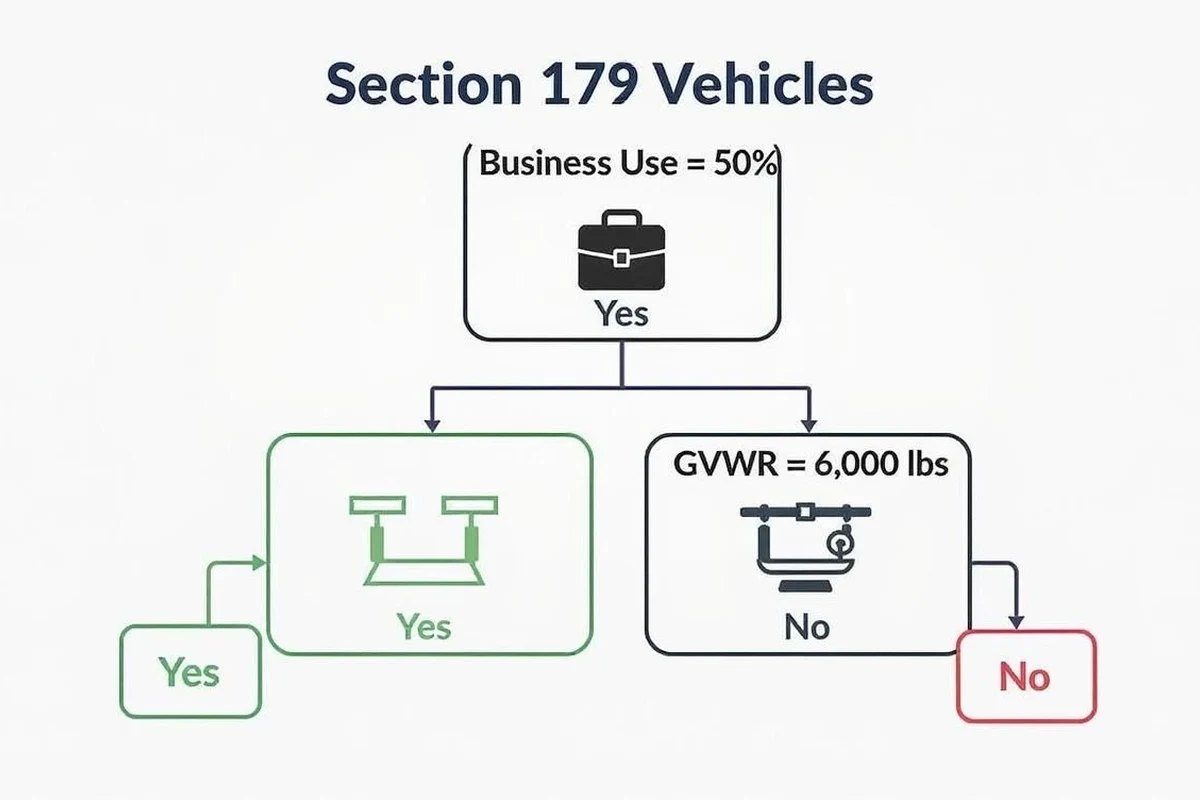
Key Criteria for Volvo XC90 to Qualify for Section 179
To ensure that your Volvo XC90 qualifies for Section 179 tax benefits, it’s essential to adhere to specific criteria regarding weight and business use.
- The vehicle must be used for business purposes more than 50% of the time.
- The curbed weight of the XC90 must exceed 6,000 lbs to maximize deductions.
- Maintain accurate documentation, including proof of purchase and vehicle weight certification.
- Document the percentage of business use with detailed mileage logs.
- Consult a tax professional to ensure compliance with current tax laws and strategies.
What is Section 179 and How Does It Work?
Section 179 lets businesses deduct the cost of qualifying vehicles from their taxable income. To qualify, the vehicle must be used for business purposes more than 50% of the time and meet specific weight requirements, typically over 6,000 lbs. For official guidance on this, see Volvo Cars official website.
This section can significantly reduce the tax burden for business owners, making it essential to understand how it applies to vehicles like the Volvo XC90. For related context, read which engine oil for volvo xc90.
Does the Volvo XC90 Qualify for Section 179 Tax Benefits?
Yes, the Volvo XC90 can qualify for Section 179 tax benefits, provided it meets the necessary weight and business use criteria.
The XC90 typically exceeds the weight threshold required for Section 179, which is beneficial for business owners looking to maximize their tax deductions. You can also use what type of engine oil for xc90 volvo 2004 as the next practical guide.
Business owners looking to maximize tax deductions.
2021-2023 Volvo XC90 models.
You primarily use the vehicle for personal purposes.
Weight Specifications of the Volvo XC90
The weight of the Volvo XC90 varies by trim and model year, which can affect its eligibility for Section 179. Generally, vehicles exceeding 6,000 lbs qualify for more substantial deductions under this tax code. For related context, read what engine oil to use for volvo xc90.
Below is a comparison of the weight specifications for various model years.
| Model Year | Trim | Curbed Weight (lbs) |
|---|---|---|
| 2023 | XC90 B5 AWD | 4,600 |
| 2023 | XC90 T8 Recharge AWD | 5,200 |
| 2022 | XC90 B5 AWD | 4,600 |
| 2022 | XC90 T8 Recharge AWD | 5,200 |
| 2021 | XC90 B5 AWD | 4,600 |
| 2021 | XC90 T8 Recharge AWD | 5,200 |
Business Use Requirements for Section 179
To claim Section 179 deductions, the XC90 must be used for business purposes more than 50% of the time. This percentage is crucial as it determines how much of the vehicle’s cost can be deducted.
Business use can include commuting to client meetings, transporting clients, or using the vehicle for deliveries. You can also use what engine oil for volvo xc90 as the next practical guide.
Confirm the weight and specifications of your specific XC90 model year against official Volvo documentation or your VIN.
Model Years of the Volvo XC90 and Their Specifications
The Volvo XC90 has undergone several changes since its introduction in 2003, with different trims and engine options offered across model years. Understanding the specifications of each model year is important for determining eligibility for Section 179.
The newer models generally feature enhanced technology and safety systems, which can also be beneficial for business purposes. For related context, read best engine oil for volvo xc90.
Document your vehicle’s business use percentage and maintain purchase records to ensure compliance with Section 179 requirements.
Documentation Needed for Claiming Section 179
To successfully claim Section 179 deductions for the XC90, owners must maintain accurate records. Necessary documentation includes proof of purchase, vehicle weight certification, and records demonstrating the percentage of business use. You can also use best engine for volvo xc90 as the next practical guide.
Keeping detailed mileage logs can also help support the claim if audited.

Leasing vs. Buying the XC90: Implications for Section 179
Whether to lease or buy the XC90 can significantly impact Section 179 eligibility. If purchased, the vehicle can qualify for full deductions under Section 179.
However, if leased, only the business portion of the lease payments may be deductible, which could be lower than the full purchase deduction. For another location comparison, read engine oil for volvo xc90 diesel.
Verify any recalls or safety notices for your XC90 model year through the official Volvo site or by checking your VIN.
Tax Benefits and Considerations
Claiming Section 179 for the Volvo XC90 can provide substantial tax benefits. Qualifying business owners may deduct the full purchase price, reducing taxable income significantly. For official guidance on this, see EPA fuel economy guide.
However, it is crucial to consult with a tax professional to understand how these deductions fit into the overall tax strategy and to ensure compliance with current tax laws. You can also use why do you need a volvo penta marine engine real guides as the next practical guide.
Does Volvo XC90 Qualify for Section 179 Tax Benefits?
The Volvo XC90 can qualify for Section 179 tax benefits if it is used for business purposes more than 50% of the time and has a curbed weight exceeding 6,000 lbs.
Business owners should maintain accurate documentation and consult a tax professional to maximize potential deductions and ensure compliance with IRS requirements.
- Verify that the XC90’s weight exceeds 6,000 lbs to maximize deductions.
- Document the percentage of business use with detailed mileage logs.
- Keep proof of purchase and vehicle weight certification for tax claims.
This guide on does volvo xc90 qualify for section 179 is general information. Rules, fees, rents, salaries, service coverage, product details, and procedures can change, so confirm important points with the manufacturer, retailer, or official app documentation before acting.
A Few More Questions
To successfully claim Section 179 deductions for the XC90, owners must maintain proof of purchase, vehicle weight certification, and records demonstrating the percentage of business use. Keeping detailed mileage logs can also help support the claim if audited.
The weight of the Volvo XC90 is crucial for Section 179 eligibility, as vehicles must typically exceed 6,000 lbs to qualify for substantial deductions. The XC90’s weight varies by trim and model year, impacting its deduction potential.
The XC90 must be used for business purposes more than 50% of the time to qualify for Section 179 deductions. This can include activities like commuting to client meetings or transporting clients.
If the XC90 is purchased, it can qualify for full deductions under Section 179. However, if leased, only the business portion of the lease payments may be deductible, potentially leading to lower deductions than a purchase.
Claiming Section 179 for the Volvo XC90 can allow qualifying business owners to deduct the full purchase price, significantly reducing their taxable income. It’s essential to consult with a tax professional to understand how these deductions fit into the overall tax strategy.
Business owners should document their vehicle’s business use percentage and maintain purchase records to ensure compliance with Section 179 requirements. Accurate record-keeping is vital, especially in case of an audit.
Final Thoughts
The Volvo XC90 does qualify for Section 179 tax benefits if it meets specific weight and business use criteria.
Business owners considering this vehicle should keep detailed records and consult a tax professional for personalized advice to maximize their tax benefits.
Author

💡 Evans Torres Tip: On every Volvo I have owned, I always keep a full digital service record from day one. When something goes wrong — and eventually something always does — having that history makes diagnosis faster and often saves money at the mechanic. Start your records today, even if the car is not new.