

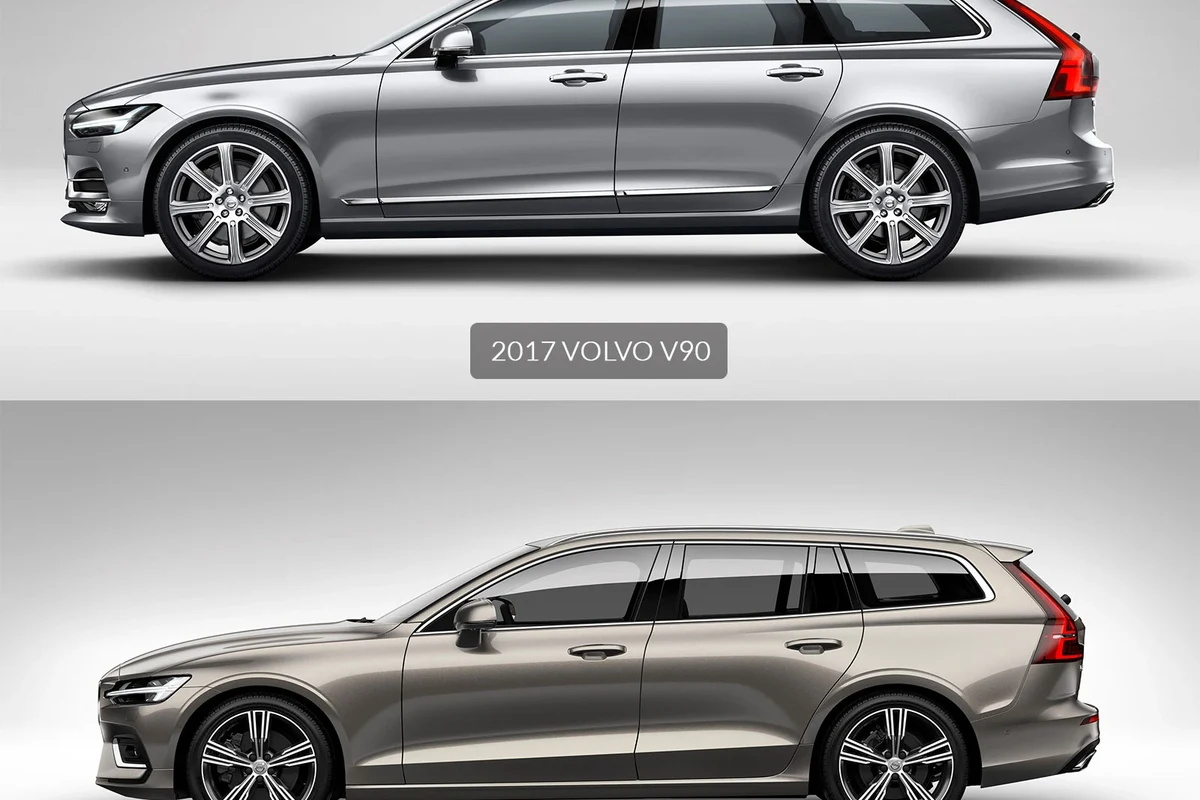
Understanding the core differences between the Volvo V90 and V70 models is essential for potential buyers to make an informed decision. Both models have unique features and specifications that cater to different preferences and needs.
The key differences between the Volvo V90 and V70 revolve around size, performance, safety features, and overall ownership experience. Understanding these differences can help buyers decide which model best suits their needs.
- Key Differences Between the Volvo: Understanding the core differences between the Volvo V90 and V70 models is essential for.
- Size and Dimensions: V90 vs: The physical dimensions of the V90 and V70 significantly influence their usability and appeal..
- Powertrains and Performance: Comparing V90: Next, we’ll analyze the engine options, horsepower, torque, and drivetrain configurations available for both.
- Safety Features and Driver-Assistance Technologies: Safety is a cornerstone of Volvo’s reputation..
- Running Costs and Fuel Efficiency: Understanding the fuel economy and typical running costs associated with owning a V90 versus.
Key Differences Between the Volvo V90 and V70
Understanding the core differences between the Volvo V90 and V70 models is essential for potential buyers to make an informed decision. Both models have unique features and specifications that cater to different preferences and needs. For related context, read what is the difference between volvo group and volvo cars.
| Feature | Volvo V90 | Volvo V70 |
|---|---|---|
| Body Style | Station Wagon | Station Wagon |
| Interior Space | More cargo space and modern design | Comfortable but less cargo capacity |
| Technology | Advanced infotainment system | Standard features with fewer tech options |
| Performance | Enhanced engine options for better handling | Reliable performance but less powerful |
Size and Dimensions: V90 vs V70
The physical dimensions of the V90 and V70 significantly influence their usability and appeal. Here is how they compare in terms of cargo space, passenger capacity, and overall dimensions.
- Volvo V90: The V90 is larger, with an overall length of around 194 inches and a width of approximately 74 inches. It offers approximately 53.9 cubic feet of cargo space with the rear seats down.
- Volvo V70: The V70 measures about 183 inches in length and 72 inches in width, providing around 72.1 cubic feet of cargo space when the rear seats are folded down.
The V70’s compact size makes it easier to maneuver in urban settings, while the V90 offers greater cargo capacity, suitable for families or those needing more storage. This area decision also connects with difference between 2025 and 2025 5 volvo xc90.
| Model | Length | Width | Cargo Space |
|---|---|---|---|
| V90 | 194 inches | 74 inches | 53.9 cubic feet |
| V70 | 183 inches | 72 inches | 72.1 cubic feet |
- Drive both cars on the same road within the same hour.
- Compare cargo space with your own gear, not just the brochure number.
- Check the warranty length and what each maker excludes.
Powertrains and Performance: Comparing V90 and V70
Next, we’ll analyze the engine options, horsepower, torque, and drivetrain configurations available for both vehicles.
Engine Options and Performance
The V90 and V70 present different powertrain configurations that cater to various driving preferences.
V90: The V90 typically features a range of engines, including a 2.0-liter turbocharged four-cylinder producing up to 250 horsepower. The higher trims offer a T8 plug-in hybrid variant with combined horsepower reaching 400. V70: The V70 offers a selection of engines, with a 2.5-liter turbocharged inline-five generating around 250 horsepower. It does not feature a hybrid variant.
Performance-wise, the V90 may provide a more refined driving experience, especially with its hybrid options, appealing to those interested in efficiency and power. For related context, read volvo difference between t5 and t6.
Safety Features and Driver-Assistance Technologies
Safety is a cornerstone of Volvo’s reputation. Let’s analyze the safety ratings and various driver-assist technologies included in both the V90 and V70 models. For official guidance on this, see EPA fuel economy guide.
- V90: Equipped with advanced safety features such as Pilot Assist, Lane Keeping Aid, and a solid suite of airbags, the V90 consistently earns high safety ratings.
- V70: While it includes essential safety features, it lacks some of the newer technologies available in the V90, such as adaptive cruise control and advanced collision avoidance systems.
For buyers prioritizing the latest safety technologies, the V90 is the better option, whereas the V70 still offers solid safety features for its time. This also connects with engine swap volvo v90 960 before you pay, sign, or book.
When considering either model, check the fuel history and service records to understand the typical running costs. This includes maintenance schedules and previous ownership expenses.
Running Costs and Fuel Efficiency
Understanding the fuel economy and typical running costs associated with owning a V90 versus a V70 is crucial for long-term budgeting.
Fuel Economy
Fuel efficiency is a significant consideration for many buyers.
V90: The V90 achieves approximately 24-30 MPG combined, depending on the engine configuration and driving conditions. V70: The V70 provides a slightly better fuel economy, averaging around 25-31 MPG combined, benefiting from its smaller engine and lighter weight.
While the V70 offers better fuel efficiency, the V90’s hybrid options may provide long-term savings for those seeking lower emissions and higher efficiency. For related context, read engine skid plate 1997 volvo v90.
Volvo specifications, features, and equipment can differ by model year, market, and trim, so a detail that is true for one car may not apply to another.
Reliability Records and Owner Experiences
Reliability can heavily influence a buyer’s choice. This section will focus on historical reliability data and common owner experiences for both models.
Reliability Ratings
Both models have established reputations, but their reliability records may differ.
- V90: Generally reported as reliable, the V90 benefits from newer technology and parts designed for durability.
- V70: Older models may show wear over time, with some common issues reported, including electrical problems and transmission wear in higher mileage vehicles.
Buyers should consider obtaining a vehicle history report and maintenance records to gauge the reliability of a used V70. You can also use edmonds cost to own 2017 volvo v90 as the next practical guide.
Resale Value Analysis: V90 vs V70
Discussing the factors that affect the resale values of the V90 and V70 is essential for potential buyers.
Market Trends
Resale values fluctuate based on market demand and vehicle condition.
V90: As a newer model, the V90 typically retains a higher resale value, supported by its modern features and technology. V70: The V70 may experience quicker depreciation due to its age and the availability of newer models, but it can still be a good value for budget-conscious buyers. For official guidance on this, see Volvo Cars official website.
For buyers looking at long-term value, the V90 may be the wiser investment, while the V70 can offer significant savings upfront. For related context, read edmonds cost to own 2014 volvo v90.
Families needing space and technology.
V90 (2017-present) and V70 (2000-2016).
You want the latest tech and safety features.
Best Fit Buyers: Who Should Choose the V90 or V70?
Identifying the types of buyers who would benefit most from each model based on their features and characteristics is crucial. You can also use edmonds cost to own volvo v90 as the next practical guide.
- Best for V90: Ideal for families or individuals seeking a spacious vehicle with advanced technology, hybrid options, and modern safety features.
- Best for V70: Suitable for budget-conscious buyers who appreciate a reliable vehicle with ample cargo space and decent fuel efficiency.
Choosing Between the Volvo V90 and V70: Which One Suits You?
When deciding between the Volvo V90 and V70, consider your needs for space, technology, and performance. The V90 offers modern features, advanced safety, and greater cargo capacity, making it ideal for families.
In contrast, the V70 is a budget-friendly option with reliable performance and decent fuel efficiency, suitable for those prioritizing cost over current technology.
Assess your cargo space needs to determine if the V90’s larger capacity fits your lifestyle. Evaluate your preference for modern technology and safety features when considering the V90. Consider your budget and ownership costs to see if the V70’s lower price and fuel efficiency align with your financial goals.
This guide on difference between v90 and v70 volvo is general information. Rules, fees, rents, salaries, service coverage, product details, and procedures can change, so confirm important points with the manufacturer, retailer, or official app documentation before acting.
Common Questions
The Volvo V90 measures around 194 inches in length and 74 inches in width, offering approximately 53.9 cubic feet of cargo space with the rear seats down. In contrast, the V70 is smaller at about 183 inches long and 72 inches wide, providing around 72.1 cubic feet of cargo space when the rear seats are folded down.
The V90 features a range of engines, including a 2.0-liter turbocharged four-cylinder with up to 250 horsepower, and offers a higher trim T8 hybrid variant with combined horsepower reaching 400. The V70, on the other hand, is equipped with a 2.5-liter turbocharged inline-five engine generating around 250 horsepower but lacks a hybrid option.
The V90 is equipped with advanced safety technologies, such as Pilot Assist and Lane Keeping Aid, which contribute to its high safety ratings. In contrast, while the V70 includes essential safety features, it does not offer the newer technologies found in the V90, such as adaptive cruise control.
The V70 provides slightly better fuel economy, averaging around 25-31 MPG combined due to its smaller engine and lighter weight. Conversely, the V90 achieves approximately 24-30 MPG combined, although its hybrid options may lead to long-term savings on emissions and efficiency.
The V90 is generally reported as reliable, benefiting from newer technology and durable parts designed for longevity. In contrast, older V70 models may show wear over time, with some common issues reported, such as electrical problems and transmission wear in higher mileage vehicles.
The V90 typically retains a higher resale value due to its modern features and technology, making it a wiser investment for long-term value. The V70, being older, may experience quicker depreciation but can still offer significant savings upfront for budget-conscious buyers.
Putting It All Together
The choice between the V90 and V70 ultimately depends on what features and attributes are most important to you. The V90 excels in modern technology, safety, and spaciousness, while the V70 remains a solid, budget-friendly option.
Each model offers unique advantages that cater to different lifestyles and preferences.
Author

💡 Evans Torres Tip: On every Volvo I have owned, I always keep a full digital service record from day one. When something goes wrong — and eventually something always does — having that history makes diagnosis faster and often saves money at the mechanic. Start your records today, even if the car is not new.