



Quick Answer
Yes, the Volvo XC40 can be fuel efficient for a compact luxury SUV, but its fuel economy depends on the model year, engine, and powertrain. Gas-powered versions, mild hybrids, and plug-in hybrids can have different fuel costs. Check the EPA rating for your exact XC40 before buying, and compare it with your real driving needs.
The Volvo XC40 offers a mix of comfort, safety, and practical space in a small luxury SUV. But is Volvo XC40 fuel efficient enough for daily driving, long trips, and family use? The answer depends on which version you choose and how you drive.
In this guide, I’ll explain what affects XC40 fuel economy, how gas and hybrid versions differ, and how you can reduce fuel use. I’ll also show you where to find reliable mileage figures for your model year.
Key Takeaways
- The XC40’s fuel economy varies by model year, engine, and powertrain.
- Gas-powered models use more fuel than their most efficient driving conditions may suggest during heavy city traffic.
- Mild-hybrid technology can help reduce fuel use, but it does not let you drive on electric power alone.
- Plug-in hybrid versions can reduce gasoline use on short trips when charged regularly, where available.
- Steady driving, correct tire pressure, and routine maintenance can help improve real-world mileage.
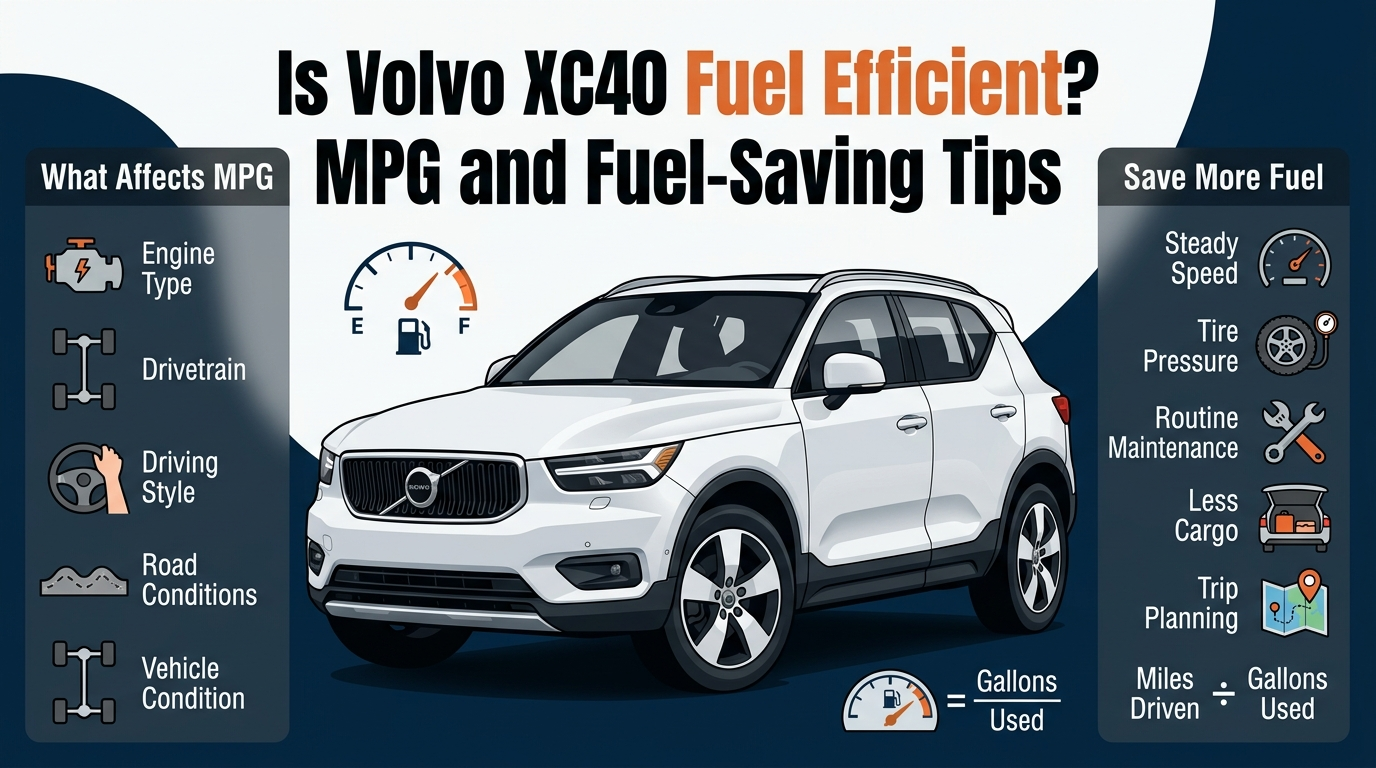
Is the Volvo XC40 Fuel Efficient?
The Volvo XC40 can deliver reasonable fuel economy for a luxury compact SUV. Still, it is not always the cheapest vehicle to run. Its turbocharged engine, vehicle weight, driving conditions, and optional equipment can affect how much gasoline it uses.
What affects XC40 fuel economy?
Several factors determine how far your XC40 travels on a gallon of fuel:
- Engine type: Different engines and power outputs can have different fuel economy ratings.
- Drivetrain: Front-wheel drive and all-wheel drive versions may have different ratings.
- Driving style: Hard acceleration and frequent braking can increase fuel use.
- Road conditions: Stop-and-go traffic, hills, and cold weather can lower mileage.
- Vehicle condition: Low tire pressure, poor alignment, or maintenance problems may reduce efficiency.
For an accurate comparison, use the official EPA fuel economy website. Select the exact model year and powertrain rather than relying on a general XC40 estimate.
EPA ratings versus real-world mileage
EPA estimates provide a useful way to compare vehicles under standardized test conditions. Your actual results may differ. Short trips, cold starts, heavy traffic, and frequent use of climate control can all affect fuel consumption.
For example, an XC40 driven mostly on open highways may use less fuel than the same model used for short trips through crowded city streets. Your driving pattern matters as much as the published rating when planning a fuel budget.
Upload Image Here
Gas, Mild Hybrid, and Plug-In Hybrid XC40 Models
Volvo has offered different XC40 powertrains across model years and markets. The available versions in the United States depend on the year, so confirm the vehicle’s specifications before comparing mileage.
| Powertrain | How It Works | Fuel-Economy Consideration |
|---|---|---|
| Gasoline | A gasoline engine powers the vehicle. | Fuel use depends on engine, drivetrain, traffic, and driving style. |
| Mild hybrid | An electric system assists the gasoline engine. | It can improve efficiency, but it cannot normally drive using electric power alone. |
| Plug-in hybrid | A rechargeable battery and electric motor work with a gasoline engine. | Regular charging and short electric trips can reduce gasoline use where this version is available. |
| Fully electric | An electric motor runs on battery power. | It uses electricity rather than gasoline, so compare energy use and charging costs instead. |
Are mild-hybrid XC40 models more efficient?
A mild hybrid uses an electric motor-generator and a small battery to support the gasoline engine. The system can recover some energy during deceleration and assist the engine under certain conditions.
This technology may improve fuel economy compared with a similar conventional setup. The actual difference depends on the model year and configuration. Do not assume that every mild-hybrid XC40 has the same EPA rating.
Can a plug-in hybrid save more fuel?
A plug-in hybrid can use electricity for some trips when its battery is charged. This can reduce gasoline use, especially for short daily journeys. Once the available electric range is used, the gasoline engine may run more often.
Charging access is important. If you rarely charge the battery, you may not receive the full fuel-saving benefit. Check the official specifications for the specific model year before choosing a plug-in hybrid.
How to Improve Volvo XC40 Fuel Economy
You can often improve fuel efficiency through simple driving habits and regular maintenance. These steps will not guarantee a specific mileage figure, but they can help limit unnecessary fuel use.
1. Drive at a steady speed
Rapid acceleration and sudden braking waste energy. Accelerate smoothly, leave enough space ahead, and maintain a steady speed when traffic allows. On highways, avoid unnecessary speed changes.
2. Check tire pressure
Underinflated tires increase rolling resistance, which can make the engine use more fuel. Check tire pressure when the tires are cold and follow the pressure listed on the vehicle’s tire-pressure label or owner’s manual.
3. Keep up with maintenance
Follow the service schedule for your model year. Use the specified engine oil and correct replacement parts. Address engine warning lights, rough running, or sudden changes in fuel consumption rather than ignoring them.
4. Reduce unnecessary weight
Remove heavy items you do not need. Roof boxes and other external cargo equipment can also increase wind resistance, especially at highway speeds. Remove them when you are not using them.
5. Combine short trips
A cold engine often uses more fuel during the early part of a trip. Combining several short errands into one journey may reduce repeated cold starts and help improve overall efficiency.
Upload Image Here
What Can Cause Poor XC40 Fuel Economy?
A sudden drop in mileage deserves attention, particularly if your driving habits have not changed. Some causes are simple, while others need professional diagnosis.
- Low tire pressure: Check and correct it using the vehicle’s recommended pressure.
- Cold weather: Lower temperatures and longer warm-up periods can increase fuel consumption.
- Heavy traffic: Frequent stops and long periods of idling waste fuel.
- Brake drag or alignment issues: A dragging brake or incorrect wheel alignment may increase resistance.
- Engine or sensor problems: A fault may affect engine operation and fuel delivery.
Start with simple checks, such as tire pressure and recent changes in driving conditions. If fuel economy drops sharply, the engine runs roughly, or a warning light appears, arrange a diagnostic check with a qualified technician.
Practical tips from Evans
I recommend tracking fuel use over several fill-ups instead of judging efficiency from one tank. Record the gallons added and miles driven, then calculate your actual miles per gallon.
For a US vehicle, you can use this simple formula:
Miles per gallon = miles driven ÷ gallons used
Use the same calculation method each time. This makes it easier to spot a lasting change rather than a temporary effect from weather or traffic.
If you are comparing used vehicles, review the fuel economy rating for each model year and check the maintenance history. You can also read our Volvo XC40 reliability guide and Volvo maintenance advice before making a purchase.

💡 Evans Torres Tip: On every Volvo I have owned, I always keep a full digital service record from day one. When something goes wrong — and eventually something always does — having that history makes diagnosis faster and often saves money at the mechanic. Start your records today, even if the car is not new.
Frequently Asked Questions
Is the Volvo XC40 fuel efficient?
The Volvo XC40 can offer reasonable fuel economy for a luxury compact SUV. Its efficiency depends on model year, engine, drivetrain, and driving conditions. Check the EPA rating for the exact version you plan to buy.
Does the Volvo XC40 use regular or premium gas?
The required fuel grade depends on the specific model year and engine. Check the owner’s manual or fuel label for your vehicle before filling up. Do not assume every XC40 has the same fuel requirement.
Is a mild-hybrid Volvo XC40 more fuel efficient?
A mild-hybrid system can help reduce fuel consumption by assisting the gasoline engine and recovering energy during deceleration. The improvement depends on the vehicle configuration and driving conditions. Compare official ratings for the exact model year.
Does highway driving improve Volvo XC40 fuel economy?
Steady highway driving can use less fuel than frequent stop-and-go traffic. High speeds, strong headwinds, hills, and roof cargo can reduce this advantage. Your actual results depend on road and weather conditions.
Why is my Volvo XC40 using more fuel than usual?
Low tire pressure, cold weather, heavy traffic, and short trips can increase fuel use. Mechanical or engine-management problems can also cause a sudden drop in mileage. Arrange a diagnostic check if the change is persistent or comes with warning lights or rough running.
How can I calculate my Volvo XC40’s real-world MPG?
Record the miles driven since your last fill-up and divide that number by the gallons needed to refill the tank. Repeat this over several fill-ups for a more useful average. Keep in mind that weather and driving conditions can change the result.
Conclusion
So, is the Volvo XC40 fuel efficient? It can be, but the answer depends on the model year, powertrain, and how you use the SUV. Mild-hybrid and plug-in hybrid systems offer different benefits, while driving habits and maintenance affect real-world results.
Before buying, compare the EPA figures for the exact XC40 version you want. After buying, track your own MPG, keep the tires at the recommended pressure, and follow the service schedule. These steps will help you understand your fuel costs and spot unusual changes early.
Author

Author

Evans Torres
I’m Evans Torres, an automotive engineer who loves Volvo cars. I graduated in Automotive Engineering from USC. I have worked in the car industry for years and now share my knowledge on The Volvo Life. I started this blog to connect with other Volvo fans. I offer tips, news, and advice to help you care for your car. My goal is to help you keep your Volvo in great shape and find all the best things about it. Join me as we discover everything Volvo has to offer!