


QUICK ANSWER
You need a Volvo Penta marine engine to power a boat, whether for propulsion, for generating onboard electricity, or both. It is a marine engine, not a Volvo car part, and it is built to run on water. Choose the engine by boat type, size, and how you use the boat.
Why do you need a Volvo Penta marine engine? If you own a Volvo car, the name may seem out of place. Volvo Penta makes engines and drive systems for boats, and it is not part of Volvo Cars.
Most people ask this question for one of two reasons. Some are buying a boat that already has Volvo Penta power. Others are repowering an older boat and comparing engine brands. I’ll explain what these engines do, who they suit, and what to think about first. I haven’t owned or tested these engines myself, so I stick to widely known information and general guidance.
Key Takeaways
- A marine engine is the heart of a boat. It drives the propeller and often powers onboard systems.
- Volvo Penta is a separate business from Volvo Cars, so car parts and car service do not apply.
- The right engine depends on boat size, hull type, water conditions, and how you plan to use the boat.
- Always confirm the exact engine model and year before buying a boat or ordering parts.
- A marine technician can help match an engine to your boat and budget.
What Is a Volvo Penta Marine Engine?
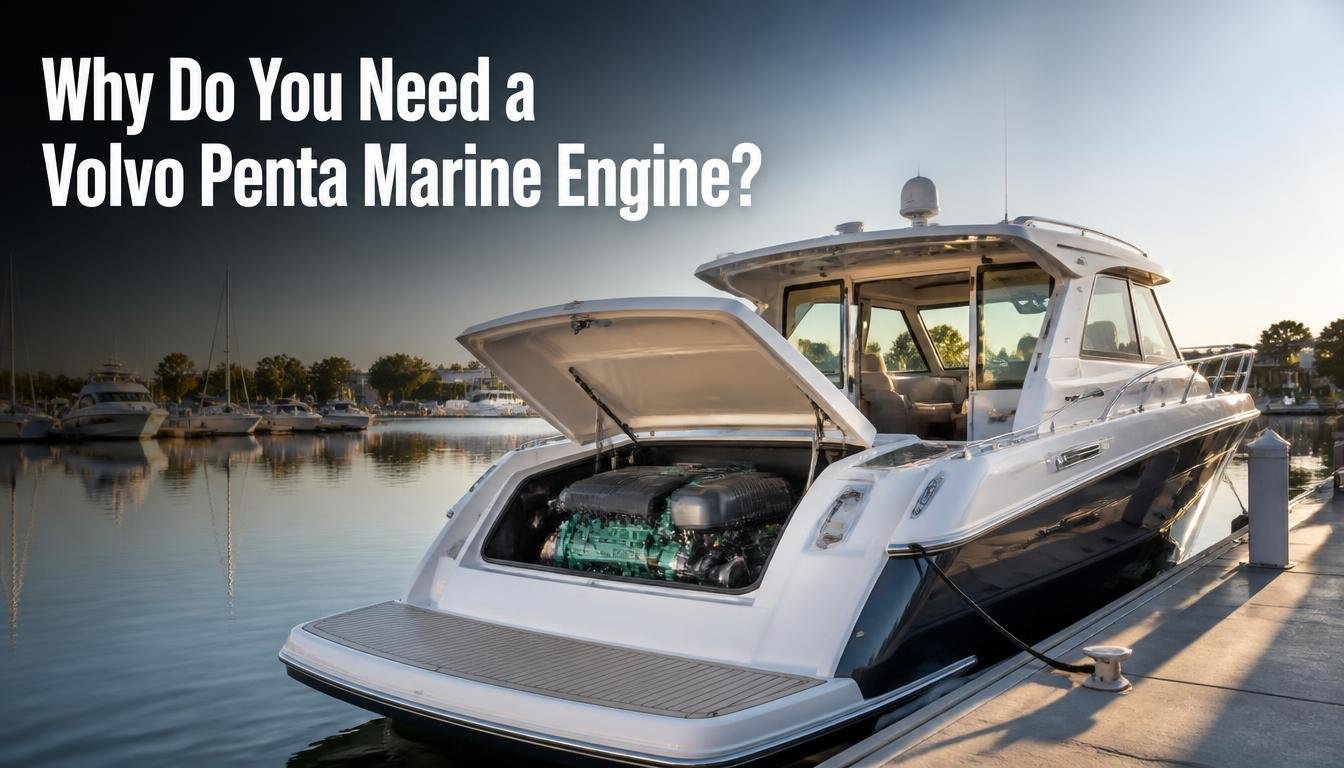
Volvo Penta is a Swedish company that builds marine and industrial engines. It makes diesel and gasoline engines, plus drive systems such as sterndrives, shaft drives, and IPS pod drives. It also makes engines for generators and work equipment.
Volvo Penta belongs to the Volvo Group, which is best known for trucks, buses, and construction equipment. Volvo Cars is a different company. You can read more on the official Volvo Penta website.
Why Do You Need a Marine Engine at All?
A boat with no power depends on wind, current, or a paddle. A marine engine gives you steady, controlled power for moving through water. It also gives you the ability to dock, maneuver, and return safely when conditions change.
A marine engine is built differently from a car engine. It runs in a damp, salty, and hot space. It also works under heavy load for long periods. That is why boats use engines made for marine use, with special cooling, corrosion protection, and fuel systems.
- Propulsion: The engine turns a propeller, either directly or through a drive.
- Maneuvering: Good low-speed control makes docking easier and safer.
- Onboard power: Engines charge batteries and run pumps, lights, and electronics.
- Safety: A reliable engine helps you get back to shore in bad weather.
Why Choose a Volvo Penta Engine?
You don’t strictly need Volvo Penta. Other brands make good marine engines too. Many owners choose or accept Volvo Penta for practical reasons, and often the boat simply comes with one installed.
- Many boat builders use them: Volvo Penta engines come installed in many new boats, so you may get one by choosing the boat.
- Wide engine range: The lineup covers small sailboat engines up to larger engines for yachts and commercial boats.
- Drive options: Sterndrives, shaft drives, and IPS pod drives suit different boat types.
- Dealer network: Volvo Penta has dealers and service centers across the USA, which helps with parts and repairs.
- Modern controls: Many newer boats offer digital throttle controls and joystick docking.
Availability and features differ by model and year. Always check details for your exact engine.
Which Type of Boat Needs Which Setup?
Different boats suit different engines and drives. The table below is a simple guide. Your boat builder, dealer, or a marine technician can confirm the right match for a specific hull.
| Boat Type | Common Setup | Why It Fits |
|---|---|---|
| Sailboat | Small diesel with a shaft or saildrive | Gives reliable auxiliary power for harbors and calm winds |
| Family runabout or small cruiser | Gasoline or diesel sterndrive | Offers a balance of cost, speed, and easy trailering |
| Larger cruiser or yacht | Diesel inboard, sometimes with IPS drives | Supports longer trips and better cruising efficiency |
| Workboat or commercial vessel | Heavy-duty diesel | Handles long hours and heavy loads |
This table is general guidance. Real choices depend on weight, hull shape, and your planned use.
Things to Consider Before You Buy or Repower
If you are shopping for a boat or replacing an engine, think through these points first:
- Decide how you will use the boat: day trips, fishing, long cruises, or work.
- Check the boat’s weight, hull type, and the power range its builder recommends.
- Compare gasoline and diesel based on cost, fuel use, and how often you run the boat.
- Confirm that a Volvo Penta dealer or qualified technician is near where you boat.
- Ask about parts availability and typical service costs for that exact engine.
- Get a professional opinion before you commit to a repower, since it can be a large expense.
Prices and service needs vary by region and model, so get a written quote before you decide.
Common Mistakes to Avoid
- Assuming Volvo Penta parts and Volvo car parts are interchangeable.
- Buying a used boat without a marine survey and an engine inspection.
- Ignoring the service schedule for the impeller, oil, and drive.
- Picking an engine that is too small or too large for the boat.
- Skipping winterization in cold climates.
Practical Tips From Evans
If I were helping a friend pick a boat with Volvo Penta power, I would suggest these steps:
- Ask for the exact engine model, serial number, and service history.
- Read the maintenance schedule on the official site before you buy.
- Budget for yearly service, fuel, storage, and insurance, not only the purchase price.
- Use only parts and fluids that meet Volvo Penta specifications for your engine.
If you own a Volvo car too, my guide to Volvo maintenance schedules for car owners covers the same habit: regular service protects your investment. If you want to know how these engines hold up, you can also read the official Volvo Penta service resources for your model.
💡 Evans Torres Tip: On every Volvo I have owned, I always keep a full digital service record from day one. When something goes wrong — and eventually something always does — having that history makes diagnosis faster and often saves money at the mechanic. Start your records today, even if the car is not new.
Frequently Asked Questions
Why do you need a Volvo Penta marine engine?
You need a marine engine to power a boat’s propeller and often its onboard systems. Volvo Penta is one brand that makes these engines. Many boats come with one installed, but other brands exist too.
Is Volvo Penta the same as Volvo Cars?
No. Volvo Penta is part of the Volvo Group, which builds trucks, buses, and construction equipment. Volvo Cars is a separate company. Parts, service, and warranties are handled separately.
Can I use a car engine in a boat instead?
Car engines are not built for marine use. Boat engines need special cooling, corrosion protection, and fuel systems. A qualified marine technician should guide any engine choice for your boat.
What types of boats use Volvo Penta engines?
Volvo Penta engines are used on sailboats, family runabouts, cruisers, yachts, and commercial vessels. The right engine and drive depend on the boat’s size, weight, and use. Check the builder’s recommendations for your hull.
Do Volvo Penta engines use diesel or gasoline?
Volvo Penta makes both diesel and gasoline marine engines. Diesel is common on larger cruisers and long-range boats, while gasoline is common on smaller family boats. Your choice depends on your boat and budget.
Where can I get a Volvo Penta engine serviced in the USA?
You can use an authorized Volvo Penta dealer or a qualified marine technician. The official Volvo Penta website lists dealer locations. Always bring your engine model and serial number.
Should I get an inspection before buying a boat with a Volvo Penta engine?
Yes. A marine survey and an engine inspection by a qualified technician help you spot problems early. Ask for service records and check the engine hours as well.
Conclusion
You need a Volvo Penta marine engine if your boat uses one, or if you choose it for a new boat or repower. It is a different product from a Volvo car engine, and it needs its own parts, service, and care.
Your next step is simple. Identify your boat’s exact engine, read its service schedule on the official Volvo Penta site, and talk to a qualified marine technician before you buy or repower. If you want to know more about the car side of the brand, visit Volvo Cars for official information.
Author

Author

Evans Torres
I’m Evans Torres, an automotive engineer who loves Volvo cars. I graduated in Automotive Engineering from USC. I have worked in the car industry for years and now share my knowledge on The Volvo Life. I started this blog to connect with other Volvo fans. I offer tips, news, and advice to help you care for your car. My goal is to help you keep your Volvo in great shape and find all the best things about it. Join me as we discover everything Volvo has to offer!