


Jump starter for Volvo A60: use a 24V commercial-grade booster rated around 3,000–5,000 peak amps (900–1,500 cranking amps) with long heavy-gauge leads. For Volvo cars/SUVs, a 12V lithium unit with 2,000+ peak amps suits most gas engines; cold-climate diesels need 3,000A.
A Volvo A60 articulated hauler runs a 24V system that a typical 12V car jump pack cannot power. Sizing and voltage matter more than brand here — pick for engine size, battery type, and climate. You can also use do scanner for Volvo exist as a helpful next guide on the same ownership topic.
This guide explains the right jump starter for the A60, plus the best portable options for Volvo cars and SUVs, safe connection steps, winter storage, and troubleshooting.
- Main point: A Volvo A60 needs a 24V heavy-duty booster; Volvo cars/SUVs use 12V jump packs sized by engine and weather.
- Best first step: Confirm system voltage (12V vs 24V) and engine size before buying; wrong voltage won’t work.
- Cost or value: Quality 12V lithium packs run $100–$300; commercial 24V boosters typically $300–$900.
- Who it suits: Daily drivers, cold‑climate owners, and A60/fleet operators who can’t wait for a service truck.
- When to get help: Swollen/leaking batteries, repeated no-starts in a week, or unclear 24V slave-start procedures.
Wants a compact 12V pack to cover a surprise dead battery in an XC60, S60, or XC40 — without calling roadside. For related context, you may also want to read is scanner for Volvo XC60.
Needs higher peak amps and smart clamps to overcome winter cranking and keep electronics protected.
Runs or maintains Volvo A‑series haulers and trucks — requires 24V commercial boosters or slave‑start gear.
What a Volvo Jump Starter Does vs a Battery Charger
A jump starter delivers a short, high-current burst to crank an engine immediately. It behaves like a portable donor battery with smart safety electronics and heavy cables.
A battery charger replenishes charge slowly over hours. Even “boost” modes on chargers rarely match a true jump starter’s cranking output, and most chargers are 12V only.
For the Volvo A60’s 24V system, you need a purpose-built 24V booster or a dual-bank unit. A 12V car pack will not turn the A60 over — and may trigger protection modes instead.
Never try to jump a 24V A60 with two separate 12V packs unless the device is explicitly designed for series use with proper protection. Improvised series connections risk damage and severe arcing.
Why Keep a Jump Starter in a Volvo — From Cars to the A60
Cold mornings, short errand trips, and aging AGM batteries are the top reasons Volvos refuse to crank. A portable pack gets you moving without waiting for a tow or a second vehicle.
Job sites add more risk: multiple start cycles, long idle times, and parasitic drain on heavy equipment. A 24V booster for an A60 can save hours of downtime and a field-service call.
Here is a quick pairing of scenarios to the correct tool so you can choose once and use it confidently.
Match voltage first, then size by engine displacement and climate. When in doubt, step up one tier for winter or diesel engines.
| Scenario | Vehicle type | Voltage | Recommended jump starter |
|---|---|---|---|
| XC60/XC40/S60 gas 2.0L–2.5L | Car/SUV | 12V | Lithium pack, 1,500–2,000A peak |
| XC90 T6/T5 gas 2.0L turbo/super | SUV | 12V | Lithium pack, 2,000–3,000A peak |
| D5/D4 diesel (cold climate) | Car/SUV | 12V | High‑output lithium, ~3,000A peak |
| T8 Recharge PHEV | Car/SUV | 12V | Standard 12V pack (jump 12V aux only) |
| EX30/EX40/EX90 (full EV) | EV | 12V | Small 12V pack for aux battery only |
| Volvo A60 articulated hauler | Heavy equipment | 24V | Commercial 24V booster, 900–1,500 CA |
| Volvo FH/FM truck (24V) | Truck | 24V | Dual‑voltage 12/24V shop booster |
Best Jump Starter Types for Volvo Cars and SUVs
Lithium portable boosters cover most Volvo cars. They’re compact, hold charge for months, and include reverse‑polarity and spark protection that’s friendly to Volvo’s electronics.
Wheeled commercial boosters suit workshops and fleets. They offer sustained cranking, longer 2/0–4 AWG leads, and dual 12/24V options for trucks alongside passenger Volvos.
- Lithium power bank style: Pocketable, USB‑C charging, ideal glovebox backup. Choose 2,000A+ for XC90/T6 or cold climates.
- Heavy‑duty shop booster: Larger AGM or ultracapacitor units for frequent use, better for diesel and repeated starts.
- Smart clamps: Look for reverse‑polarity, over‑voltage, and thermal protection to safeguard CEM/ECM modules.
Cold cuts lithium capacity by 20–40%. A 2,000A pack on a 20°F morning can behave like a 1,200–1,400A unit — size up one tier if winters dip below freezing.
Volvo Model‑Based Jump Starter Guide
XC90 owners should target 2,000–3,000A peak lithium packs for confident winter starts. The larger SUV and T6/T8 trims draw higher cranking current, especially below 32°F. This connects closely with is scanner for Volvo XC90 if you want to compare the topic in more detail.
XC60, S60, V60, and XC40 gas models usually start with 1,500–2,000A packs. Older five‑cylinder Volvos with higher compression appreciate a stronger 2,000A unit in winter. For another practical angle, see do scanner for Volvo work with all models.
- XC90 (T5/T6): 2,000–3,000A peak, 12V.
- XC60/S60/V60 (2.0L gas): 1,500–2,000A peak, 12V.
- D4/D5 diesel cars: ~3,000A peak in cold regions.
- T8 Recharge PHEV: Standard 12V pack; jump only the 12V posts.
Alarm blare after a jump can be avoided on some models with the right sequence. See our step-by-step for how to jump‑start an S60 without triggering the alarm.
Jump Starters for Volvo Diesel, Hybrid, and EV Models
Diesel engines have higher compression and thicker oil at low temps, so they need more current. For D5/D4 cars, pick the next amp tier — especially if you park outside.
PHEV T8 models and full EVs use a 12V auxiliary battery for control electronics. You can jump the 12V system safely; never attempt to jump the high‑voltage pack.
Never connect a jump starter to a hybrid or EV high‑voltage battery. Only use the designated 12V jump posts shown in the owner’s manual or on Volvo Support. The HV system is orange‑cabled and strictly off‑limits.
For BEVs like EX30/EX40/EX90, a small 12V pack is enough to wake systems so they can close contactors and charge; the traction battery itself isn’t “jumped.”
Jump Starter for Volvo Trucks and Heavy Equipment (A60)
The Volvo A60 articulated hauler uses a 24V starting system fed by large-capacity batteries. Plan on a commercial 24V booster with 900–1,500 cranking amps and long, heavy leads.
Some fleets use slave‑start receptacles or dual‑voltage boosters to serve both trucks and haulers. Confirm connection points and isolation switches in the A60 operator manual before use.
24V equipment like the A60 is usually powered by two 12V batteries in series. If one battery fails, the system voltage may read 24V at rest but sag heavily under load — a booster helps you start, but plan diagnostic testing right after.
Volvo CE publishes model details and support; see the A60H product overview on Volvo Construction Equipment. For cars and SUVs, general jump‑start guidance appears on Volvo Cars Support.
What Size Jump Starter You Need: Voltage, Amps, Engine, Climate
Five factors drive sizing: system voltage, peak/cranking amps, engine displacement, battery chemistry, and ambient temperature. Start with voltage, then pick the next amp tier for diesels or below‑freezing starts.
- Voltage: 12V for cars/SUVs; 24V for A60/trucks.
- Peak amps: 1,500–2,000A (gas cars), 2,000–3,000A (XC90/cold), ~3,000A (diesel cars); 900–1,500CA at 24V (A60).
- Engine size: Larger displacement = higher cranking demand.
- Climate: Sub‑freezing? Upsize one tier.
- Cable gauge: Thicker leads (2/0–4 AWG) reduce voltage drop on big diesels.
How to Use a Jump Starter for Volvo Safely
Correct clamp order and the right jump points protect sensitive Volvo electronics and reduce arcing. Read your model’s manual first, then follow these steps exactly — especially grounding to the recommended chassis point on newer cars.
- Park and prep: Set Park/Neutral, engage the brake, turn off lights/accessories, and open the hood or service hatch.
- Find jump posts: Use the marked positive post and designated ground point (not the battery negative on many models).
- Connect clamps: Red to positive (+) post first, then black to chassis ground.
- Power the booster: Turn on the jump starter; wait for “ready” if it has safety checks.
- Crank the engine: Try a 3–5 second start. If no start, wait 30–60 seconds and try once more.
- Disconnect safely: Remove black clamp (ground) first, then red clamp.
- Let it run: Idle for 10–15 minutes or drive to recharge the alternator‑fed battery.
- Recharge the pack: Top off your jump starter as soon as you’re done; don’t store it partially discharged.
- On SPA/CMA Volvos, always use the chassis ground point to avoid sensor/module voltage spikes.
- Two short start attempts beat one long crank — long cranks overheat starters and drain packs.
- Clean corroded posts before clamping; poor contact wastes 20–40% of your available current.
- After any jump, load‑test the battery; repeated jumps in a week usually mean replacement time.
Charging and Storing a Jump Starter in Winter
Recharge after every use and every 2–3 months if unused. Lithium packs lose capacity in the cold; store them indoors between 50–77°F when possible and warm them briefly before use.
Avoid leaving a pack in a sub‑freezing trunk for weeks — capacity and screen life suffer, and condensation can form when reheated.
Where to Buy a Jump Starter for Volvo
Amazon and major auto‑parts stores carry reputable lithium packs with easy returns. Best Buy stocks consumer units with helpful in‑store support; workshop boosters are common at tool suppliers.
Volvo dealers can advise on safe jump points and may stock compatible 12V packs, but prices trend higher than online retailers.
Remote start does not replace a jump starter; it won’t help a dead 12V system. Learn about the app‑based feature in our overview of Volvo’s remote start app or the key‑fob option for XC90s explained here.
Jump Starter Troubleshooting
No crank after connecting usually comes down to one of five issues: the pack isn’t charged, clamps aren’t biting clean metal, the pack is undersized, safety mode blocked output, or the vehicle battery is internally failed.
- No output: Charge the pack to 100%; some won’t boost under 50% SOC.
- Spark alert: Re‑check polarity; smart clamps may lock out after a reverse‑polarity touch.
- Bad ground: Move the black clamp to a clean bolt on the engine or chassis.
- Too small: Step up one amp tier, especially below 32°F or on diesels.
- Battery failure: A shorted cell won’t take a boost — tow or replace the battery.
Common Mistakes to Avoid — And When to Replace the Battery
Wrong clamp order, clamping on painted metal, and jumping damaged batteries top the mistake list. Don’t crank continuously — heat kills starters fast.
Needing two jumps in a week, a battery older than 5–6 years, or slow cranks even when warm point to replacement over more boosts. After a successful jump, test voltage and CCA to decide.
Do not jump a swollen, cracked, or leaking battery. Acid exposure and internal shorts risk fire and injury. Replace the battery and neutralize any spill with baking soda solution.
You can also learn alarm‑friendly steps for older S60 models in our guide to jump‑starting an S60 without triggering the alarm.
Remote‑start questions come up often during winter starts; clarity there helps avoid confusion with jump‑starting. See our articles linked above for specifics.
💡 Evans Torres Tip: I keep a 2,000A lithium pack in my XC90 and a shop‑grade 24V booster at a client yard that runs an A60. Last January at a ski lot, the XC90 cranked slow at 12°F — the pack fired it on the first 3‑second attempt. On the A60, long leads and a clean chassis ground made the difference between click and start.
Frequently Asked Questions
This section answers the most common buying and safety questions not fully covered above — especially voltage matching for the A60, cold‑weather performance, hybrid/EV precautions, and how often to charge your booster so it’s ready when you actually need it.
What jump starter works for a Volvo A60 articulated hauler?
A 24V commercial booster rated roughly 900–1,500 cranking amps with long heavy‑gauge leads. Look for 24V‑only or dual 12/24V shop units with reverse‑polarity protection. A 12V car pack cannot crank the A60 — voltage must match the hauler’s 24V system.
Can a 12V pack start a 24V A60 in an emergency?
No. A 12V jump pack won’t turn a 24V starter and may trip its protection or spark. Only use a proper 24V booster or an approved slave‑start setup per the A60 manual. Improvised series connections are unsafe unless the equipment explicitly supports it.
What size jump starter should I buy for an XC90?
Pick a 12V lithium unit with at least 2,000A peak; 3,000A gives extra margin for cold mornings and T6 engines. Short commuting and winter parking outside justify the larger unit because lithium output drops significantly in the cold.
Is it safe to jump a Volvo T8 hybrid or an EX series EV?
Yes for the 12V system only. Connect the jump pack to the designated 12V posts and never to the high‑voltage battery. For full EVs, a small 12V boost can wake control modules so the traction pack can engage; you don’t “jump” the HV battery itself.
How often should I charge my lithium jump pack?
Top it off after every use and every 2–3 months if stored. In winter, keep it warm and indoors when possible; cold saps capacity. Many packs self‑discharge slowly, but periodic charging prevents surprise empty batteries when you really need them.
Why won’t my jump starter work in very cold weather?
Cold thickens oil, increases cranking demand, and cuts lithium output. Warm the pack indoors for 10–15 minutes, clean clamp contact points, and try two short 3–5 second cranks. If it still won’t start, the pack may be undersized or the vehicle battery may be failed.
Does remote start help with a dead battery?
No. Remote start depends on a healthy 12V system to wake modules and crank. It won’t overcome a low or failed battery; you still need a jump starter or a charger, and possibly a replacement battery if no‑start repeats.
Where should I connect the negative clamp on newer Volvos?
Use the designated chassis ground point rather than the battery’s negative terminal when the manual specifies it. This reduces voltage spikes to sensitive control modules. The ground point is typically a clean, unpainted stud or bolt near the engine.
Final Verdict
The A60 needs a true 24V commercial booster; Volvo cars and SUVs run 12V packs sized to engine and climate. Voltage match first, then choose the next amp tier for diesel or winter duty.
Follow the safe clamp order and ground‑point guidance, and recharge your pack regularly. If you’re jumping more than once in a week, schedule a battery test and plan a replacement instead of carrying on with repeated boosts.
My Top Picks at a Glance
Here are the three jump starter options I would check first if you want a faster buying decision.
These picks highlight the strongest overall choice, the best value option, and the premium-style pick for practical Volvo ownership.
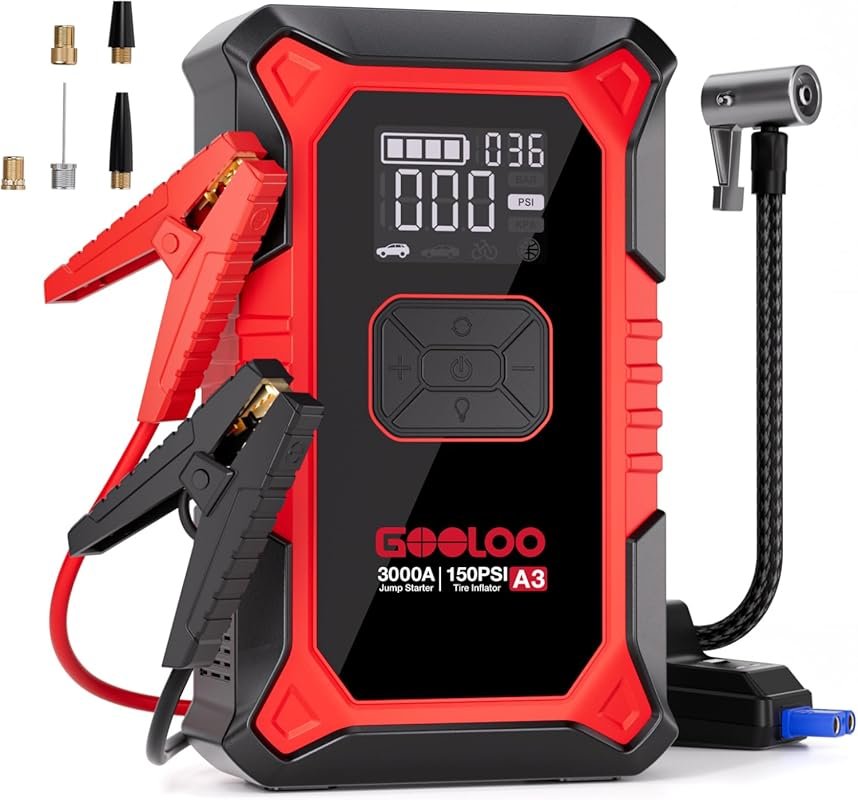 Best Overall
GOOLOO A3 3000A jump starter with 150 PSI compressor, Supersafe booster for 9L gas/6.5L diesel, LED
It offers the strongest all-around mix of fit, value, and practical daily use for Volvo owners.
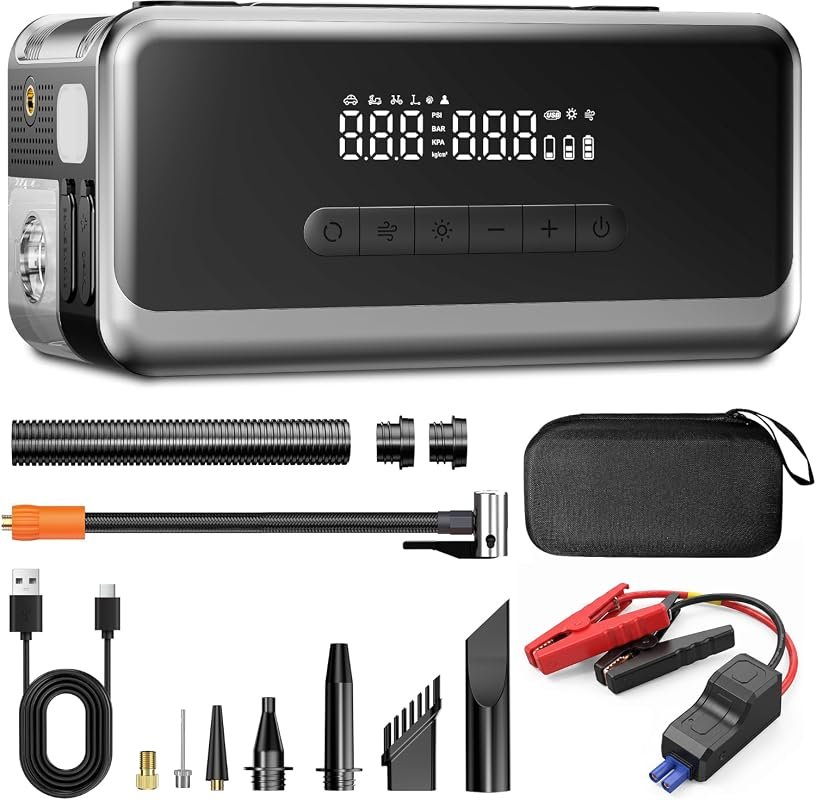 Best Value
Portable 4000A 12V jump starter with air compressor, tire inflator, supports 9.0L gas/8.0L diesel, LED
It makes sense for owners who want a useful upgrade without paying more than necessary.
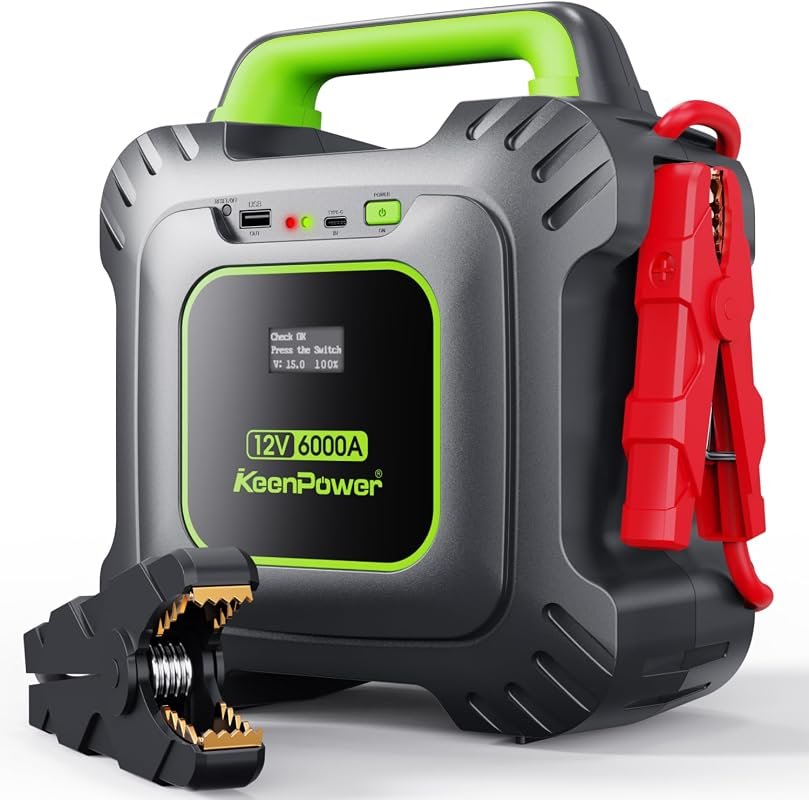 Best Premium Option
KeenPower 6000A supercapacitor jump starter, no battery required, 1-minute fast charge, works to -45°F
It is the pick I would compare first if build quality, features, and long-term ownership value matter most.
Author

Author

Evans Torres
I’m Evans Torres, an automotive engineer who loves Volvo cars. I graduated in Automotive Engineering from USC. I have worked in the car industry for years and now share my knowledge on The Volvo Life. I started this blog to connect with other Volvo fans. I offer tips, news, and advice to help you care for your car. My goal is to help you keep your Volvo in great shape and find all the best things about it. Join me as we discover everything Volvo has to offer!