


Volvo AB vs Volvo Cars compares two separate companies that share the Volvo name but operate in different markets. AB Volvo (Volvo Group) builds commercial vehicles and equipment for businesses, while Volvo Car AB (Volvo Cars) designs and sells passenger cars and SUVs.
Choose Volvo Cars if you’re a retail buyer evaluating safety, comfort, and charging access. Choose AB Volvo brands if you’re a fleet or enterprise buyer focused on uptime, payload, and total cost of ownership.
They are not direct competitors; they share trademarks under license and maintain independent strategies, boards, and stock listings.
Confusion around the Volvo name is common in the U.S. because two separate Swedish companies legally use it. AB Volvo—often called the Volvo Group—makes heavy trucks, buses, construction equipment, and marine/industrial power solutions for businesses.
Volvo Car AB (publ), better known as Volvo Cars, builds consumer vehicles like the XC60, EX30, and EX90. Both companies are headquartered in the Gothenburg area and share historic roots, but they were split decades ago and now follow different ownership and market paths.
This guide unpacks the ownership, divisions, brand licensing, safety frameworks, electrification roadmaps, and what matters for your decision. It is written for U.S. readers who may be shopping for a Volvo car—or clarifying whether a truck or fleet solution sits under the same corporate roof.
- Main difference: AB Volvo (Volvo Group) serves B2B with trucks, buses, construction equipment, and engines; Volvo Cars sells B2C passenger vehicles and SUVs.
- Best for A: AB Volvo brands suit fleets prioritizing uptime, duty-cycle efficiency, telematics, and dealer service networks.
- Best for B: Volvo Cars suits individuals and families valuing safety ratings, comfort tech, and an expanding EV lineup.
- Cost/value: Cars are evaluated by MSRP, incentives, and consumer TCO; trucks by lifecycle cost, financing, service contracts, and utilization.
- Important caveat: They are separate companies sharing trademarks via Volvo Trademark Holding AB; safety tests, warranties, and stock listings are not interchangeable.
You want safety scores, comfort, ADAS, and charging options for daily use and road trips. Your focus is Volvo Cars and its dealer network.
You evaluate payload, uptime, service contracts, and telematics. Your focus is AB Volvo brands like Volvo Trucks and Mack Trucks.
You need clarity on stock tickers, governance, and brand licensing. This article distinguishes the two listings and their separate strategies.
Are Volvo AB and Volvo Cars direct competitors?
No—AB Volvo (the Volvo Group) and Volvo Cars operate in different industries and do not compete for the same customers. AB Volvo sells commercial vehicles and equipment to businesses and governments, while Volvo Cars sells passenger vehicles to consumers.
AB Volvo’s portfolio includes Volvo Trucks, Mack Trucks, Renault Trucks, Volvo Buses (market-dependent), Volvo Construction Equipment, Volvo Penta, and related services. These divisions target freight, construction, municipal, marine, and industrial applications.
Volvo Cars builds sedans and SUVs and now emphasizes battery-electric models alongside hybrids in certain markets. U.S. shoppers encounter Volvo Cars in retail showrooms, financing programs, and consumer warranties—none of which apply to AB Volvo’s truck/equipment ecosystem.
While they share brand heritage and certain trademarks, each maintains independent ownership structures, boards, financials, R&D priorities, and safety/compliance frameworks. The overlap is branding and Swedish roots—not product competition.
For a deeper brand-structure explainer focused on the public split, see our primer on the difference between Volvo Group and Volvo Cars.
Volvo AB vs Volvo Cars at a glance
To reduce confusion, the table below aligns the most relevant facts for U.S. readers: ownership status, brand licensing, market focus, and how each company shows up in daily life. It does not compare vehicle specs because these entities sell fundamentally different products.
Where financial or regulatory items vary by year or market, we point to the governing source rather than estimate numbers. Always verify the latest investor materials before making financial decisions.
| Category | AB Volvo (Volvo Group) | Volvo Car AB (Volvo Cars) |
|---|---|---|
| Entity type | Public company; commercial vehicles/equipment and services | Public company; passenger cars and SUVs |
| Primary market | B2B/B2G (fleets, enterprises, municipalities) | B2C (retail buyers) and some corporate fleets |
| Core brands/divisions (examples) | Volvo Trucks, Mack Trucks, Renault Trucks, Volvo Construction Equipment, Volvo Penta | Volvo branded vehicles; historical ties with Polestar as a performance/EV affiliate |
| Stock listing | Nasdaq Stockholm (VOLV A/VOLV B) | Nasdaq Stockholm (VOLCAR B) |
| Ownership highlights | Widely held; includes significant institutional and strategic shareholders | Majority-owned by Zhejiang Geely Holding Group; publicly traded float |
| Headquarters | Gothenburg area, Sweden | Gothenburg area, Sweden |
| Brand/trademark rights | Uses the Volvo name under Volvo Trademark Holding AB (joint ownership) | Uses the Volvo name under Volvo Trademark Holding AB (joint ownership) |
| U.S. presence | Volvo Trucks NA (VA), Mack Trucks (PA), powertrain/parts and dealer networks | Retail dealers nationwide; manufacturing and R&D footprints vary by model |
| Safety frameworks | Heavy-vehicle standards; fleet safety tech and telematics | IIHS/NHTSA consumer crash testing and ADAS benchmarks |
| Electrification | Battery-electric trucks/equipment available; fuel-cell development (cellcentric) | Expanding EV lineup (e.g., EX30, EX90) and plug-in hybrids (market-dependent) |
For consumers, the practical takeaway is simple: retail showrooms and safety scores relate to Volvo Cars; fleet sales, vocational upfits, and telematics contracts relate to AB Volvo brands. The shared logo does not mean shared warranties, dealers, or tests.
Before making purchase or investment decisions, confirm you are viewing the right company: VOLV A/VOLV B refers to AB Volvo (Volvo Group), while VOLCAR B refers to Volvo Car AB (publ). Always cross-check official investor pages for the latest filings.
Main differences between AB Volvo and Volvo Cars
The headline difference is customer and product focus: AB Volvo serves commercial buyers with trucks, construction equipment, and power solutions, whereas Volvo Cars serves retail buyers with sedans and SUVs.
AB Volvo optimizes uptime, duty-cycle efficiency, dealer service contracts, and fleet telematics. Volvo Cars optimizes safety ratings, comfort, infotainment, design, and retail ownership experience.
Regulatory frameworks diverge as well. Consumer cars face IIHS/NHTSA testing and EPA fuel/EV metrics, while heavy trucks align to different safety, emissions, and vocational standards that aren’t cross-comparable.
Finally, both use the Volvo brand under a joint trademark entity, but they license it for distinctly different products, communications, and customer journeys. This explains why the logo appears across semis and family SUVs without implying one corporate balance sheet.
Similarities and common ground
Both companies share Swedish roots, a long safety-first engineering culture, and public listings on Nasdaq Stockholm. Each invests in electrification, software, and connected services.
They also coordinate via Volvo Trademark Holding AB to steward the brand’s design language and integrity. That shared stewardship keeps the Iron Mark recognizable, even as the products and customers differ.
The famous Volvo logo and “Iron Mark” are administered through Volvo Trademark Holding AB, jointly owned by the two companies. That’s why a Volvo semi and a Volvo family SUV wear nearly the same badge—but arrive from separate corporations.
Price, trims, and feature-adjusted value: how to think about it
There is no apples-to-apples price comparison because AB Volvo sells commercial assets with vocational specifications, while Volvo Cars sells consumer-trimmed vehicles with MSRPs and incentives.
Volvo Cars value analysis weighs MSRP versus standard safety tech, interior quality, warranty, financing, and likely depreciation. Incentives and EV tax credits can materially shift total cost of ownership for U.S. buyers.
AB Volvo value analysis centers on lifecycle cost: acquisition plus body/upfit, fuel or electricity, maintenance plans, downtime risk, residuals, and driver productivity. Financing often involves business credit, leasing, or specialized fleet arrangements.
If you’re comparing “value” across both, start by clarifying whether you are a retail driver or a fleet operator. Your metrics will differ accordingly—and so will your dealer relationships and service cadence.
Scale, manufacturing footprint, and distribution in the U.S.
AB Volvo and Volvo Cars both operate globally, but their U.S. footprints serve different missions. AB Volvo emphasizes assembly, powertrain, parts logistics, and robust dealer networks for uptime.
Volvo Cars focuses on retail sales and aftersales support, with U.S. manufacturing and import flows varying by model and year. Plant utilization can shift as new EVs launch.
If you’re assessing a consumer purchase, manufacturing origin can influence delivery timing, parts availability, and potential incentives. For fleets, proximity to dealers and service centers tends to outweigh where the unit was assembled.
For a consumer-focused look at current build locations, read our guide on where Volvo cars are made today. Fleet buyers should consult brand-specific dealer maps and parts distribution hubs.
Design, comfort, and usability: passenger cabins vs. vocational cabs
Volvo Cars prioritizes Scandinavian interior design, seat ergonomics, visibility, and calm NVH tuning. These elements support daily commuting, family trips, and long-distance comfort.
AB Volvo’s vehicle cabs are work tools, balancing driver comfort with durability, visibility for safety, and functional storage for vocational tasks. Ergonomics matter, but within the context of long-haul or jobsite needs.
Both companies invest in human-centered design, but the outcomes reflect different days-in-the-life. A premium SUV cockpit and a long-haul sleeper are each “right” for their mission—just not cross-comparable.
Software, infotainment, and connectivity technologies
Volvo Cars increasingly ships vehicles with Google built-in infotainment, over-the-air updates, and advanced driver assistance. Consumer UX emphasizes intuitive navigation, voice control, and seamless phone integration.
AB Volvo emphasizes telematics portals, fleet analytics, predictive maintenance, and driver-assist systems tuned for heavy-duty duty cycles. Connectivity aims to maximize uptime and safety under load.
If you’re a retail buyer, evaluate screen responsiveness, update cadence, and app support. If you run a fleet, evaluate data quality, API access, over-the-air configurability, and dealer support for software-enabled services.
Volvo Cars competes in consumer safety testing like IIHS and NHTSA, and its ADAS suites are tuned for passenger-vehicle scenarios. AB Volvo develops collision mitigation, lane support, and visibility tech for heavy vehicles with distinct regulations.
These frameworks aren’t directly comparable, and scores from one do not translate to the other. What they share is a culture of reducing injuries and fatalities via engineering and training.
For consumer-focused safety history and modern ADAS expectations, see our analysis: Are Volvo Cars still the safest? For fleets, review the specific make/model’s standard versus optional safety packages and driver training programs.
Compare safety within the right agency and class. Use IIHS/NHTSA only for passenger vehicles like Volvo Cars. For heavy trucks and equipment, rely on OEM documentation and the relevant federal and state standards for that vehicle class.
Powertrains, performance, and ride
Volvo Cars blends turbocharged gasoline, hybrid, and battery-electric powertrains, tuning ride for comfort and control. EV models emphasize smooth torque delivery and quiet cabins.
AB Volvo provides diesel, battery-electric, and alternative solutions depending on the duty cycle, with fuel-cell development underway through industry partnerships. Performance is measured by torque under load, gradeability, and efficiency in real routes.
For consumers, test drivability, brake feel, and one-pedal behavior in EVs. For fleets, assess payload, charging/dwell times, route modeling, and dealer support for new-energy drivetrains.
Fuel economy and EV range: metrics that don’t translate
Volvo Cars’ gasoline fuel economy and EV range are measured by consumer standards like EPA estimates. Real-world results vary with driving style, climate, and load.
AB Volvo’s heavy vehicles follow different efficiency metrics tied to payload and duty cycles. Fleet telematics and route simulations provide better projections than any single label value.
If you’re comparing EVs, a retail buyer should consider charger access and DC fast-charging speeds. Fleet operators should model charging windows, depot power, and utility rates across the operating schedule.
For home and public charging considerations specific to U.S. infrastructure, our guide on Volvo Cars and Tesla chargers explains compatibility basics and evolving standards.
Reliability, known issues, and data sources
Reliability views differ by market. Volvo Cars reliability is tracked by owner surveys, warranty data, recalls, and long-term maintenance experiences. Outcomes can vary by model and year.
AB Volvo’s reliability is framed as uptime and mean time between failures, captured through fleet telematics and dealer service records. Duty cycle and maintenance discipline drive outcomes as much as the base platform.
Because datasets are not identical, avoid universal claims across both companies. Instead, review model-year specifics, recall histories, and maintenance bulletins for the exact vehicle or platform you’re considering.
Maintenance, insurance, depreciation, and total ownership cost
Volvo Cars ownership costs include scheduled services, wear items, insurance, and depreciation. EV maintenance profiles can differ from gasoline models, often shifting cost to tires and software support.
AB Volvo fleets assess service contracts, driver training, spare-parts logistics, and utilization. Insurance and depreciation are modeled against annual mileage, routes, and cargo types.
Consumer buyers should request prepaid maintenance and warranty details at the dealer. Fleet managers should benchmark service network density, roadside coverage, and telematics-driven PM schedules before signing.
Ask for a line-item TCO. For Volvo Cars: MSRP, incentives, insurance quotes, maintenance plans, tires, and projected depreciation. For AB Volvo units: acquisition plus upfit, energy/fuel, PM contracts, downtime assumptions, driver training, and residual values.
Resale and everyday practicality
Volvo Cars resale depends on model desirability, powertrain, warranty transferability, and perceived reliability. Practicality factors include cargo space, seating flexibility, and driver-assist ease in traffic.
AB Volvo resale depends on engine hours, duty cycle, service records, and market demand in specific vocational niches. Practicality maps to payload, chassis flexibility, and dealer parts availability that keeps units earning revenue.
Match the metric to the mission. A family crossover’s fold-flat seats and child-seat ergonomics solve a different problem than a day cab’s visibility and quick turnarounds.
AB Volvo (Volvo Group) Pros and Cons
- Broad commercial lineup with dealer and service networks optimized for uptime.
- Strong telematics and fleet support for lifecycle cost management.
- Expanding battery-electric and alternative powertrain options in key segments.
- Not a retail car seller; consumer warranties and crash scores do not apply.
- Acquisition requires business financing and vocational specs expertise.
- Infrastructure and route modeling needed for heavy-duty electrification.
Volvo Car AB (Volvo Cars) Pros and Cons
- Strong safety reputation with IIHS/NHTSA-tested models and advanced ADAS.
- Refined interiors, Google built-in infotainment, and growing EV lineup.
- Retail financing, warranties, and nationwide dealer support for consumers.
- Premium pricing relative to mainstream brands; insurance can trend higher.
- EV charging planning required for apartments or rural areas.
- Model-specific reliability and depreciation vary; research the exact year and trim.
Which is better for different buyers: AB Volvo vs Volvo Cars?
The “better” choice depends on whether you are a consumer or a commercial operator. Volvo Cars is the consumer path; AB Volvo brands are the commercial path.
Within each, define your priorities—safety and comfort for families, or duty-cycle efficiency and uptime for fleets—and then narrow to the specific model or platform that best supports those needs.
Alternatives worth considering
If you’re a retail buyer cross-shopping Volvo Cars, consider Audi, BMW, and Mercedes-Benz for premium benchmarks, plus mainstream EVs where charging cost is central. Evaluate safety scores and ADAS carefully.
If you’re a fleet operator, comparable commercial groups include Daimler Truck (Freightliner, Western Star), PACCAR (Kenworth, Peterbilt), and Navistar (International). Local service networks and route modeling may outweigh spec-sheet differences.
How to Decide Between Volvo AB and Volvo Cars
Start by clarifying whether your need is personal transportation or commercial operations. Then map your decision to the right cost and performance metrics.
- Identify your buyer type: consumer driver, small business, or fleet. This sets your dealer path and financing.
- Define your mission: family travel and commute vs. payload, routes, and uptime. Rank must-have features or specs.
- Set total cost targets: MSRP/insurance/maintenance for cars; lifecycle cost and utilization for fleets.
- Validate support: check local dealers, service hours, loaners (cars), or roadside/telematics coverage (fleets).
- Pilot the choice: schedule a test drive or a fleet demo with route and charging simulations where relevant.
Before we tackle common questions, one practical reminder can save time during research and store visits.
💡 Evans Torres Tip: Bring the exact use case to the counter. For cars, note family size, commute length, parking constraints, and charging access. For fleets, list routes, dwell times, loads, and depot power. The more specific your profile, the more accurate the dealer’s feature and contract recommendations will be.
Frequently Asked Questions
Volvo’s split identity can create confusion for U.S. readers navigating showrooms, fleet bids, and even stock tickers. These FAQs address the most common misunderstandings about ownership, safety, warranties, brand licensing, EV charging, and where vehicles are made.
Answers reflect official disclosures and U.S.-market context. Because models, regulations, and corporate holdings can change, confirm any time-sensitive details with the latest manufacturer sources, dealer disclosures, or investor relations pages before you commit to a purchase or investment.
Are AB Volvo and Volvo Cars owned by the same company?
No. AB Volvo (Volvo Group) and Volvo Car AB (Volvo Cars) are separate public companies with independent boards. They have different major shareholders and separate stock listings in Stockholm.
They share access to the Volvo name through Volvo Trademark Holding AB, which governs brand use across their products and communications.
Who owns the Volvo logo and brand?
The Volvo name and Iron Mark are administered by Volvo Trademark Holding AB. That entity is jointly owned to ensure consistent brand stewardship across both companies.
Each company licenses the brand for its own products—commercial vehicles and equipment for AB Volvo, and passenger cars for Volvo Cars.
Do Volvo Cars’ safety ratings apply to Volvo trucks or buses?
No. Volvo Cars undergoes IIHS and NHTSA consumer testing, which applies to passenger vehicles. Heavy trucks and buses follow different standards and evaluation methods.
Always compare safety within the same class and agency framework, rather than extrapolating scores across industries.
Can a Volvo car use Tesla Superchargers in the U.S.?
Many recent Volvo Cars EVs can access Tesla’s network as standards and adapters evolve. Compatibility depends on model year, connector type, and subscription/app requirements.
For specifics and planning tips, see our guide on Volvo Cars and Tesla chargers for U.S. drivers.
Where are Volvo cars built for the U.S. market?
Volvo Cars builds vehicles in several global plants and supplies the U.S. from multiple locations, which can change with model cycles and demand.
For current model-by-model insights and context, start with our explainer on where Volvo cars are made today.
Is Polestar part of Volvo Cars or AB Volvo?
Polestar has operated as a separate, publicly listed EV brand with historical ties to Volvo Cars through technology and prior shareholding. Ownership levels and financing arrangements have evolved.
Check the latest investor releases from Volvo Cars and Polestar for current shareholding details before making investment conclusions.
Are maintenance and diagnostics the same across both companies?
No. Volvo Cars uses consumer-focused dealer tools and service intervals tailored to passenger vehicles. AB Volvo brands use commercial diagnostic systems and fleet service contracts.
Consumer owners curious about diagnostics can review our overview of the diagnostic tool for Volvo Cars.
Are Volvo cars still known for safety?
Volvo Cars maintains a safety-first reputation and competes strongly in modern crash testing and ADAS features. Model-year specifics vary, so verify ratings for the exact vehicle you’re buying.
Our deep dive, Are Volvo Cars still the safest?, summarizes the latest context and buyer implications.
Final Verdict
Think of the Volvo brand as two separate doors. If you’re a consumer shopping for a safe, refined SUV or EV, Volvo Cars is your door—complete with retail financing, crash-test scores, and an expanding charging ecosystem.
If you run a business, AB Volvo (Volvo Group) is the other door—focused on uptime, dealer-supported telematics, and lifecycle cost across trucks, equipment, and power solutions. The logo is shared, but the products, warranties, regulations, and stock tickers are not.
Decide by your mission. Families and commuters belong with Volvo Cars. Fleets and vocational buyers belong with AB Volvo brands. The right choice is the one that matches your daily reality—and the metrics that define success there.
My Top Picks at a Glance
These three Volvo accessories are practical options to compare after choosing the right Volvo configuration.
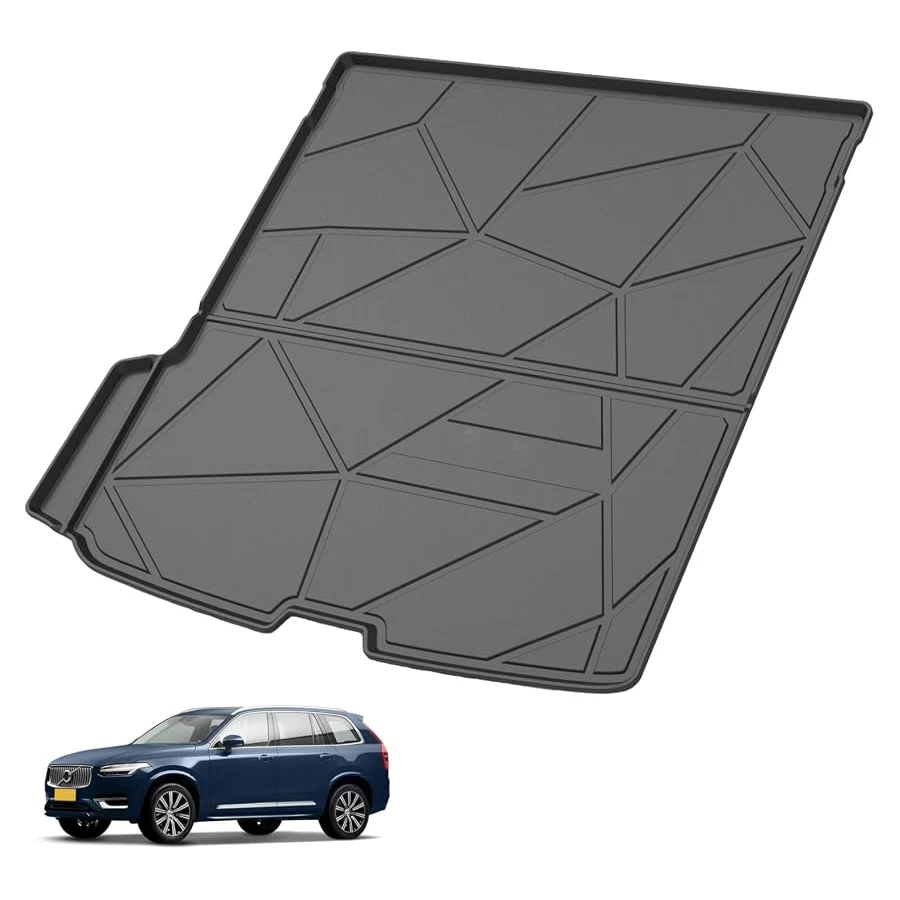 Best Overall
Elsetyler Volvo XC90 Cargo Liner 2016-2026, Custom-Fit Black TPE, All-Weather, Waterproof, Heavy-Duty Protection
A vehicle-fit accessory to compare for compatibility, daily usefulness, and value.
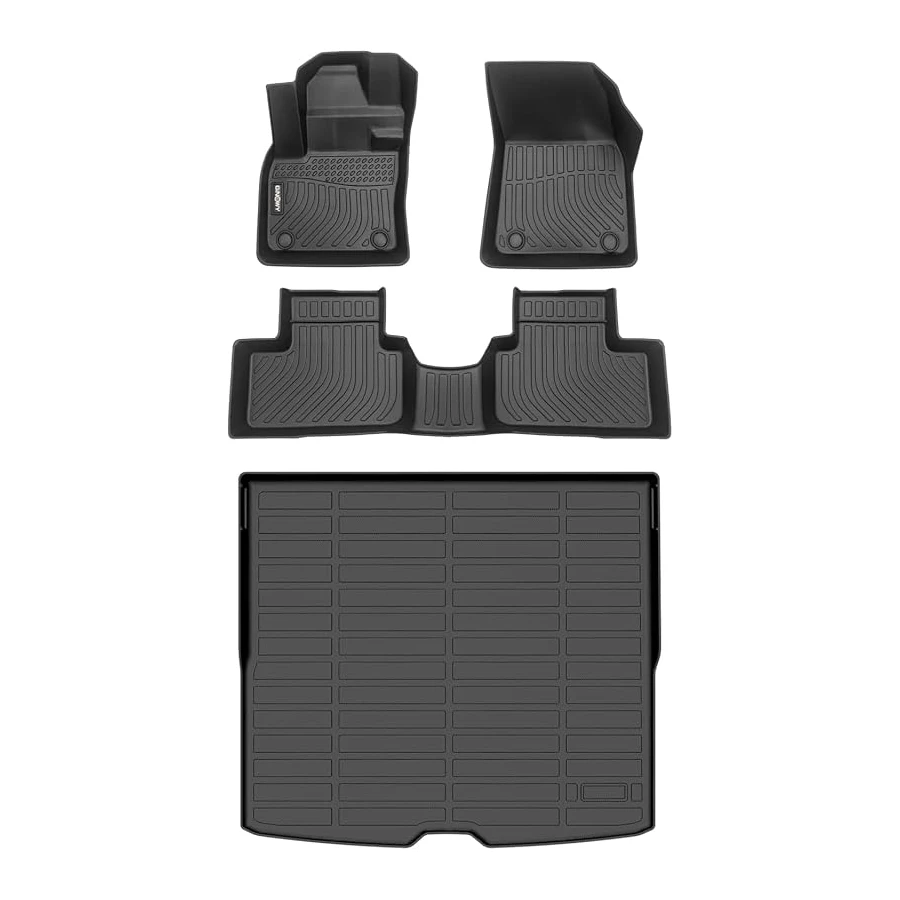 Best Value
GINOWY Volvo XC40 2019-2026 Floor Mats and Cargo Liner, Custom Fit, All-Weather, Durable Rubber
A vehicle-fit accessory to compare for compatibility, daily usefulness, and value.
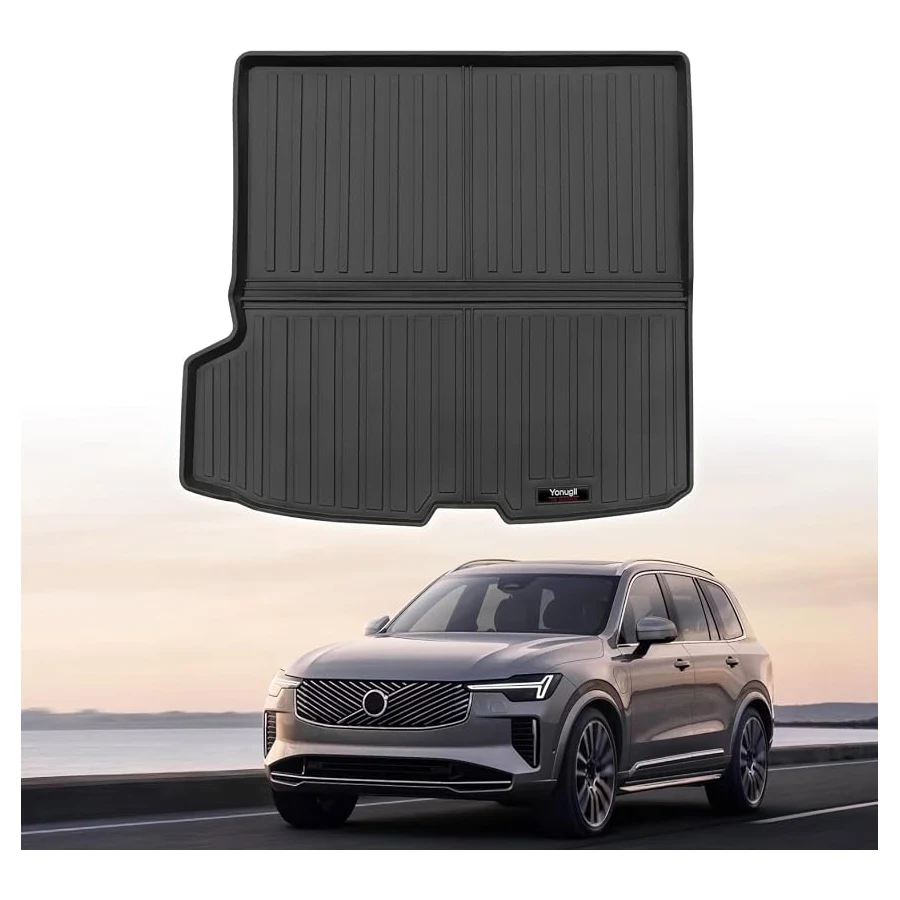 Best Premium Option
Volvo XC90 Cargo Liner 2016-2026, Behind 2nd Row, Custom-Fit TPE, All-Weather Trunk Protection
A vehicle-fit accessory to compare for compatibility, daily usefulness, and value.
Sources and Methodology
This U.S.-focused explainer distinguishes AB Volvo (Volvo Group) from Volvo Car AB (Volvo Cars) using official brand, trademark, and investor materials. We aligned comparisons to market role, licensing, safety frameworks, and electrification rather than forcing vehicle specs.
We avoided time-sensitive figures where not essential and noted when datasets are non-comparable (e.g., IIHS vs. heavy-truck standards). Readers should confirm current filings, model features, and dealer details before purchase or investment. Verified July 2026.
Author

Author

Evans Torres
I’m Evans Torres, an automotive engineer who loves Volvo cars. I graduated in Automotive Engineering from USC. I have worked in the car industry for years and now share my knowledge on The Volvo Life. I started this blog to connect with other Volvo fans. I offer tips, news, and advice to help you care for your car. My goal is to help you keep your Volvo in great shape and find all the best things about it. Join me as we discover everything Volvo has to offer!