
The Volvo D12 and D13 engines serve different operational needs and preferences. Understanding their distinctions is crucial for making an informed decision based on your specific requirements.
The difference between Volvo D12 and D13 engines primarily lies in their specifications and performance capabilities. While the D12 offers up to 500 horsepower, the D13 provides up to 600 horsepower, making it a more powerful option for demanding applications.
This article explores these differences in detail to help you make an informed decision.
- Practical Differences Between Volvo D12: The Volvo D12 and D13 engines serve different operational needs and preferences..
- Key Specifications: Volvo D12 vs.: The following table summarizes the important specifications of both engines for a quick reference..
- Power Outputs: Performance Comparison: Examining the power outputs of the D12 and D13 will help identify which engine.
- Fuel Efficiency: D12 vs. D13: Understanding fuel efficiency differences is vital for cost management in operations..
- Safety Features: Technological Advancements: Both engines are equipped with varying levels of safety and driver-assist technologies that can.
Practical Differences Between Volvo D12 and D13 Engines
The Volvo D12 and D13 engines serve different operational needs and preferences. Understanding their distinctions is crucial for making an informed decision based on your specific requirements. For related context, read which engine oil for 2015 volvo d13.
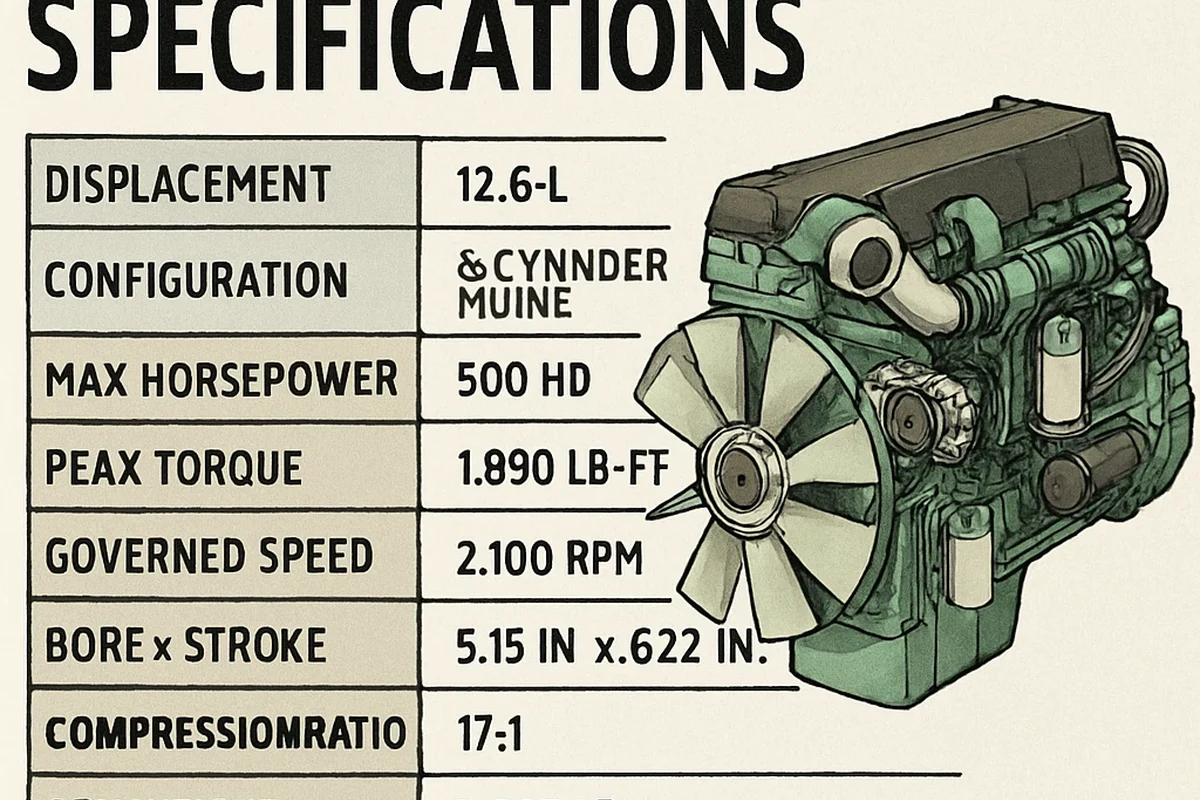
| Criteria | D12 | D13 |
|---|---|---|
| Engine Displacement | 12.1 liters | 13 liters |
| Power Output | 420-500 HP | 420-540 HP |
| Torque | 1,550-1,750 Nm | 2,300 Nm |
| Fuel Efficiency | Moderate | High |
Key Specifications: Volvo D12 vs. D13
The following table summarizes the important specifications of both engines for a quick reference.
| Specification | Volvo D12 | Volvo D13 |
|---|---|---|
| Horsepower | Up to 500 HP | Up to 600 HP |
| Torque | Up to 1850 lb-ft | Up to 2050 lb-ft |
| Displacement | 12.1 liters | 13.0 liters |
| Fuel Efficiency | Less efficient | More efficient |
Consider your daily driving conditions to determine which engine will save you more on fuel.
Power Outputs: Performance Comparison
Examining the power outputs of the D12 and D13 will help identify which engine might be better suited for your operational needs. The D12, with its maximum output of 500 horsepower, is sufficient for many standard hauling tasks. For official guidance on this, see Consumer Reports car guidance.
However, the D13, peaking at 600 horsepower, is designed for heavier loads and more demanding routes. This area decision also connects with what oil is good for volvo d13 engine.
Fuel Efficiency: D12 vs. D13
Understanding fuel efficiency differences is vital for cost management in operations. The D13 engine is generally more fuel-efficient than the D12, making it a better choice for long-haul applications where fuel costs significantly impact overall expenses. For another location comparison, read how much oil in d13 volvo engine.
If you’re leaning towards the D13, check out its maintenance schedule for better planning.
Safety Features: Technological Advancements
Both engines are equipped with varying levels of safety and driver-assist technologies that can impact operational safety. The D13 often includes more advanced safety features due to its newer design and technology updates, offering better support for drivers in challenging conditions. This also connects with best engine oil for volvo d13 before you pay, sign, or book.
Maintenance and Reliability: Owner Insights
A look into maintenance requirements and reliability records can provide valuable insights into the long-term ownership experience. Generally, the D12 may require more frequent maintenance compared to the D13, especially if it’s older or has higher mileage. For related service checks, see which engine oil for volvo xc90.

Drivers needing reliability for standard routes.
Various Volvo trucks from different model years.
You require high power for heavy-duty applications.
Best Fit Scenarios for D12 and D13
Identifying the ideal use cases for each engine will help buyers make informed decisions based on their specific applications. The D12 is suited for lighter loads and urban driving, while the D13 excels in long-haul and heavy-duty scenarios. You can also use which engine oil for my 2012 volvo xc60 t6 as the next practical guide.
Final Verdict: D12 or D13?
Both engines have their strengths and weaknesses. The choice largely depends on your operational needs, budget, and performance expectations.
If fuel efficiency and higher power output are priorities, the D13 may be the better choice. However, for standard operations, the D12 remains a reliable option. For related context, read volvo d11 engine wiring diagram.
- Listen for any unusual noises from the engine.
- Check the dashboard for any alerts or warnings.
- Test the responsiveness of the transmission.
Understanding the Key Differences
The core differences between the Volvo D12 and D13 engines revolve around power, efficiency, and intended applications. The D13 is designed for more demanding tasks, offering greater power and efficiency, making it ideal for long-haul trucking. You can also use volvo d11 engine review as the next practical guide.
Key Differences Between Volvo D12 and D13 Engines
The primary distinctions between the Volvo D12 and D13 engines hinge on their power output, torque, and fuel efficiency. For official guidance on this, see NHTSA recall lookup by VIN.
The D12, offering up to 500 horsepower and moderate fuel efficiency, is ideal for standard hauling tasks, while the D13, peaking at 600 horsepower and boasting higher efficiency, excels in demanding long-haul applications.
Consider these factors to choose the best engine for your needs.
- Evaluate your typical load requirements to determine if the D12 or D13 is more suitable.
- Assess fuel costs versus operational efficiency to decide which engine aligns with your budget.
- Review maintenance schedules and reliability records to understand long-term ownership implications.
This guide on difference between volvo d12 and d13 is general information. Rules, fees, rents, salaries, service coverage, product details, and procedures can change, so confirm important points with the manufacturer, retailer, or official app documentation before acting.
Questions People Also Ask
The Volvo D12 engine offers up to 500 horsepower, while the D13 engine provides a maximum of 600 horsepower. This difference in power output makes the D13 a more suitable choice for demanding applications.
The D12 engine delivers up to 1850 lb-ft of torque, whereas the D13 engine offers up to 2050 lb-ft. This increase in torque with the D13 further enhances its performance for heavy-duty tasks.
The Volvo D12 is generally less fuel-efficient compared to the D13 engine. The D13, with its newer design, is more efficient, making it a better option for long-haul applications.
The D13 engine is designed for heavier loads and more demanding routes, making it the better option for heavy-duty applications. In contrast, the D12 is more appropriate for standard hauling tasks.
The D13 engine often includes more advanced safety features due to its newer design and technology updates. This can provide better support for drivers in challenging driving conditions compared to the D12.
Generally, the D12 may require more frequent maintenance compared to the D13, particularly if it is older or has higher mileage. Understanding these maintenance needs can help in planning for long-term ownership.
Wrapping Up
Ultimately, the decision between the Volvo D12 and D13 engines should be based on your specific needs, whether that’s power, efficiency, or maintenance considerations. Evaluating your operational requirements will guide you to the best engine choice for your situation.
Author

💡 Evans Torres Tip: On every Volvo I have owned, I always keep a full digital service record from day one. When something goes wrong — and eventually something always does — having that history makes diagnosis faster and often saves money at the mechanic. Start your records today, even if the car is not new.