


Key Takeaways
- The XC60 Recharge is a plug-in hybrid, not a fully electric vehicle.
- Charging the battery regularly helps you make better use of electric driving.
- The gasoline engine can keep the vehicle moving when electric charge is low.
- Regenerative braking recovers some energy, but it does not replace plugging in.
- Electric range, charging time, and available features depend on the model year and configuration.
1. What Powers the Volvo XC60 Recharge?
The XC60 Recharge has three main powertrain components: a gasoline engine, an electric motor, and a high-voltage battery. A control system manages how these parts work together based on your driving conditions and selected settings.
The gasoline engine
The gasoline engine provides power for longer trips and can work with the electric motor during acceleration. It also means you can continue driving after the battery’s usable electric charge has been depleted, as long as you have enough fuel and the vehicle has no other faults.
The electric motor
The electric motor can move the SUV without using the gasoline engine under suitable conditions. It can also assist the engine when you accelerate. Electric driving can reduce local exhaust emissions and gasoline use, especially on short trips that begin with a charged battery.
The high-voltage battery
The battery stores electricity for the electric motor. You recharge it by connecting the vehicle to a suitable power source. The battery also receives some energy from regenerative braking.
These components work as one system. You do not need to switch between them manually during normal driving, although available drive modes and battery settings can affect how the vehicle uses its power sources.
2. How Does the XC60 Recharge Drive?
The XC60 Recharge can use electric power, gasoline power, or a combination of both. The exact behavior depends on the model year, battery charge, temperature, driving conditions, and selected drive mode.
Electric driving
With enough battery charge, the SUV can travel on electric power alone when conditions allow. This is useful for commuting, school runs, errands, and other short trips. Electric driving is quiet and produces no tailpipe emissions while the vehicle moves on electricity alone.
Hybrid driving
In hybrid operation, the vehicle manages the gasoline engine and electric motor to balance power, efficiency, and driving needs. It may use electric power at lower loads and bring in the engine when more power is needed. You can generally let the vehicle manage this process without constantly changing settings.
Using the gasoline engine
During long highway trips, strong acceleration, or other conditions that call for more power, the gasoline engine may run more often. Cold weather and cabin heating needs can also affect how much the engine operates. A charged battery does not guarantee that the engine will remain off in every situation.
The key point is simple: the XC60 Recharge combines two ways of producing power. It offers electric driving for suitable trips while retaining the flexibility of a gasoline-powered SUV.
3. How Do You Charge a Volvo XC60 Recharge?
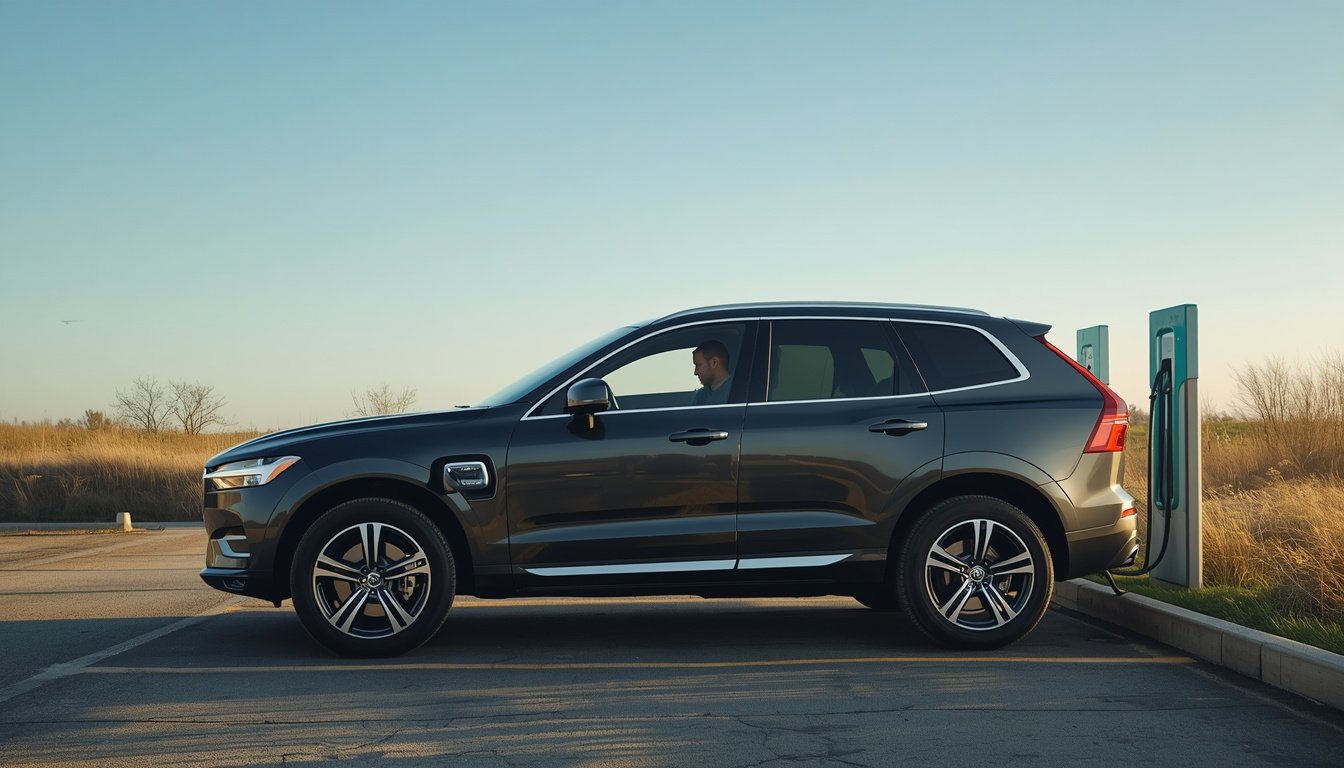
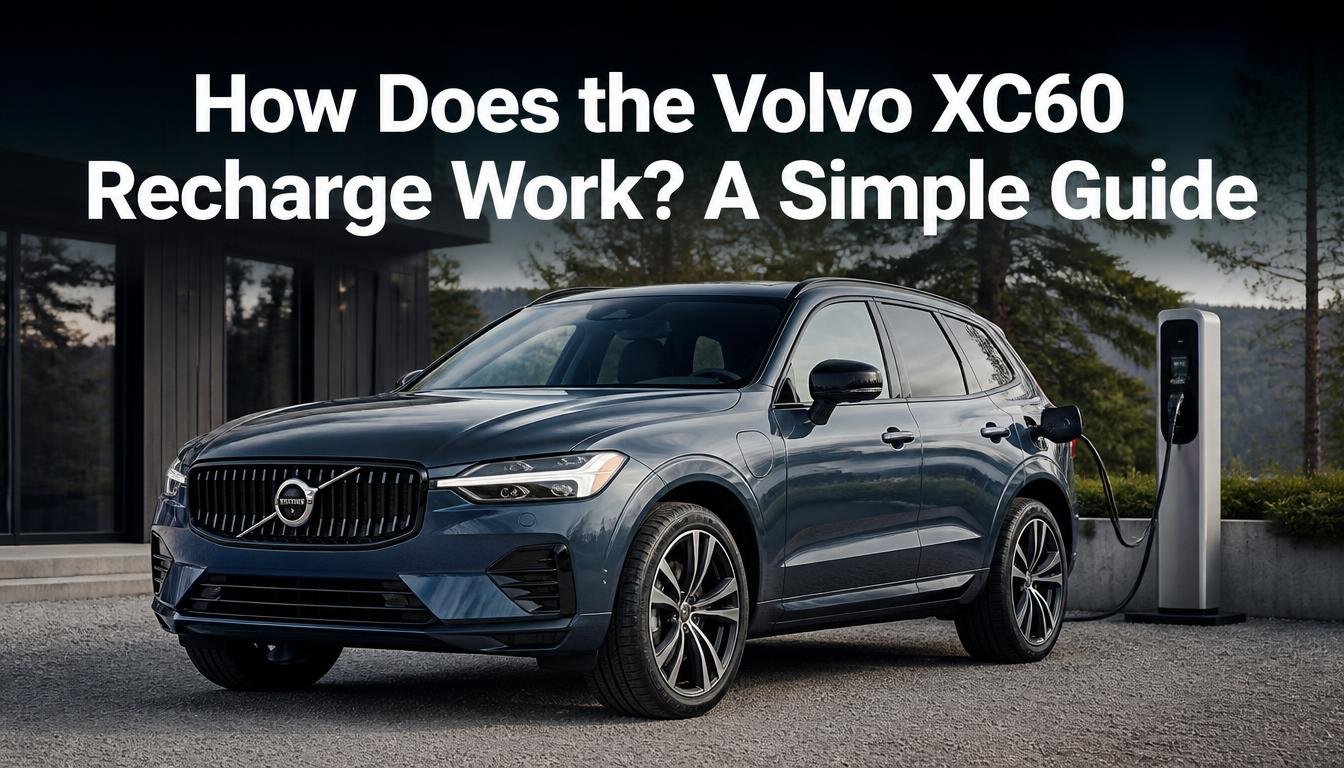
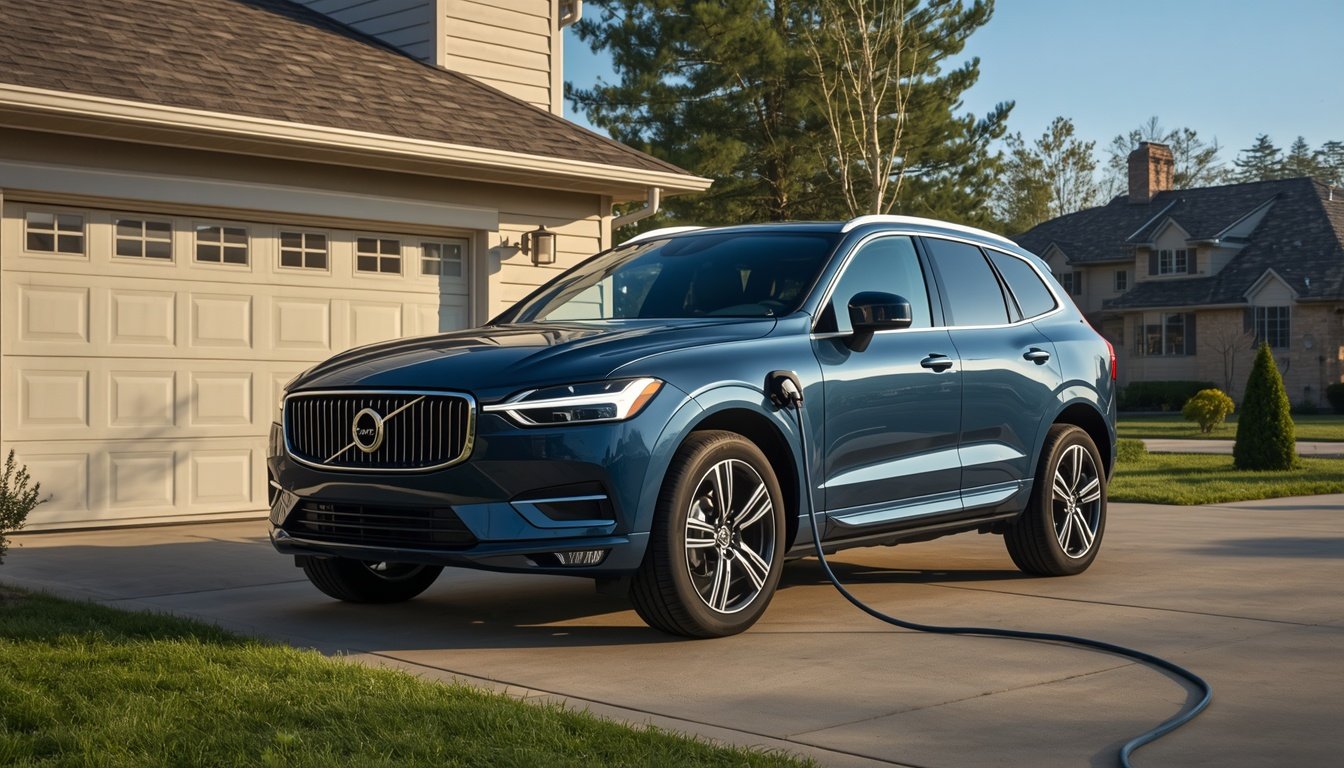
You can charge a compatible XC60 Recharge at home or at a public AC charging station. For many owners, home charging is the easiest option because the vehicle can recharge while parked overnight.
Charging at home
A suitable home charging point or wallbox is a convenient choice for regular use. A standard household outlet may also be supported for certain model years and charging setups, but Volvo treats this as an occasional option rather than the preferred daily method. Check the manual for your specific vehicle before choosing a charging method.
Charging at a public station
Public AC charging stations can provide power while you shop, work, or visit other places. Confirm that the station has a compatible connector and that the charging equipment supports your vehicle. Do not assume every public charging plug or high-power charging station will work with every XC60 Recharge.
Steps to start charging
- Park the vehicle and make sure it is in Park.
- Use a suitable, undamaged charging cable and power source approved for your vehicle.
- Open the charging port and connect the cable as described in the owner’s manual.
- Check the charging indicator or instrument panel to confirm that charging has started.
- Allow the battery to charge, then stop and disconnect the cable using the correct procedure for your vehicle.
Never use extension cords, power strips, or improvised adapters between the power source and the charging cable. If a household outlet becomes hot, looks damaged, or produces an unusual smell, stop using it and have it checked by a qualified electrician.
For vehicle-specific steps, see the official Volvo XC60 Recharge support and owner’s manual resources.
4. How Long Does It Take to Charge?
Charging time depends on the battery, charging equipment, available electrical power, battery temperature, and vehicle condition. There is no single charging time that applies to every XC60 Recharge model year.
As one current reference, Volvo lists an approximate five-hour charge from zero to 100% for the 2026 XC60 plug-in hybrid using a compatible two-phase, 16-amp AC supply. This is an estimate, not a guarantee, and older models may have different specifications.
| Charging factor | What it means for you |
|---|---|
| Home wallbox | A convenient option for regular charging, depending on its supported power output. |
| Household outlet | May take longer and requires a suitable, grounded outlet and careful safety checks. |
| Public AC charger | Can recharge the battery while you are away from home, subject to vehicle and station limits. |
| Cold or hot weather | Can affect charging speed, battery performance, and available electric range. |
For an accurate estimate, check the charging specifications for your exact model year and the equipment you plan to use. Volvo’s official XC60 plug-in hybrid specifications provide current model information.
5. What Happens When the Battery Runs Low?
You do not need to stop driving just because the XC60 Recharge has used its available electric range. The vehicle can rely more on its gasoline engine and hybrid system when the battery has little usable charge remaining.
However, a low battery does not mean the hybrid battery is physically empty in the same way as an unplugged device that has no power left. The vehicle manages its battery within operating limits to support its systems and protect the battery.
You can refuel the gasoline tank at a suitable gas station as needed. Refueling does not fully recharge the plug-in battery, though the vehicle may recover some energy while driving. To restore the battery’s full external charge, plug it into a compatible charging source.
Can you drive without plugging it in?
Yes. The XC60 Recharge can generally operate as a gasoline-electric hybrid without being plugged in. But you will miss much of the benefit of electric driving, and fuel use may rise compared with driving on a regularly charged battery. If your daily journeys are short and you can charge at home, plugging in regularly can make the system more useful.
6. How Regenerative Braking Recharges the Battery
The XC60 Recharge can recover some energy as you slow down. This process is called regenerative braking. Instead of allowing all the vehicle’s movement energy to become heat in the brakes, the electric motor works as a generator and sends some energy back to the battery.
Regenerative braking can occur during suitable deceleration and braking. Some model years also offer specific settings or driving modes that change how the vehicle slows when you lift off the accelerator.
Keep these points in mind:
- Regenerative braking recovers only part of the energy used to move the vehicle.
- It cannot fully recharge a depleted plug-in battery during ordinary driving.
- Energy recovery varies with speed, battery charge, temperature, and braking conditions.
- Use the brake pedal as needed to maintain a safe stopping distance.
Do not change your braking habits to chase a higher energy-recovery figure. Smooth, safe driving matters more than trying to maximize every small amount of recovered energy.
7. How Far Can the XC60 Recharge Drive on Electricity?
Electric range varies by model year and driving conditions. Volvo lists an EPA-estimated electric range of up to 35 miles for the 2026 XC60 plug-in hybrid. This is a model-specific estimate, not a promise that every driver will reach that distance.
Your actual range may be lower or higher depending on speed, temperature, road grade, traffic, tire condition, cabin heating or cooling, and driving style. Highway driving at higher speeds can use more energy than slower urban driving. Cold weather can also reduce available electric range.
The range shown on the instrument panel is an estimate based partly on recent driving patterns. It can change as conditions change, so use it as a guide rather than an exact prediction.
8. Tips for Getting More From Your XC60 Recharge
I recommend building a charging routine that fits your daily travel. You do not need to make every trip an exercise in maximizing efficiency. A few simple habits can help you use the hybrid system well.
- Charge regularly: Plug in at home when practical so electric power is available for your next trip.
- Drive smoothly: Gradual acceleration and early, gentle slowing can reduce energy use.
- Plan longer journeys: Keep the gasoline engine and fuel range in mind rather than relying only on the electric estimate.
- Use climate settings wisely: Heating and cooling can affect battery range, especially in extreme weather.
- Check tire pressure: Use the pressure values listed for your vehicle, since underinflated tires can increase energy use.
For more ownership advice, you can also explore our Volvo maintenance guide and Volvo diagnostic scanner guide.
9. Common Mistakes to Avoid
Some misunderstandings can lead to frustration or unnecessary charging concerns. Avoid these common mistakes:
- Assuming the XC60 Recharge is fully electric. It is a plug-in hybrid with a gasoline engine.
- Expecting the electric range to stay the same in every season and driving condition.
- Using damaged outlets or unapproved charging accessories.
- Assuming regenerative braking can replace regular charging.
- Trying to open or repair the high-voltage battery or orange high-voltage cables yourself.
The high-voltage system can cause severe injury. If you suspect damage to the battery or charging components, stop using the affected equipment and contact an authorized Volvo workshop. After a collision, flood, or other event that may have damaged high-voltage components, follow Volvo’s safety guidance and seek professional help.
10. Is the Volvo XC60 Recharge Right for You?
The XC60 Recharge can be a good fit if you want an SUV that offers electric driving for short trips without giving up a gasoline engine for longer journeys. It is especially practical for drivers who have a safe, convenient place to charge at home or work.
It may be less appealing if you cannot charge regularly and mostly drive long distances. In that case, compare the plug-in hybrid with the regular XC60 mild hybrid and consider your fuel use, charging access, purchase budget, and typical driving pattern.
Before buying a used XC60 Recharge, confirm the model year, service history, charging equipment, and any battery or hybrid-system warnings. Ask a qualified Volvo technician to assess the vehicle if you have concerns about battery health or hybrid operation.
💡 Evans Torres Tip: On every Volvo I have owned, I always keep a full digital service record from day one. When something goes wrong — and eventually something always does — having that history makes diagnosis faster and often saves money at the mechanic. Start your records today, even if the car is not new.
Frequently Asked Questions
How does the Volvo XC60 Recharge work?
The Volvo XC60 Recharge combines a gasoline engine, an electric motor, and a rechargeable high-voltage battery. It can drive on electric power alone under suitable conditions or use both power sources together. You can charge it externally and recover some energy through regenerative braking.
Does the Volvo XC60 Recharge need to be plugged in?
No, it can generally drive using its gasoline-electric hybrid system without being plugged in. However, regular charging lets you use more of its electric-driving capability and may reduce gasoline use on short trips.
How long does it take to charge a Volvo XC60 Recharge?
Charging time depends on model year, battery condition, temperature, and the available power supply. Volvo lists approximately five hours for a full charge on the 2026 XC60 plug-in hybrid with a compatible two-phase, 16-amp AC supply. Check your vehicle’s specifications for the correct estimate.
Can the Volvo XC60 Recharge run on gas only?
The XC60 Recharge can generally continue driving when its available electric range has been used, with the gasoline engine providing more of the power. The hybrid system may still manage the battery and electric motor, so this is not the same as permanently switching off the hybrid system.
How far can a Volvo XC60 Recharge drive on electric power?
The 2026 XC60 plug-in hybrid has an EPA-estimated electric range of up to 35 miles. Actual range depends on factors such as weather, speed, terrain, climate settings, and driving style. Other model years may have different estimates.
Does regenerative braking fully recharge the XC60 Recharge battery?
No. Regenerative braking captures some energy during deceleration and sends it back to the battery. It helps improve efficiency but cannot replace charging from a compatible external power source.
Can I charge a Volvo XC60 Recharge using a regular household outlet?
Some XC60 Recharge model years support charging from a suitable household outlet, but charging may be slow and the outlet must meet Volvo’s safety requirements. Follow your owner’s manual, avoid damaged outlets and extension cords, and ask a licensed electrician to check the circuit if needed.
Final Thoughts
The Volvo XC60 Recharge works by combining electric power with a gasoline engine, giving you the option to drive shorter trips on electricity and take longer journeys without relying on public charging alone. Regular charging, smooth driving, and a good understanding of your vehicle’s range can help you get more from the system.
My advice is to check the owner’s manual for your exact model year and set up a safe charging routine that fits your daily needs. If the vehicle displays a hybrid-system or charging fault, do not guess at the cause. Follow the dashboard guidance and arrange a professional inspection when needed.
Author

Author

Evans Torres
I’m Evans Torres, an automotive engineer who loves Volvo cars. I graduated in Automotive Engineering from USC. I have worked in the car industry for years and now share my knowledge on The Volvo Life. I started this blog to connect with other Volvo fans. I offer tips, news, and advice to help you care for your car. My goal is to help you keep your Volvo in great shape and find all the best things about it. Join me as we discover everything Volvo has to offer!