


People have died in Volvo crashes, including in recent years, so there is no honest “Volvos have had zero deaths since X date” answer. The harder question is whether anyone can identify the single most recent fatality in a Volvo anywhere in the world. In practice, no authoritative global real-time database publishes a continuously updated “last death by vehicle brand” record.
What we can verify is much more useful: government fatal-crash databases, model-level driver-death-rate studies, current crash-test results and Volvo’s own safety research. The latest U.S. IIHS driver-death-rate study, published in July 2026, places the Volvo XC60 4WD and XC90 4WD among the lowest-rate vehicles in the study, at 7 driver deaths per million registered vehicle-years. The average across all makes and models was 37.
When was the last time someone died in a Volvo? There is no trustworthy public source that can name the single latest Volvo-related death worldwide in real time. Fatal crashes involving Volvos still occur. The best current U.S. evidence comes from NHTSA’s annual Fatality Analysis Reporting System (FARS) and IIHS model-level driver-death-rate studies. In the newest IIHS study covering fatalities from 2021–2024 for 2023 and equivalent models, the Volvo XC60 4WD and XC90 4WD each recorded an estimated driver death rate of 7 per million registered vehicle-years, far below the all-vehicle average of 37.
- Volvo fatalities are not zero. Real-world fatal crashes involving Volvo vehicles still occur.
- There is no global “latest Volvo death” counter. Police, state, national and insurance datasets are collected on different schedules.
- NHTSA FARS is annual, not real-time. It is a census of qualifying fatal U.S. traffic crashes and is one of the strongest sources for fatality analysis.
- IIHS driver-death rates are model-level estimates. They are expressed per million registered vehicle-years and adjusted for driver age and gender.
- The newest IIHS study is encouraging for Volvo SUVs. XC60 4WD and XC90 4WD both show 7 driver deaths per million registered vehicle-years in the 2021–2024 study window.
- The all-model average in that study is 37. That means those two Volvo estimates are substantially lower than the overall average.
- Low death rates do not mean invincibility. Speed, vehicle mass, seat-belt use, road conditions, impairment and crash type still matter.
- Volvo’s current safety vision remains ambitious. Volvo says its vision is that no one should be seriously injured or killed in a new Volvo, while its newer ambition is a future with zero collisions.

Why There Is No Reliable “Last Volvo Death” Date
The phrase “when was the last time someone died in a Volvo?” sounds as if there should be a single timestamp somewhere. There is not. Fatal-crash information is collected by local authorities, states, national agencies, insurers, researchers and sometimes manufacturers, and those systems do not update as one synchronized global database.
In the United States, the most authoritative national source is NHTSA’s Fatality Analysis Reporting System (FARS). FARS is a census of fatal motor-vehicle traffic crashes in the 50 states, the District of Columbia and Puerto Rico. A qualifying crash must occur on a trafficway customarily open to the public and result in the death of a vehicle occupant or nonoccupant within 30 days.
That is extremely valuable for research, but it is not a real-time news ticker. Annual records must be collected, coded and validated. NHTSA released final 2024 traffic-fatality data in 2026 and reported 39,254 U.S. traffic deaths for that year. Early estimates for 2025 are newer, but they are not a finalized brand-by-brand “Volvo death” list.
If a page claims “the last person to die in a Volvo died on [specific date]” without defining a country, database, occupant type and reporting cutoff, treat that claim cautiously. A recent news article can identify a fatal Volvo crash; it cannot prove that the crash was the world’s most recent Volvo fatality.
Latest Real-World Volvo Driver Death Rates: 2026 IIHS Update
IIHS periodically combines fatality information from FARS with vehicle-registration exposure data to estimate driver deaths per million registered vehicle-years. A registered vehicle-year means one vehicle registered for one year. Using exposure rather than raw death counts makes comparisons more meaningful because popular models spend far more total time on the road than low-volume models.
The newest IIHS report was published July 30, 2026. It uses fatalities from 2021 through 2024 for 2023 models and earlier equivalent models that had not been substantially redesigned. Across all evaluated makes and models, the average driver death rate was 37 per million registered vehicle-years.
| Vehicle / Group | Driver Death Rate | Study Context |
|---|---|---|
| Volvo XC60 4WD | 7 per million registered vehicle-years | 2023 and equivalent earlier models; fatalities 2021–2024 |
| Volvo XC90 4WD | 7 per million registered vehicle-years | 2023 and equivalent earlier models; fatalities 2021–2024 |
| All makes and models | 37 per million registered vehicle-years | Same IIHS study |
| Midsize luxury SUVs | 17 per million registered vehicle-years | Class average in same study |
These results are strong. In the IIHS list of vehicles with the lowest driver-death rates, both Volvo SUVs sit alongside vehicles such as the Porsche Cayenne, BMW X5 and Toyota Highlander. IIHS also noted that the XC60 4WD and XC90 4WD were among a small group of models that appeared on both its low driver-death-rate and low other-driver-death-rate lists.
However, the number 7 does not mean exactly seven people died in each model. It is a rate normalized by vehicle exposure. It also applies to the specific four-wheel-drive variants included in the study, not every Volvo vehicle ever made.
“7 driver deaths per million registered vehicle-years” is a statistical rate. It does not mean seven total fatalities, seven deaths per year or seven deaths in all XC60s/XC90s worldwide.
What Happened to the Famous “Zero Deaths in an XC90” Claim?
The Volvo XC90 built a remarkable safety reputation partly because earlier IIHS studies reported an estimated zero driver death rate for the first-generation XC90 4WD during certain study periods. That is real historical evidence, but it is often repeated online in a misleading way.
A zero driver-death rate in one IIHS study does not mean nobody anywhere died in any XC90. IIHS measures driver deaths in a defined U.S. population and exposure window. It does not count every passenger, pedestrian or international crash, and a zero estimate in one period does not remain permanently true as the vehicle population ages and accumulates more miles.
The latest 2026 IIHS study is a good illustration. The XC90 4WD now has an estimated driver-death rate of 7, which is still impressively low but is no longer zero. The same applies to the XC60 4WD in the newest data.
Some Volvo XC90 study periods produced a zero estimated driver-death rate.
It does not prove no XC90 occupant has ever died anywhere.
The newest IIHS rate for XC90 4WD is 7 per million registered vehicle-years.
Why Volvo Death Rates Can Be Low Without Being Zero
A car’s real-world fatality rate is influenced by much more than its crash structure. Vehicle size, mass, occupant protection, crash-avoidance technology, where the vehicle is driven, how many miles it travels, driver behavior and the vehicles it collides with all influence outcomes.
IIHS specifically warns that driver-death rates reflect both vehicle properties and real-world use. The rates are adjusted for driver age and gender, but not for every possible behavioral factor such as daily mileage or driving speed. That is why a low rate should be interpreted as useful real-world evidence, not as a pure engineering score.
1. Strong Occupant Protection
Volvo has spent decades developing structural protection, restraint systems and crash-energy management. Modern Volvos use reinforced occupant compartments, crumple structures, airbags and advanced seat-belt systems intended to reduce injury in different crash directions.
2. Crash-Avoidance Systems
Current Volvo safety technology includes automatic emergency braking and other driver-assistance functions intended to reduce or mitigate crashes. Volvo describes its newer “Safe Space Technology” approach as combining sensing and intervention around the people inside and outside the vehicle.
3. Vehicle Size Matters
The latest IIHS driver-death-rate study again shows that small cars as a group experience higher driver-death rates than larger vehicles. The XC60 and XC90 are SUVs, so their low rates reflect both safety design and the physical advantages associated with larger vehicle structures.
4. Seat Belts Still Matter
Advanced technology does not replace restraint use. Volvo’s own safety history centers on the three-point safety belt introduced in 1959. Modern airbags and crash structures are designed to work with properly restrained occupants.
5. Human Behavior Can Overwhelm Safety Systems
Speed, impairment, distraction and failure to wear a seat belt remain major risk factors. Even the strongest passenger compartment cannot eliminate the energy involved in every collision. A high-speed impact with a much heavier vehicle, a severe side impact, fire, submersion or multiple-impact crash can exceed design limits.
Volvo’s Safety Legacy: More Than Marketing
Volvo’s reputation did not begin with modern driver-assistance software. One of its most important contributions was the three-point safety belt developed by Volvo engineer Nils Bohlin and introduced in 1959. Volvo made the design available for wider use rather than restricting the concept to its own vehicles.
Over the decades, Volvo expanded its focus into side-impact protection, whiplash protection, rollover safety, child safety, pedestrian detection, automatic braking and driver monitoring. The company says its Traffic Accident Research Team has studied real crashes and other driving events since 1970 and has used that evidence to refine vehicle safety systems.
Volvo currently says its vision is that no one should be seriously injured or killed in a new Volvo car, while its broader ambition is a future with zero collisions. That wording is important: it is a long-term safety vision, not a statement that Volvo has already reached zero deaths.
Vision 2020: Did Volvo Achieve Zero Deaths?
Older Volvo communications described a 2020 goal that nobody should be killed or seriously injured in a new Volvo. The goal pushed the company toward stronger crash avoidance and occupant protection, but it was not achieved as a literal worldwide zero-fatality result.
Volvo itself now states that it has yet to achieve the vision that no one should be killed or seriously injured in a new Volvo. Its current public safety messaging shifts the focus beyond crash survival toward preventing collisions through sensing, software, driver understanding and over-the-air improvement.
It is more accurate to say that Volvo’s 2020 target influenced a major safety-development program, while real-world fatalities did not fall to literal zero. The company’s current safety vision continues beyond 2020.
Current 2026 IIHS Safety Ratings: Model Matters
Death rates and crash-test ratings answer different questions. Driver-death rates look backward at real-world outcomes. Crash-test and crash-prevention ratings evaluate how current vehicles perform in controlled tests and specified avoidance scenarios.
For 2026 midsize luxury SUVs, IIHS lists the Volvo XC90 and XC90 Plug-In Hybrid as Top Safety Pick winners. The current XC60 earns good ratings in several areas but does not carry the same 2026 award in the class summary shown by IIHS.
This is another reason to avoid saying “Volvo is automatically the safest car.” The exact model, model year, headlights, crash-prevention equipment and test criteria determine the rating.
| 2026 Volvo Model | Current IIHS Status | Why It Matters |
|---|---|---|
| XC90 | Top Safety Pick | Meets the 2026 award criteria for its category |
| XC90 Plug-In Hybrid | Top Safety Pick | Also meets 2026 award criteria |
| XC60 | Current ratings published; no 2026 TSP badge shown in class summary | Individual test ratings should be reviewed rather than assuming an award |
How Volvo Compares With Other Brands
The safest approach is to compare models, not corporate logos. The latest IIHS driver-death-rate list includes several non-Volvo models with similarly low or even zero estimated rates. Audi Q7 4WD, BMW X7 4WD, Chevrolet Tahoe 4WD, Mercedes-Benz GLB-Class 4WD, Mercedes-Benz GLE-Class 2WD and Toyota Tundra CrewMax 4WD all show zero in the newest driver-rate table.
That does not diminish Volvo’s result. It shows that modern safety engineering is competitive across several manufacturers. Volvo’s XC60 and XC90 still stand out because their estimated rate of 7 is far below the overall 37 and below the midsize-luxury-SUV class average of 17.
It also demonstrates why a claim such as “Volvo has the lowest fatality rate of any brand” needs a clearly defined dataset. Results change with model, drivetrain, study years and exposure.
What Volvo Owners Can Actually Do to Reduce Risk
A strong crash structure is valuable, but the most effective safety strategy combines the vehicle with good decisions before and during every trip.
- Wear the seat belt correctly every trip. Make sure every occupant is restrained before moving.
- Use the correct child restraint. Installation and seating position matter as much as the seat brand.
- Maintain tires. Correct inflation, tread depth and seasonal suitability influence braking, steering and stability.
- Keep cameras and sensors clear. Dirt, snow and damage can reduce the availability or performance of driver-assistance systems.
- Respond to warning lights. Do not normalize ABS, stability-control, airbag or restraint-system faults.
- Install software updates when appropriate. Modern vehicle systems increasingly receive function and reliability updates through software.
- Do not treat Pilot Assist or similar systems as autonomous driving. The driver remains responsible.
- Slow down for conditions. A safe car cannot remove the physics of excessive speed.
- Avoid impaired and distracted driving. Vehicle technology is an aid, not a replacement for attention.
- Carry basic emergency equipment. Preparation matters when a crash, breakdown, fire or severe weather event happens.
Emergency Preparedness: Useful Products for Volvo Owners
This keyword is mainly informational, so product recommendations should stay limited to items that have a genuine safety-preparedness role. None of these products makes a Volvo “safer” in a crash by itself, and none replaces correct driving, seat-belt use or professional emergency assistance.
As an Amazon Associate, The Volvo Life may earn from qualifying purchases. Product availability can change. Emergency tools should be stored where occupants can actually reach them.
Emergency Escape Tool

RESQME Original Car Escape Tool
The compact RESQME combines a concealed seat-belt cutter with a spring-loaded window breaker. It is intended for emergencies where a jammed belt or breakable side/rear window prevents an occupant from exiting the vehicle.
First-Aid Kit for the Vehicle

First Aid Only 299-Piece All-Purpose Kit
A compact soft-case first-aid kit is useful for minor cuts, scrapes and everyday travel injuries while waiting for professional care when needed. This 299-piece kit organizes supplies in clear compartments and is sized for home, travel or vehicle storage.
Tire Pressure Gauge
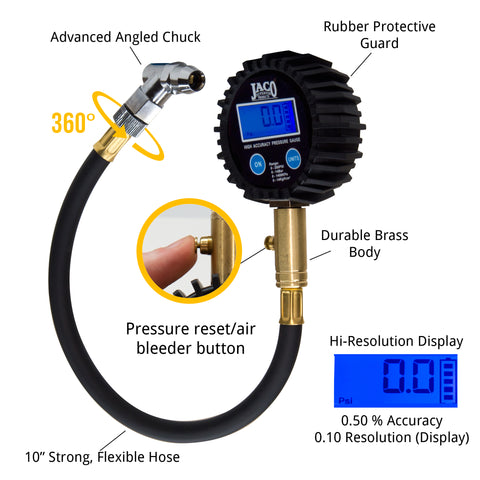
JACO ElitePro Digital Tire Pressure Gauge
Correct tire pressure supports braking, steering, tire life and stable handling. The JACO ElitePro gives a direct pressure reading and includes a hose, swivel chuck and pressure-release button for convenient checks.
Safety Preparedness Product Comparison
| Product | Image | Check Price |
|---|---|---|
|
RESQME Original Car Escape Tool Best for accessible emergency seat-belt cutting and tempered-glass escape |
|
View on Amazon |
|
First Aid Only 299-Piece Kit Best for basic road-trip first-aid preparedness |
|
View on Amazon |
|
JACO ElitePro Digital Tire Pressure Gauge Best for routine tire-pressure checks |
|
View on Amazon |
How to Interpret Volvo Fatality Statistics Correctly
Safety statistics are easy to misuse. The following distinctions prevent most common mistakes.
Driver Deaths vs Occupant Deaths
IIHS model death-rate tables focus on drivers. They do this because every moving vehicle has a driver, while passenger counts vary. A driver-death rate therefore should not be described as the total occupant-fatality rate.
Raw Death Counts vs Exposure-Adjusted Rates
A popular vehicle can accumulate more crashes simply because millions of examples travel billions of miles. Registered vehicle-years help account for exposure. That is why IIHS reports deaths per million registered vehicle-years instead of relying on raw counts alone.
Crash Tests vs Real-World Death Rates
A crash-test rating measures performance under standardized conditions. A death-rate study measures real-world outcomes affected by drivers, roads, weather, speed, other vehicles and vehicle use. Both are valuable, but they are not interchangeable.
Zero in a Study vs Zero in the World
A zero estimated rate can occur in a particular dataset. It does not mean a model has never been involved in a fatal crash anywhere. This distinction is especially important with the famous XC90 safety claim.
💡 Evans Torres Tip: On every Volvo I have owned, I always keep a full digital service record from day one. When something goes wrong — and eventually something always does — having that history makes diagnosis faster and often saves money at the mechanic. Start your records today, even if the car is not new.
Frequently Asked Questions
Yes. Fatal crashes involving Volvo vehicles have occurred. Volvo has a strong safety record, but no passenger vehicle can eliminate every fatal-crash scenario.
There is no authoritative worldwide real-time database that can prove the single latest Volvo fatality. U.S. FARS data are annual, and media reports cannot establish a global “last” event.
Some earlier IIHS study periods reported a zero estimated driver-death rate for the XC90 4WD. That was a defined U.S. driver-rate statistic, not proof that no XC90 occupant anywhere had ever died.
In IIHS’s July 2026 report covering fatalities from 2021–2024 for 2023 and equivalent models, the Volvo XC90 4WD has an estimated driver death rate of 7 per million registered vehicle-years.
The same 2026 IIHS study lists the Volvo XC60 4WD at 7 driver deaths per million registered vehicle-years.
The all-make/all-model average in the newest IIHS study is 37 driver deaths per million registered vehicle-years, versus 7 for the XC60 4WD and XC90 4WD.
There is no single scientific ranking that makes one brand universally “the safest.” Safety varies by model, size, model year, crash type and test criteria. Volvo has a long safety history and several models with very low real-world driver-death rates, but other manufacturers also achieve excellent results.
No, not as a literal zero-fatality worldwide outcome. Volvo’s current safety material acknowledges that the vision of no one being seriously injured or killed in a new Volvo has not yet been achieved. The company now also describes an ambition of zero collisions.
Some are. IIHS currently lists the 2026 XC90 and XC90 Plug-In Hybrid as Top Safety Pick winners. The exact award and individual ratings vary by model.
Crash energy, speed, vehicle mismatch, seat-belt use, road conditions, impairment, fire, submersion and many other factors can overwhelm safety systems. Safety technology reduces risk; it does not eliminate physics.
Wear seat belts correctly, maintain tires and brakes, keep safety sensors clean, address warning lights, use correct child restraints, stay current on maintenance/software and avoid speeding, distraction and impairment.
Sources & Verification — August 2026
- IIHS — July 30, 2026 driver death rate report
- IIHS — Driver death rates by make and model methodology
- IIHS — Current midsize luxury SUV ratings
- NHTSA — Fatality Analysis Reporting System (FARS)
- NHTSA — 2024 annual fatality data and 2025 early estimate
- Volvo Cars USA — Current safety vision and research overview
- Volvo Cars USA — Safety legacy
- RESQME — Original car escape tool specifications and glass limitation
- First Aid Only — 299-piece kit information
- JACO — ElitePro digital tire gauge specifications
Final Say: So, When Was the Last Time Someone Died in a Volvo?
The most accurate answer is that we cannot identify a single worldwide “last Volvo death” from a trustworthy real-time source. People still die in Volvo crashes, and any page claiming otherwise is oversimplifying the data.
What current evidence does support is that several Volvo models perform very well in real-world fatality statistics. In the newest IIHS driver-death-rate study, the XC60 4WD and XC90 4WD each record an estimated rate of 7 deaths per million registered vehicle-years, compared with 37 across all makes and models. That is strong evidence of low real-world driver risk, but it is not zero risk.
Volvo’s most credible safety story is therefore not “nobody dies in a Volvo.” It is that the company has spent decades trying to reduce serious injuries and deaths, uses real-world crash research to guide development, and continues to pursue a future with fewer collisions. Owners still have an essential role through seat-belt use, maintenance, safe speed and attentive driving.
My Top Picks at a Glance
These three products fit this safety-focused article because they support emergency escape, basic roadside first aid and routine tire-pressure maintenance. They are preparedness tools—not substitutes for safe driving or professional emergency care.
EMERGENCY ESCAPE PICK
RESQME Original Car Escape Tool
A compact emergency tool combining a seat-belt cutter with a spring-loaded breaker for tempered side/rear glass. Keep it within reach, and verify which windows in your Volvo use tempered versus laminated glass.
ROAD-TRIP FIRST-AID PICK
First Aid Only 299-Piece Kit
A compact soft-case kit with organized supplies for minor everyday injuries and road-trip preparedness while professional help is obtained when a situation is serious.
TIRE SAFETY PICK
JACO ElitePro Tire Pressure Gauge
A dedicated digital gauge for routine tire-pressure checks. Correct pressure supports stable handling and braking; always use the Volvo vehicle placard specification rather than the tire’s maximum sidewall pressure.
